District Cooling & Industrial Heat Exchangers in Qatar: The Complete Supplier Guide

Heat exchangers in Qatar sit at the heart of two things the country’s economy quietly depends on — keeping its cities cool and keeping its heavy industries running. Qatar’s rapid transformation into one of the Gulf’s most modern economies has been built on two things that quietly depend on heat transfer: keeping its cities cool and keeping its industries running.

Behind almost every mall, stadium, high-rise, LNG train, and desalination plant in the country sits a heat exchanger doing critical thermal work.

Whether you are specifying a district cooling heat exchanger in Qatar for a new development in Lusail, or sourcing a rugged industrial heat exchanger in Qatar for a petrochemical or power plant, choosing the right equipment — and the right supplier — directly affects your project cost, reliability, and long-term maintenance burden.

This guide is written for consultants, MEP contractors, EPC firms, facility managers, and plant operators across Doha, Lusail, Al Rayyan, Mesaieed, Ras Laffan, and the wider country.

It covers how district cooling and industrial heat exchangers are used in Qatar, how to select the correct type and materials for the local climate, and why partnering with SRJ Heatt Exchangers — a specialist manufacturer of plate heat exchangers in Qatar and compatible spare parts serving the Middle East — gives you competitive pricing, fast lead times, and genuine engineering support.

Why Heat Exchangers Are Critical Infrastructure in Qatar

Qatar’s climate and economy place unusually heavy demands on thermal equipment. Summer ambient temperatures regularly exceed 45°C, cooling is a year-round necessity rather than a seasonal one, and the country’s hydrocarbon and utility industries operate continuously with very low tolerance for downtime.

Add to this the widespread use of seawater for cooling and the aggressive, high-chloride environment of the Gulf coast, and it becomes clear why robust, corrosion-resistant heat exchangers in Qatar are essential — not optional — infrastructure.

Two broad categories dominate the market. District cooling heat exchangers in Qatar serve the enormous demand for centralised air conditioning across Qatar’s cities and mega-developments. Industrial heat exchangers in Qatar serve oil and gas, petrochemicals, power generation, desalination, and manufacturing. Both categories increasingly favour plate heat exchangers in Qatar (PHEs) for their compactness, high efficiency, and serviceability — and both create an ongoing need for replacement plates, gaskets, and servicing over the equipment’s life.

District Cooling Heat Exchangers in Qatar

District cooling is one of Qatar’s signature infrastructure achievements. Instead of every building running its own chillers, a central cooling plant produces chilled water and distributes it through insulated pipe networks to many buildings across a district. This model is far more energy-efficient, saves space, reduces maintenance, and lowers the urban heat footprint — all critical advantages in Qatar’s climate.

Major developments such as Lusail City, The Pearl, Msheireb, and stadium and metro precincts rely heavily on district cooling networks.

Where the heat exchanger fits in a district cooling system

At the heart of every building connection in a district cooling scheme sits a plate heat exchanger. It hydraulically separates the primary chilled-water loop (owned by the district cooling operator) from the secondary loop (inside the building), while transferring the cooling energy between them. This separation is essential: it protects the primary network from building-side pressure and water quality, allows accurate energy metering, and lets each building operate independently.

Because these units run continuously through Qatar’s long, hot cooling season, they must be highly efficient, reliable, and easy to service. Gasketed plate heat exchangers in Qatar are the standard choice, as their plate pack can be opened for cleaning and re-gasketing, and capacity can be adjusted by adding or removing plates.

Why plate heat exchangers in Qatar suit district cooling

  • High thermal efficiency — gasketed plate heat exchangers in Qatar achieve close temperature approaches, maximising the cooling energy transferred and improving overall plant efficiency.
  • Compact footprint — critical in building plant rooms and energy transfer stations where space is limited and valuable.
  • Clean hydraulic separation — protecting the primary network and enabling precise energy billing at each substation.
  • Easy maintenance — the pack opens for inspection, cleaning, and re-gasketing, keeping the system efficient over decades of service.
  • Scalable capacity — plates can be added as building loads grow, avoiding full equipment replacement.

Materials and specification for Qatar’s district cooling

For most closed-loop chilled-water district cooling duty, AISI 316 stainless steel plates with EPDM gaskets are the standard, offering an excellent balance of corrosion resistance and cost for treated water service. Where seawater or open condenser-water circuits are involved at the central plant, titanium plates are specified to resist chloride attack.

Correct gasket selection (typically EPDM for chilled and hot water) and correct plate compression are essential to prevent leaks and maintain efficiency. SRJ’s technical team helps match the right plate and gasket specification to each substation and central-plant duty.

Industrial Heat Exchangers in Qatar

Beyond cooling the cities, heat exchangers in Qatar are indispensable to the industries that power Qatar’s economy. An industrial heat exchanger in Qatar may be handling hydrocarbons at high pressure in an LNG train, cooling lube oil in a power plant, recovering heat in a petrochemical process, or heating brine in a desalination unit.

Each duty demands the correct exchanger type, material, and gasket chemistry — and reliable spares support to keep it running.

Key industrial sectors served in Qatar

Oil, gas & LNG — Qatar is one of the world’s largest LNG producers, and its Ras Laffan and offshore facilities operate vast fleets of heat exchangers in Qatar for interstage cooling, condensate recovery, glycol systems, amine cooling, and lube oil cooling. These hydrocarbon and sour-service duties require carefully matched plate materials and nitrile (NBR) or fluoroelastomer (FKM) gaskets rated for the fluids and temperatures involved.

Petrochemicals & fertilizers — Mesaieed and other industrial cities host large petrochemical and fertilizer complexes that rely on heat exchangers in Qatar for precise process temperature control, often with corrosive or high-temperature fluids requiring high-alloy plates and chemically compatible gaskets.

Power generation — Qatar’s power and cogeneration plants use PHEs for auxiliary cooling, closed-loop cooling water, generator cooling, and lube oil cooling. Reliability is critical, as exchanger failure can derate or trip a unit.

Desalination — much of Qatar’s fresh water comes from desalination, where plate heat exchangers in Qatar handle brine heating, heat recovery, and cooling. Seawater and brine service makes titanium plates the standard for chloride corrosion resistance.

Food, beverage & manufacturing — Qatar’s growing domestic manufacturing base uses food-grade and general-industrial heat exchangers in Qatar for pasteurisation, chilling, and process heating, with hygienic design and food-safe gasket materials.

Types of industrial heat exchangers in Qatar SRJ supplies

SRJ manufactures and supplies a full range of heat exchanger types to suit every industrial duty found in Qatar:

Matching the exchanger type to the fluid, pressure, temperature, and fouling tendency of the duty is the single most important engineering decision — and getting it right from the start avoids costly redesigns and premature failures.

Choosing the Right Heat Exchanger for Qatar Conditions

Whether the application is district cooling or heavy industry, a few local factors always shape the correct specification:

  1. Corrosion environment — Qatar’s coastal, high-chloride, high-humidity environment favours titanium plates for seawater and open circuits, and quality stainless steel for treated closed loops.
  2. High ambient temperatures — designs must account for elevated cooling-water and ambient temperatures that reduce available temperature difference and demand efficient plate geometries.
  3. Continuous operation — most Qatari plants and district cooling systems run year-round, so reliability, serviceability, and rapid spares availability are paramount.
  4. Correct gasket chemistry — EPDM for water and steam, NBR for oils and hydrocarbons, FKM for high temperatures and aggressive chemistry — never the wrong elastomer, which causes rapid failure.
  5. Serviceability & spares — choose equipment and a supplier that make re-gasketing, plate cleaning, and replacement straightforward and fast.

Why Choose SRJ for Heat Exchangers in Qatar

SRJ Heatt Exchangers is a specialist manufacturer of plate heat exchangers and PHE spare parts serving customers across the Middle East, including Qatar. Rather than acting as a one-time equipment vendor, SRJ partners with operators for the full lifecycle — supplying new units, compatible replacement plates and gaskets for all major brands, and re-gasketing and servicing support.

  • Full product range — gasketed, semi-welded, welded, wide-gap, brazed, and spiral heat exchangers for every district cooling and industrial duty in Qatar.
  • Compatible replacement plates & gaskets — precision-matched parts for all major PHE brands, at a fraction of OEM pricing and with faster availability.
  • Correct materials — titanium, 316/316L stainless steel, and high alloys, with EPDM, NBR, FKM, and HNBR gaskets matched to your exact duty.
  • Fast lead times — manufacturing geared to short turnaround with export experience serving Qatar and the wider GCC.
  • Engineering support — application advice, material selection, and troubleshooting from a team that understands Gulf operating conditions.
  • Full lifecycle partner — new units, spares, re-gasketing, and refurbishment from a single supplier, simplifying your supply chain.

Maintenance & Servicing: Protecting Your Investment

Qatar’s demanding conditions make disciplined maintenance essential. A well-maintained heat exchanger delivers its full efficiency and service life; a neglected one wastes energy, risks leaks, and eventually fails in service.

Best practice includes monitoring pressure drop and outlet temperatures, cleaning fouled plates (CIP or manual), re-gasketing on a planned schedule rather than reacting to leaks, and holding a strategic stock of compatible plates and gaskets for critical units.

SRJ supplies gasket sets and plates matched to your exact model and can advise sensible re-gasketing intervals for each duty — ensuring a gasket failure or fouled pack never becomes a prolonged, costly stoppage.

Frequently Asked Questions (FAQ)

  1. Do you supply district cooling heat exchangers in Qatar?A. Yes. SRJ supplies gasketed plate heat exchangers ideal for district cooling energy transfer stations and central plants across Doha, Lusail, and other Qatari developments, along with compatible plates, gaskets, and servicing support.
  2. What type of industrial heat exchanger is best for oil & gas in Qatar?A. It depends on the duty. Gasketed PHEs suit most cooling and heating services; semi-welded and welded units handle aggressive, high-temperature, or gasket-incompatible fluids common in LNG and petrochemical service. Our team matches the type, material, and gasket to your exact process conditions.
  3. Which plate material should I choose for Qatar’s seawater cooling?A. Titanium plates are the standard for seawater, brine, and high-chloride duties because of their excellent chloride corrosion resistance. Treated closed-loop chilled water typically uses 316/316L stainless steel.
  4. Can SRJ supply replacement plates and gaskets for existing units in Qatar?A. Yes. SRJ manufactures compatible replacement plates and gaskets precision-matched to all major PHE brands, functioning as direct drop-in replacements at lower cost and often faster lead times than OEM sourcing.
  5. How quickly can you deliver to Qatar?A. SRJ’s manufacturing is geared to short lead times with export experience serving Qatar and the GCC. For critical units, we recommend keeping a strategic stock of gaskets and key plates to eliminate downtime risk.
  6. Do you provide servicing and re-gasketing support?A. Yes. In addition to new units and spare parts, SRJ provides re-gasketing, plate cleaning, inspection, and pack refurbishment, so you have a single partner for the full equipment lifecycle.

Conclusion

From cooling Qatar’s landmark cities to keeping its LNG, power, and desalination plants running, heat exchangers are quiet but critical infrastructure. Choosing the right district cooling or industrial heat exchanger — correctly specified for Qatar’s heat, chloride environment, and continuous operation — and backing it with a supplier who provides fast spares and genuine engineering support is the key to reliability and low lifecycle cost.

SRJ Heatt Exchangers is that partner. As a specialist manufacturer of plate heat exchangers and compatible parts serving Qatar and the Middle East, SRJ delivers the full range of exchanger types, correct materials, competitive pricing, and responsive support that Gulf projects demand.

Planning a district cooling or industrial project in Qatar? Contact SRJ Heatt Exchangers today with your duty details for a fast, competitive quotation and expert technical support.

For technical background on the systems behind heat exchangers in Qatar, see general references on plate heat exchangers and district cooling.

To specify or source heat exchangers in Qatar for a district cooling or industrial project, SRJ supplies units and spare plates with fast lead times across the country.

Hisaka Plate Heat Exchanger in the Middle East & Your Trusted PHE Supplier in Saudi Arabia

Across the Middle East, plate heat exchangers (PHEs) sit at the heart of almost every heavy-duty thermal process. From offshore oil and gas platforms in the Arabian Gulf to giant seawater desalination plants along the Red Sea coast, from district cooling stations keeping cities comfortable to food and beverage factories serving a growing population, reliable heat transfer equipment is not a luxury — it is a hard operational requirement. Among the global brands that engineers in the region trust, the Hisaka plate heat exchanger has earned a strong reputation for compact design, high thermal efficiency, and rugged performance in demanding conditions.

If you operate, maintain, or specify Hisaka units — or any other brand of gasketed plate heat exchanger — the single biggest challenge you face is keeping them running at peak efficiency without paying premium OEM prices or waiting weeks for imported spares. That is exactly where SRJ Heatt Exchangers steps in. As a specialist manufacturer and PHE supplier in Saudi Arabia and the wider Middle East, SRJ supplies precision-engineered plate heat exchanger plates and gaskets that are fully compatible with Hisaka models, along with complete PHE units, servicing, and after-sales support tailored to the region.

This guide is written for plant engineers, procurement managers, maintenance teams, EPC contractors, and facility operators across Saudi Arabia, the UAE, Qatar, Oman, Kuwait, and Bahrain. It explains what makes Hisaka plate heat exchangers so widely used in the Middle East, the industries and applications they serve, how to source genuine-quality compatible spare parts, and why partnering with the right PHE supplier in Saudi Arabia can dramatically cut your maintenance cost and downtime. By the end, you will know exactly how to keep your Hisaka and other PHE fleets performing — and who to call when you need parts fast.

What Is a Hisaka Plate Heat Exchanger?

A plate heat exchanger is a compact thermal device that transfers heat between two fluids using a stack of thin, corrugated metal plates instead of the bulky tube bundles found in traditional shell-and-tube exchangers. The plates are pressed with a herringbone or chevron pattern that creates turbulence, forcing the two fluids — a hot side and a cold side — to flow in thin channels on alternating sides of each plate. This turbulence, combined with a very large surface area packed into a small footprint, produces heat transfer coefficients several times higher than shell-and-tube equipment of comparable duty.

Hisaka Works Ltd., a Japanese manufacturer with decades of thermal engineering heritage, is one of the recognised global names in gasketed plate heat exchanger technology. Hisaka PHEs are known for tight manufacturing tolerances, optimised plate geometries, and elastomer gaskets engineered for long service life. In the Middle East, these qualities matter enormously: ambient temperatures are high, cooling water is often aggressive seawater or brackish water, and process fluids in oil, gas, and petrochemical plants can be corrosive. A well-built PHE that resists fouling and corrosion while maintaining thermal performance directly protects a plant’s uptime and profitability.

Key components of a gasketed plate heat exchanger

  • Plates — the stainless steel or titanium plate pack that carries out the actual heat transfer.
  • Gaskets — the rubber (elastomer) seals that direct fluid flow and prevent leakage or intermixing between the hot and cold streams.
  • Frame and bars — the thick end plates and horizontal carrying/guide bars that hold the plate pack under compression.
  • Tightening bolts — the threaded rods and nuts that compress the plate pack to the correct clamping dimension.
  • Nozzles / connections — the ports where hot and cold fluids enter and leave the unit.

Of all these parts, the plates and gaskets are the wear items — the components most likely to degrade, corrode, or need periodic replacement. This is critical to understand for maintenance planning: you rarely need to replace an entire Hisaka plate heat exchanger. In the vast majority of cases, restoring full performance simply means re-gasketing the unit or replacing worn plates. This is precisely why a dependable supplier of Hisaka-compatible plates and gaskets is worth far more to your operation than a one-time equipment vendor.

Hisaka Plate Heat Exchanger Models Commonly Found in the Middle East

Hisaka manufactures a broad range of plate heat exchanger series, each optimised for different flow rates, pressures, temperatures, and duties. Understanding which series you have is the first step to sourcing the correct compatible plates and gaskets. Below is an overview of the Hisaka model families most frequently encountered on Middle East sites.

Hisaka Series Typical Duty / Character Common Middle East Applications
RX Series General-purpose, high-efficiency gasketed PHE range HVAC, district cooling, general process cooling
SX Series Compact, high heat-recovery designs Food & beverage, chemical, light industrial
UX Series Robust industrial duty, higher throughput Oil & gas, petrochemical, power generation
LX Series Larger-capacity plates for high flow rates Desalination, seawater cooling, refineries
EX Series High-performance heat transfer geometries Energy recovery, process optimisation

Note: model designations, plate sizes, and available materials evolve over time, and individual units may be configured with different plate counts, port sizes, and gasket materials. If you are unsure which Hisaka series or plate model you have, the fastest way to get the right parts is to send the nameplate details — model number, serial number, plate count, and connection sizes — to your PHE supplier. SRJ’s technical team can identify the exact compatible plate and gasket specification from these details and, where needed, from a physical sample plate or gasket.

How to read your Hisaka nameplate

Every plate heat exchanger carries a nameplate, usually mounted on the fixed frame plate. For accurate cross-referencing to compatible replacement parts, capture the following information:

  1. Manufacturer and model / type designation (e.g., the Hisaka series and plate model).
  2. Serial or unit number — useful for tracing the original build specification.
  3. Number of plates and the pass configuration.
  4. Design pressure and design temperature (PS / TS).
  5. Plate material (e.g., AISI 316 stainless steel or titanium) and gasket material.
  6. Connection / nozzle sizes and the clamping (tightening) dimension range, often shown as A-min and A-max.

With these details, a competent supplier can supply drop-in compatible plates and gaskets that match the original plate geometry, thickness, material, and pressing pattern — restoring the unit to its rated thermal performance without any need to modify the frame or connections.

Why Hisaka Plate Heat Exchangers Are So Widely Used in the Middle East

The Middle East presents one of the most demanding operating environments on earth for thermal equipment. High ambient temperatures, abundant use of seawater as a cooling medium, aggressive process chemistries, and around-the-clock production schedules place extreme stress on heat exchangers. Hisaka plate heat exchangers have become a common sight across the region for several practical reasons.

1. High thermal efficiency in a compact footprint

Space and weight are always at a premium — whether on an offshore platform, inside a packed refinery, or in a rooftop district cooling plant. Hisaka PHEs deliver large heat-transfer duties in a fraction of the space and weight of shell-and-tube exchangers, which is a decisive advantage where real estate and structural loading are limited.

2. Corrosion resistance for seawater and brine service

Much of the region’s cooling relies on seawater or brackish water. Hisaka units can be specified with titanium or high-grade stainless steel plates that resist chloride-induced corrosion, making them well suited to desalination and coastal power and process plants where cooling water is inherently aggressive.

3. Easy maintenance and serviceability

Because the plate pack can be opened, inspected, cleaned, re-gasketed, and reassembled on site, gasketed PHEs offer a maintenance model that suits the region’s uptime-driven industries. Plates can be added or removed to change capacity, and worn parts can be replaced without discarding the whole unit — provided compatible spares are readily available.

4. Proven reliability and brand trust

Engineers and procurement teams across the Gulf value equipment with a strong track record. Hisaka’s reputation for build quality and consistent performance has made it a specified brand in many plants, which in turn creates a large installed base — and a steady, ongoing demand for high-quality replacement plates and gaskets across the Middle East.

Middle East Applications of Hisaka & Other Plate Heat Exchangers

Plate heat exchangers touch nearly every major industry in the region. Understanding the specific demands of each application helps you specify the right plate material, gasket elastomer, and maintenance schedule. Here are the core sectors where Hisaka and compatible PHEs are deployed across Saudi Arabia and the GCC.

Oil & gas and petrochemicals

The backbone of the regional economy, the oil, gas, and petrochemical sector relies on plate heat exchangers for interstage cooling, condensate recovery, glycol heating and cooling, amine cooling, lube oil cooling, and countless process duties. These services often involve high pressures, elevated temperatures, and hydrocarbons or sour fluids, so plate material and gasket compatibility (for example, nitrile or fluoroelastomer gaskets rated for hydrocarbons) are critical selection factors. A supplier who understands these chemistries is essential.

Seawater desalination

The Middle East is home to some of the world’s largest desalination capacity. Both thermal (MED / MSF) and membrane (SWRO) desalination plants use plate heat exchangers extensively — for brine heating, heat recovery, and cooling duties. Seawater and brine service demands titanium plates or high-alloy stainless steel to survive chloride attack. Because desalination plants run continuously and any downtime affects municipal water supply, fast access to compatible plates and gaskets is a matter of operational necessity.

District cooling and HVAC

As cities across the Gulf expand, district cooling has become the standard for efficient, centralised air conditioning of large developments, malls, airports, and mixed-use districts. Plate heat exchangers separate the primary chilled-water loop from building secondary loops, enabling clean hydraulic separation and precise temperature control. These units cycle continuously through the long, hot cooling season, so gasket durability and plate cleanliness directly affect energy efficiency and comfort.

Power generation

Conventional, cogeneration, and combined-cycle power plants use PHEs for auxiliary cooling, closed-loop cooling water systems, lube oil cooling, and generator cooling. Reliability is paramount because heat-exchanger failure can force a unit derating or trip. Robust plate materials and disciplined re-gasketing schedules keep these critical systems dependable.

Food, beverage, and dairy

A growing population and expanding domestic manufacturing have driven strong demand for food-grade plate heat exchangers used in pasteurisation, chilling, and heat recovery for milk, juices, edible oils, and beverages. Hygienic design and food-safe gasket materials (such as EPDM approved for food contact) are the priorities here, along with plates that resist the mild acids and cleaning chemicals used in CIP (clean-in-place) cycles.

Chemical and pharmaceutical processing

Chemical and pharma plants use PHEs for precise temperature control of reactive and sometimes corrosive fluids. Correct plate alloy selection and chemically compatible gaskets are non-negotiable, and documentation and traceability of replacement parts often matter for quality compliance.

Marine and offshore

Ships, FPSOs, and offshore facilities operating in Gulf waters use compact plate heat exchangers for engine jacket cooling, central cooling, and fresh-water generation. Titanium plates are common for seawater duty, and the compact, low-weight design of gasketed PHEs is ideal for space- and weight-constrained vessels and platforms.

Whatever your sector, the common thread is clear: the plate heat exchanger itself may run for decades, but its plates and gaskets are consumables that must be maintained and periodically replaced with the correct compatible parts. This is the ongoing need that a specialist regional PHE supplier is built to serve.

PHE Supplier in Saudi Arabia: Market Overview & Why It Matters

Saudi Arabia is the largest industrial economy in the Middle East and one of the most heat-transfer-intensive markets in the world. The Kingdom’s oil and gas backbone, its enormous desalination programme, a fast-growing petrochemical and downstream sector, and the wave of construction and district cooling driven by national development goals all translate into a huge and growing installed base of plate heat exchangers — and an equally large need for spares, service, and new units.

Saudi Vision 2030 and industrial expansion

Saudi Arabia’s Vision 2030 economic diversification programme has accelerated investment in manufacturing, downstream petrochemicals, water infrastructure, tourism, and giga-projects. Each of these depends on thermal management. New desalination capacity, new industrial cities, expanded downstream complexes, and large real-estate developments with district cooling all add plate heat exchangers to the national fleet. For plant operators and contractors, this means both new-unit demand and a rising volume of maintenance and replacement-parts requirements over the equipment lifecycle.

The challenge: sourcing quality PHE parts locally and quickly

Despite the scale of demand, many operators in Saudi Arabia still struggle with three recurring pain points when it comes to plate heat exchanger spares:

  • Cost and lead time — genuine OEM plates and gaskets are expensive and can carry long lead times when imported from distant factories.
  • Downtime risk — a single failed or leaking PHE can halt a critical process, and waiting weeks for imported parts is not an option in continuous-process plants.
  • Technical matching — not every supplier can correctly cross-reference and match plate geometry, material, and gasket specification to legacy or brand-specific units such as Hisaka.

A capable PHE supplier in Saudi Arabia solves all three: competitively priced, precision-manufactured compatible parts; short and predictable delivery to Gulf sites; and the engineering know-how to identify and match the correct specification for Hisaka and other brands. That combination is exactly what SRJ Heatt Exchangers brings to the region.

SRJ Heatt Exchangers: Your Hisaka-Compatible PHE Parts & Supply Partner

SRJ Heatt Exchangers is a specialist manufacturer of plate heat exchangers and PHE spare parts, supplying customers across India and the Middle East. SRJ focuses on what plant operators actually need day to day: high-quality, precisely matched replacement plates and gaskets that are compatible with all major PHE brands — including Hisaka — plus complete PHE units, re-gasketing, and technical support.

For customers running Hisaka plate heat exchangers in the Middle East, SRJ offers a practical alternative to expensive, slow OEM sourcing. Every plate is pressed to match the original plate geometry, pitch, and pressing depth; every gasket is moulded to the correct profile and supplied in the right elastomer for your fluid and temperature. The result is a genuine drop-in replacement that restores rated thermal performance — at a significantly lower total cost of ownership.

What SRJ supplies for Hisaka and other PHEs

  • Compatible replacement plates — precision-pressed in stainless steel (AISI 304, 316, 316L), titanium, and other alloys, matched to your original plate model.
  • Compatible gaskets — clip-on and glued PHE gaskets and replacement parts moulded in NBR, EPDM, and fluoroelastomer (FKM/Viton-type) to suit your process fluid and temperature.
  • Complete PHE units — newly manufactured gasketed plate heat exchangers engineered to your duty specification.
  • Re-gasketing & servicing — on-site or workshop re-gasketing, plate cleaning, inspection, and pack refurbishment.
  • Technical identification — nameplate and sample-based cross-referencing to identify the exact compatible specification for your unit.

Why customers across the Middle East choose SRJ

  • Cost savings — compatible parts at a fraction of OEM pricing, reducing your maintenance budget without compromising quality.
  • Fast turnaround — manufacturing capability geared to short lead times, with export experience serving Saudi Arabia and the wider GCC.
  • Precision matching — plates and gaskets built to match original geometry and materials, so performance and clamping dimensions are preserved.
  • Application expertise — material and profile selection guided by your actual process conditions, not guesswork.
  • Direct support — responsive quotation and technical assistance for engineers and procurement teams across the region.

Hisaka Replacement Plates & Gaskets: What You Need to Know

The single most common maintenance requirement for any gasketed plate heat exchanger is replacement of the plates and gaskets. Understanding when and why these parts wear out — and how compatible replacements work — helps you plan maintenance intelligently and avoid unplanned failures.

When do PHE gaskets need replacing?

Gaskets are elastomer seals, and like all rubber components they age. Heat, compression set, chemical exposure, and repeated thermal cycling gradually harden and shrink them, eventually causing leaks between plates or external drips. As a general rule, gaskets should be inspected at every planned opening of the unit and replaced whenever they show hardening, cracking, permanent deformation, or loss of elasticity. In high-temperature or chemically aggressive service, gasket life is shorter and re-gasketing is a routine, scheduled activity rather than a reactive repair.

When do plates need replacing?

Plates are far more durable than gaskets but are not immortal. Over time they can suffer from corrosion (especially chloride pitting in seawater service), erosion, fouling that resists cleaning, mechanical damage, or stress cracking around the ports. Signs that plates need replacement include visible pinholes or cracks, cross-contamination between the two fluids, persistent performance loss after cleaning, and thinning detected during inspection. Replacing damaged plates with correctly matched compatible plates restores both the pressure integrity and the thermal duty of the unit.

How compatible (non-OEM) plates and gaskets work

A compatible plate or gasket is manufactured to match the exact geometry and material of the original part so that it functions as a direct drop-in replacement. For plates, this means matching the plate length and width, port positions and sizes, corrugation (chevron) angle and pitch, pressing depth, and material grade. For gaskets, it means matching the groove profile, cross-section, attachment method (clip-on or glued), and elastomer type. When these parameters are correctly reproduced, compatible parts deliver the same performance as OEM parts while typically costing considerably less and often being available faster. SRJ specialises in exactly this precision matching for Hisaka and other leading PHE brands.

Mixing OEM and compatible parts

It is perfectly acceptable — and common practice — to service an OEM Hisaka unit with high-quality compatible plates and gaskets. Because compatible parts are engineered to the same dimensional and material standards, they integrate seamlessly with existing OEM plates in the pack. What matters is not the brand printed on the part but whether it correctly reproduces the original specification. This is why choosing a supplier with genuine engineering capability, rather than a generic reseller, is so important.

Plate & Gasket Materials: Choosing the Right Specification

Selecting the correct plate metal and gasket elastomer is the most important technical decision in PHE maintenance. The wrong material fails prematurely; the right one delivers years of trouble-free service.

Plate materials

Plate Material Best For Notes
AISI 304 SS Mild, non-aggressive water and general duty Economical; not for high chloride service
AISI 316 / 316L SS General process, moderate chlorides, wide use The most common all-round PHE plate material
Titanium Seawater, brine, high-chloride & desalination Excellent chloride corrosion resistance
SMO 254 / high alloy Very aggressive brine and chemical service Used where 316 and Ti need supplementing
Nickel alloys Special corrosive / high-temperature chemistry Application-specific selection

Gasket materials

Gasket Elastomer Best For Typical Limits / Notes
NBR (Nitrile) Oils, water, general hydrocarbons Good for oil & gas water/oil duties
EPDM Hot water, steam, food & beverage Not compatible with mineral oils
FKM (Viton-type) High temperature, aggressive chemicals, oils Premium elastomer for tough service
HNBR Higher-temperature hydrocarbon service Upgraded nitrile performance

Because material selection depends on your exact fluids, temperatures, and pressures, it is always best to confirm the specification with a supplier who understands your application. Supplying an incorrect gasket elastomer — for example, EPDM in an oil service — will cause rapid gasket failure. SRJ’s technical team helps match the right plate alloy and gasket compound to each duty, drawing on experience across the region’s oil and gas, desalination, HVAC, and food processing sectors.

Serving Saudi Arabia and the Entire GCC

While Saudi Arabia is a core market, SRJ supplies Hisaka-compatible plates and gaskets, complete PHE units, and servicing across the whole Gulf region.

Saudi Arabia — the largest market in the region, driven by oil and gas, petrochemicals, the world’s biggest desalination footprint, power generation, and rapidly expanding district cooling and industrial development under Vision 2030. Demand spans everything from titanium plates for seawater duty to food-grade gaskets for the growing manufacturing base.

United Arab Emirates (UAE) — a hub for oil and gas, aluminium and heavy industry, large-scale district cooling across Dubai and Abu Dhabi, and extensive desalination. The UAE’s dense concentration of high-rise developments and mega-projects sustains strong ongoing demand for PHE maintenance parts.

Qatar — home to major LNG and gas processing infrastructure, Qatar operates a significant fleet of heat exchangers in demanding hydrocarbon service, alongside desalination and district cooling for its urban centres.

Oman — with growing oil and gas, refining, and industrial activity, plus coastal desalination and power plants, Oman represents a steady market for both replacement parts and complete PHE units.

Kuwait — a major oil producer and refiner, Kuwait relies heavily on plate heat exchangers in its downstream and utility systems, as well as in water production, creating consistent demand for spares and servicing.

Bahrain — Bahrain’s refining, aluminium, and industrial sectors, along with desalination and cooling infrastructure, round out a GCC-wide market in which reliable, quickly available PHE parts are always in demand.

How to Choose the Right PHE Supplier in the Middle East

Not all suppliers are equal. When your production depends on reliable heat transfer, the supplier you choose for plates, gaskets, and complete units directly affects your uptime, safety, and maintenance cost. Use the following checklist to evaluate any PHE supplier in Saudi Arabia or the wider Middle East:

  1. Can the supplier correctly identify and match your plate model and gasket profile — including brand-specific units like Hisaka — from nameplate details or a physical sample?
  2. Are plates pressed to reproduce the original geometry, pitch, and pressing depth, and are gaskets moulded to the exact groove profile and attachment method?
  3. Does the supplier offer the correct plate alloys (304, 316/316L, titanium, high alloys) and gasket elastomers (NBR, EPDM, FKM, HNBR) for your specific fluids and temperatures?
  4. Can they meet the lead times your operation requires, with reliable export logistics to Gulf sites?
  5. Is pricing genuinely competitive against OEM without cutting corners on material quality or dimensional accuracy?
  6. Do they provide technical support — application advice, material selection, and troubleshooting — rather than just taking orders?
  7. Can they also handle complete units, re-gasketing, and refurbishment, so you have a single partner for the full PHE lifecycle?

A supplier that answers “yes” across this checklist becomes a long-term partner rather than a transactional vendor. SRJ Heatt Exchangers is structured around exactly these capabilities.

PHE Maintenance & Servicing Best Practices

Even the best plate heat exchanger requires disciplined maintenance to deliver its full service life, especially in the harsh operating conditions of the Middle East.

Routine inspection and monitoring

Monitor pressure drop and outlet temperatures continuously. A rising pressure drop across the unit usually signals fouling, while a falling thermal performance indicates scaling or plate damage. Watch for any external leakage at the plate pack, which often means gaskets need attention. Track the clamping dimension against the specified range — over-tightening to stop a leak is a common mistake that damages plates and gaskets.

Cleaning: CIP and manual

Fouling is the enemy of PHE efficiency. Clean-in-place (CIP) circulation of appropriate cleaning chemicals removes many deposits without opening the unit, while heavier fouling or scaling may require opening the pack for manual cleaning. Always use cleaning agents compatible with your plate and gasket materials, and rinse thoroughly. In seawater and hard-water service, scale management is an ongoing priority.

Re-gasketing

Re-gasketing is the scheduled replacement of gaskets during a planned opening. It is far cheaper to re-gasket on a planned schedule than to react to a leak in the middle of production. Keep a set of compatible gaskets in stock for your critical units so that maintenance windows are never delayed by parts availability. SRJ can supply gasket sets matched to your exact plate model and recommend a sensible re-gasketing interval for your duty.

Plate inspection and replacement

Whenever the unit is open, inspect plates for pitting, cracks, deformation, and thinning. Dye-penetrant testing can reveal hairline cracks not visible to the eye. Replace any suspect plates with correctly matched compatible plates before reassembly. Reassemble in the correct plate order and orientation, fit new gaskets properly, and tighten evenly to the specified clamping dimension.

Spare parts strategy

For critical PHEs, holding a strategic stock of compatible plates and a full gasket set dramatically reduces downtime risk. Combined with a reliable regional supplier for rapid replenishment, this approach ensures that a gasket failure or damaged plate never becomes a prolonged production stoppage.

Total Cost of Ownership: Compatible Parts vs OEM

For procurement and maintenance managers, the economics are compelling. Genuine OEM plates and gaskets carry premium pricing and, when imported into the region, can involve long lead times and high logistics costs. High-quality compatible parts from a specialist manufacturer like SRJ deliver the same dimensional accuracy, material grades, and thermal performance at a substantially lower price — often with faster availability.

Consider the full lifecycle of a plate heat exchanger. Over its service life, a unit may be re-gasketed several times and have plates replaced at least once. Each of these events is an opportunity to reduce cost without sacrificing reliability. By standardising on a trusted compatible-parts supplier, operators across Saudi Arabia and the GCC routinely cut their PHE maintenance spend meaningfully while keeping — or even improving — reliability. The savings compound across a fleet of units and across years of operation.

Importantly, lower cost does not mean lower quality here. Compatible parts are only a saving if they are engineered correctly. The value lies in getting OEM-equivalent geometry and materials at a better price and lead time — which is precisely the SRJ proposition for Hisaka and other PHE brands in the Middle East.

Common Plate Heat Exchanger Problems & How to Solve Them

Reduced heat transfer performance

If your unit no longer reaches the required outlet temperatures, the usual cause is fouling or scaling on the plate surfaces. The first response is a thorough clean — CIP for light fouling, or opening the pack for manual cleaning of heavier deposits. If performance does not recover after cleaning, the plates may be corroded, deformed, or thinning, in which case correctly matched compatible plates restore the original duty.

External leakage from the plate pack

Drips from between the plates almost always indicate gasket problems. Before re-gasketing, check the clamping dimension — a pack that has relaxed below the specified tightening dimension can leak from under-compression. If tightening to the correct dimension does not stop the leak, a full re-gasket with correctly matched compatible gaskets is required. Never over-tighten beyond the minimum specified dimension to chase a leak.

Cross-contamination between fluids

If the two fluids are mixing, one or more plates almost certainly has a crack, pinhole, or corrosion breakthrough. The unit must be opened and each plate inspected (dye-penetrant testing helps find hairline cracks). Damaged plates must be replaced with correctly matched compatible plates. In seawater service, chloride pitting is the most common root cause — which is why titanium plates are specified for such duties.

Rising pressure drop

An increasing pressure drop at the same flow rate is a classic fouling indicator — the flow channels are narrowing with deposits, which also raises pumping energy costs. Cleaning usually restores the correct pressure drop. If fouling recurs rapidly, review upstream filtration, water treatment, and operating temperatures.

Gasket blow-out or repeated gasket failure

If gaskets fail quickly after replacement, the elastomer is likely wrong for the service — for example, EPDM used with oils. The solution is to switch to the correct elastomer (NBR, FKM, or HNBR as appropriate). A knowledgeable supplier prevents this problem at the specification stage.

Beyond Hisaka: Compatible Parts for All Major PHE Brands

Most Middle East sites operate a mixed fleet of PHE brands accumulated over years of expansion. A key advantage of working with a specialist manufacturer like SRJ is that a single supplier can provide compatible plates and gaskets across all of these brands.

SRJ manufactures compatible plates and gaskets matched to the major gasketed plate heat exchanger brands found throughout the region, including Hisaka, GEA / Kelvion, APV / SPX, Sondex / Danfoss, Tranter / SWEP, Funke / HRS, and more. Because the manufacturing approach is the same — matching the exact plate geometry, pressing depth, material, and gasket profile — a compatible part for any of these brands functions as a true drop-in replacement in the original frame.

For procurement teams, the benefit is significant. Instead of maintaining separate OEM relationships for each brand of PHE on site, you can source high-quality compatible plates and gaskets for your entire fleet from one regional partner — reducing administrative overhead, improving negotiating leverage, and shortening lead times.

Energy Efficiency & Sustainability in the Middle East Climate

In a region where cooling demand is enormous and energy costs and carbon targets are increasingly in focus, the efficiency of heat transfer equipment has a direct financial and environmental impact. Plate heat exchangers are inherently among the most efficient heat-transfer devices available, and keeping them in top condition is one of the most cost-effective sustainability measures a plant can take.

A fouled or degraded plate heat exchanger forces the rest of the system to work harder: pumps consume more energy pushing fluid through narrowed channels, chillers and boilers run longer to compensate for lost heat transfer, and overall process efficiency falls. By maintaining clean plates, correctly compressed packs, and healthy gaskets, operators recover this lost efficiency — reducing both energy bills and emissions.

Replacing worn or corroded plates with correctly matched compatible plates also restores the original thermal performance, meaning the exchanger once again achieves its design duty with the minimum energy input. For Middle East operators facing long, hot cooling seasons and rising energy scrutiny, a disciplined PHE maintenance programme — supported by a reliable regional parts supplier — is a straightforward way to improve efficiency, cut operating cost, and support broader sustainability goals such as those embedded in national development plans.

Glossary of Key Plate Heat Exchanger Terms

  • Plate Heat Exchanger (PHE) — a compact heat exchanger using a stack of thin corrugated metal plates to transfer heat between two fluids.
  • Plate — the individual pressed metal plate that provides the heat-transfer surface; a wear item along with gaskets.
  • Gasket — the elastomer (rubber) seal that directs flow and prevents leakage between plates.
  • Plate pack — the complete stack of plates and gaskets compressed together within the frame.
  • Clamping / tightening dimension — the compressed length of the plate pack between the frame plates, specified between A-min and A-max.
  • Chevron / herringbone pattern — the V-shaped corrugation pressed into each plate that creates turbulence and mechanical strength.
  • Fouling — the buildup of deposits, scale, or biological matter on plate surfaces that reduces heat transfer.
  • CIP — Clean-In-Place: circulating cleaning chemicals through the unit without opening it.
  • Re-gasketing — the scheduled replacement of all gaskets during a planned maintenance opening.
  • OEM — Original Equipment Manufacturer, the company that built the original unit.
  • Compatible part — a part manufactured to match the original specification exactly, functioning as a direct drop-in replacement.

Frequently Asked Questions (FAQ)

  1. Do you supply parts for Hisaka plate heat exchangers in the Middle East?
    A. Yes. SRJ manufactures and supplies plates and gaskets that are fully compatible with Hisaka plate heat exchangers, along with complete PHE units and servicing, for customers across Saudi Arabia, the UAE, Qatar, Oman, Kuwait, and Bahrain. Parts are engineered as direct drop-in replacements matched to your original plate geometry and materials.
  2. Are your compatible plates and gaskets as good as OEM parts?
    A. When compatible parts correctly reproduce the original geometry, pressing depth, material grade, and gasket profile, they deliver the same thermal performance and pressure integrity as OEM parts. SRJ specialises in this precision matching, so you get OEM-equivalent performance at a lower price and often a shorter lead time.
  3. Can I use compatible parts in an existing OEM Hisaka unit?
    A. Yes. Because compatible plates and gaskets are made to the same dimensional standards, they integrate seamlessly with existing OEM plates in the pack. It is common and accepted practice to service branded units with high-quality compatible parts.
  4. How do I identify which Hisaka model and plate I have?
    A. Send us the nameplate details — model/type, serial number, plate count, design pressure and temperature, connection sizes, and clamping dimension — and, where possible, a photo or a physical sample plate or gasket. Our technical team will cross-reference the exact compatible specification for you.
  5. Which plate material should I choose for seawater service?
    A. For seawater, brine, and high-chloride duties such as desalination, titanium plates are the standard choice for their outstanding chloride corrosion resistance. For milder duties, 316/316L stainless steel is usually sufficient. We help you select based on your actual water chemistry and temperature.
  6. What gasket material do I need for oil and gas service?
    A. Hydrocarbon and oil duties typically require nitrile (NBR) or, for higher temperatures and more aggressive chemistry, fluoroelastomer (FKM/Viton-type) gaskets. EPDM must not be used with mineral oils. We match the elastomer to your specific fluid and temperature.
  7. How often should PHE gaskets be replaced?
    A. Gaskets should be inspected at every planned opening and replaced whenever they show hardening, cracking, permanent set, or loss of elasticity. In high-temperature or aggressive service, scheduled re-gasketing at defined intervals is best practice rather than waiting for a leak.
  8. Do you supply complete new plate heat exchangers as well as parts?
    A. Yes. In addition to compatible plates and gaskets, SRJ manufactures complete gasketed plate heat exchangers engineered to your duty specification, and provides re-gasketing, plate cleaning, inspection, and refurbishment services.
  9. Can you deliver quickly to Saudi Arabia and other GCC countries?
    A. SRJ’s manufacturing is geared to short lead times, and we have export experience serving Saudi Arabia and the wider GCC. For critical units, we also recommend holding a strategic stock of gaskets and key plates to eliminate downtime risk.
  10. How much can I save by choosing compatible parts over OEM?
    A. Savings vary by model and material, but high-quality compatible plates and gaskets typically cost significantly less than OEM parts while delivering equivalent performance. Across multiple re-gasketing cycles and a fleet of units, these savings compound substantially over the equipment lifecycle.
  11. What information do you need to give me a quotation?
    A. The fastest route to an accurate quote is your unit’s nameplate data (brand/model, plate count, pressures, temperatures, connection sizes), the fluids on each side, and the quantity of plates or gasket sets required. A photo of the nameplate and a sample part speed things up further.
  12. Do you provide technical support for material and application selection?
    A. Yes. Our team advises on plate alloy and gasket elastomer selection, troubleshooting fouling and leakage, re-gasketing intervals, and maintenance best practice — drawing on experience across the region’s oil and gas, desalination, HVAC, power, and food processing sectors.

Conclusion: Keep Your Hisaka & PHE Fleet Running With the Right Partner

Plate heat exchangers are indispensable to the Middle East’s most important industries — oil and gas, desalination, power, district cooling, and food processing. Hisaka plate heat exchangers, in particular, enjoy a strong installed base across the region thanks to their efficiency, durability, and serviceability. But the long-term performance of any PHE depends on one thing: keeping it supplied with the correct plates and gaskets, maintained on a disciplined schedule, and backed by a supplier who understands both the equipment and the region.

SRJ Heatt Exchangers delivers exactly that. As a specialist manufacturer and PHE supplier in Saudi Arabia and across the GCC, SRJ provides precision-engineered, Hisaka-compatible plates and gaskets, complete PHE units, and full servicing — at a lower total cost of ownership and with the responsiveness that continuous-process plants demand.

Ready to source Hisaka-compatible PHE plates & gaskets or a complete unit? Contact SRJ Heatt Exchangers today with your unit’s nameplate details for a fast, competitive quotation and expert technical support across Saudi Arabia and the Middle East.

Related Resources

Frequently Asked Questions About the Hisaka Plate Heat Exchanger

Is SRJ a genuine PHE Supplier in Saudi Arabia for Hisaka units?
Yes. As a specialist manufacturer and PHE Supplier in Saudi Arabia, SRJ Heatt Exchangers supplies precision-engineered plates and gaskets that are fully compatible with your Hisaka Plate Heat Exchanger, along with complete PHE units, servicing, and after-sales support across the Middle East.

Can SRJ supply compatible plates and gaskets for any Hisaka Plate Heat Exchanger model?
SRJ manufactures compatible plates and gaskets for the common Hisaka Plate Heat Exchanger series used across Saudi Arabia, the UAE, Qatar, Oman, Kuwait, and Bahrain. Share your Hisaka nameplate model and our team will match the exact plate pattern and gasket material.

How much can I save versus imported OEM spares?
Sourcing your Hisaka Plate Heat Exchanger spares through SRJ typically cuts spare-parts cost significantly compared with imported OEM parts, while reducing lead times and plant downtime.

Where can I learn more?
You can review the original manufacturer at Hisaka Works Ltd. and read the engineering background on plate heat exchanger technology before choosing your PHE Supplier in Saudi Arabia.

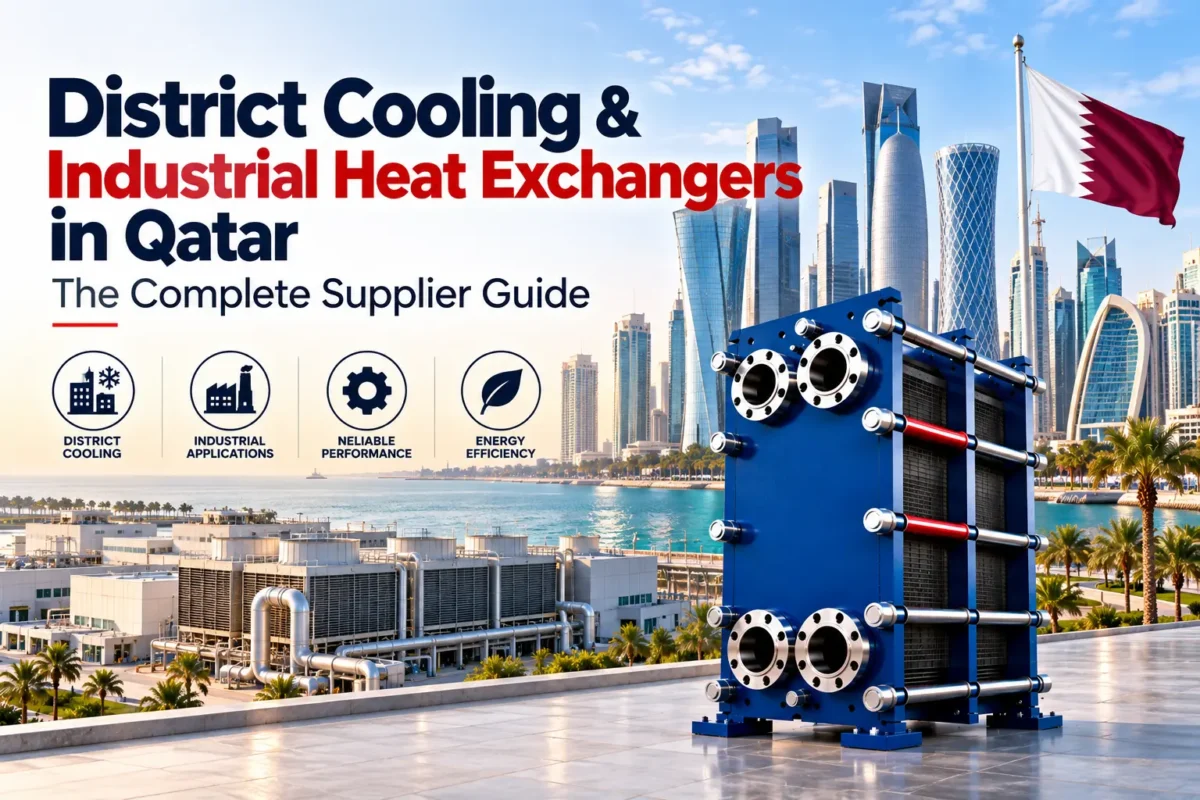
Plate Heat Exchanger Manufacturers in Bahrain: Engineering for the Gulf’s Toughest Industrial and Climate Conditions

Bahrain presents an unusual combination of demands for anyone sourcing thermal equipment: heavy industrial cooling duties tied to oil refining, petrochemicals and aluminium smelting, sitting alongside a climate that pushes ambient temperatures past 45 degrees Celsius for months at a time. Finding the right plate heat exchanger manufacturers in Bahrain means finding a partner who understands both ends of that spectrum, not just one.

Bahrain’s Industrial Landscape and What It Demands from a Heat Exchanger

The Sitra Industrial Area, on the island south of Muharraq, is Bahrain’s primary heavy-industry zone. It houses the Bahrain Petroleum Company’s Sitra refinery, the Gulf Petrochemical Industries Company’s ammonia, methanol and urea complex, and Banagas’s gas-processing facility. Refining and petrochemical operations here run continuous, high-volume cooling duties — crude preheating, product cooling, and utility water systems — often at elevated pressure and with process streams that are anything but forgiving of the wrong material choice.

Aluminium Bahrain, one of the world’s largest single-site aluminium smelters, adds a distinct cooling profile of its own. Potline and casting operations generate sustained thermal loads with cooling water carrying a meaningful particulate burden, which changes how a plate heat exchanger needs to be spaced and maintained compared with a clean-water duty.

Bahrain’s Electricity and Water Authority runs combined power and desalination plants that depend on efficient heat recovery and seawater cooling stages, where Gulf seawater’s high salinity and elevated ambient temperature push material selection toward corrosion-resistant alloys well beyond what a freshwater duty would need.

Away from heavy industry, Manama’s commercial towers and waterfront developments such as Bahrain Bay and Diyar Al Muharraq depend on district cooling and building HVAC systems to manage a climate where cooling isn’t seasonal — it’s a year-round structural load on every mechanical system in the building.

Plate Heat Exchanger Supplier in Bahrain: What Changes When You’re Importing

Bahrain has limited domestic plate heat exchanger manufacturing capacity, which means most buyers are effectively evaluating a plate heat exchanger supplier in Bahrain who is really an import channel back to a manufacturer elsewhere — commonly India, given the established trade lane and cost-competitive, ISO-certified production base. That changes the questions worth asking. Lead time matters more than it would for a domestic purchase: confirm whether the unit ships by sea (typically the more economical route) or air (for urgent replacement needs), and get a realistic port-to-site timeline through Khalifa Bin Salman Port rather than a factory-gate date alone.

Documentation matters just as much as the hardware. Bahrain’s major industrial buyers — Bapco, GPIC, Alba and EWA among them — run procurement processes that expect full material test certificates, hydro-test reports, and compliance with the relevant ASME or API standard for the duty, not just a product datasheet. A supplier who can’t produce that paperwork alongside the unit will slow down your own commissioning schedule.

Industrial Heat Exchanger in Bahrain: Getting Material Selection Right

Selecting the right industrial heat exchanger in Bahrain starts with the fluid, not the catalogue. For seawater cooling circuits common in desalination and power-plant applications, titanium plates are the standard choice — Gulf seawater’s chloride content and elevated temperature will pit and crack standard stainless steel over time in ways that don’t show up until a leak has already started.

For GPIC-type ammonia and methanol duties, gasket compound selection needs particular attention: EPDM generally performs far better than nitrile rubber against ammonia exposure, since nitrile degrades relatively quickly in that environment. For Alba’s particulate-heavy cooling water, wide-gap plate designs resist the fouling and blockage that standard narrow channels are prone to under a heavy solids load. For Bapco’s refinery-side cooling and heat-recovery duties, welded or semi-welded construction is often warranted wherever the process side carries hydrocarbons at temperature and pressure combinations a gasketed unit isn’t rated for.

HVAC Plate Heat Exchanger in Bahrain: Cooling for a Climate That Never Really Cools Down

An HVAC plate heat exchanger in Bahrain does a different job than the same equipment would do in a temperate climate. District cooling plants serving Manama’s towers and the Gulf’s waterfront developments use plate heat exchangers primarily to isolate the chilled-water loop feeding building interiors from the condenser water loop rejecting heat to cooling towers or seawater — protecting expensive chiller plant from the fouling and corrosion that raw cooling-tower or seawater exposure would otherwise cause.

Because Bahrain’s cooling load runs high for most of the year rather than peaking seasonally, HVAC plate heat exchangers here are sized against a much higher duty cycle than the same equipment would see in a four-season climate, which makes plate count, flow velocity and fouling margin decisions correspondingly more consequential to long-term energy cost.

A Practical Framework for Evaluating a Bahrain-Bound Supplier

  • Ask for a thermal datasheet specific to your fluid and site conditions, including Gulf seawater temperature and salinity data where relevant, not a generic clean-water sizing.
  • Confirm plate material explicitly for any seawater or high-chloride duty — titanium should be the default discussion point, not an upsell you have to request.
  • For ammonia, methanol or hydrocarbon duties, confirm gasket compound compatibility and, where needed, welded or semi-welded construction with supporting documentation.
  • Verify ISO 9001 certification and ask what material test certificates and hydro-test reports ship with the unit.
  • Confirm shipping method, realistic port-to-site lead time, and after-sales support arrangements before committing, since a unit with no local service backing becomes expensive to maintain the moment something needs adjusting.

Why Manufacturer Choice Matters for Bahrain Buyers

Working directly with a manufacturer rather than a pure trading intermediary matters more, not less, across a long shipping lane. SRJ Heatt Exchangers India Pvt. Ltd. manufactures gasketed, welded, semi-welded, brazed and wide-gap plate heat exchangers to ISO 9001 standards, with export documentation and material certification built into the production process rather than assembled after the fact — a detail that matters when a Bahrain-based EPC contractor or plant engineer needs full traceability for a Bapco or GPIC-linked project.

Maintenance Under Gulf Operating Conditions

Higher ambient and process temperatures generally accelerate both fouling and gasket aging compared with temperate-climate operation, so inspection intervals that work well elsewhere may need to be shortened for Bahrain-based units. Seawater-cooled circuits should be checked specifically for chloride-related pitting at plate edges and around gasket grooves, since this failure mode develops gradually and isn’t always obvious from external inspection alone. As with any plate heat exchanger, a rising pressure drop signals fouling, a falling outlet temperature signals reduced heat transfer, and any weeping at the frame edge calls for immediate gasket inspection rather than a wait-and-see approach.

What Drives Cost for a Bahrain-Bound Unit

Material selection is the dominant cost factor here more than in most markets, since titanium plates for seawater duty cost substantially more than standard stainless. Beyond material, total heat-transfer area, pressure and temperature rating, and frame construction set the base price, with freight, Bahrain’s standard import duty of roughly five percent, and documentation costs adding to the landed total. Comparing quotes on landed cost with full certification included, rather than ex-works price alone, gives a far more accurate picture of what a unit actually costs to get operational.

Frequently Asked Questions

Why do plate heat exchanger manufacturers in Bahrain typically mean an import relationship rather than local production?
Bahrain has limited domestic plate heat exchanger manufacturing capacity, so most buyers work with an established manufacturer abroad — commonly in India — through a local supplier or agent who manages import logistics and documentation.

What plate material is recommended for seawater cooling in Bahrain?
Titanium is the standard recommendation for seawater and high-chloride duties, since Gulf seawater’s salinity and elevated temperature accelerate pitting and corrosion in standard stainless steel over time.

What should I check before choosing a plate heat exchanger supplier in Bahrain?
Confirm ISO 9001 certification, ask for material test certificates and hydro-test reports specific to the unit, and get a realistic shipping method and port-to-site lead time rather than relying on a factory-gate date alone.

Which gasket material works best for ammonia service, such as GPIC-type petrochemical duties?
EPDM generally performs better than nitrile rubber against ammonia exposure, since nitrile compounds tend to degrade more quickly in that environment.

How is an HVAC plate heat exchanger in Bahrain different from one used in a temperate climate?
Because Bahrain’s cooling demand runs high for most of the year rather than peaking seasonally, HVAC units here operate against a much higher duty cycle, making sizing decisions around plate count and fouling margin more consequential to long-term energy cost.

What documentation should accompany an industrial heat exchanger in Bahrain for major buyers like Bapco or GPIC?
Full material test certificates, hydro-test reports, and compliance documentation against the relevant ASME or API standard, in addition to the standard product datasheet.

How does Bahrain’s climate affect plate heat exchanger maintenance schedules?
Higher ambient and process temperatures generally accelerate fouling and gasket aging, so inspection intervals suited to temperate climates often need to be shortened for units operating in Bahrain.

What’s the biggest cost driver for a plate heat exchanger destined for Bahrain?
Material selection, particularly titanium plates required for seawater or high-chloride service, which cost substantially more than standard stainless and should be compared on landed cost rather than ex-works price alone.

Conclusion

Bahrain’s combination of heavy petrochemical, refining and aluminium industry alongside a climate that keeps cooling demand high year-round makes material selection and documentation the two factors that matter most in any sourcing decision. SRJ Heatt Exchangers India Pvt. Ltd. manufactures its full range of gasketed, welded, semi-welded, brazed and wide-gap plate heat exchangers to the material and certification standards Bahrain’s Sitra refining and petrochemical complex, Alba’s aluminium operations, and the Gulf’s district cooling infrastructure all require, with export documentation built in from the start rather than added on request.

Plate Heat Exchanger Selection, Performance and Supply Guide for Qatar’s Industrial and HVAC Sectors

A plate heat exchanger transfers thermal energy between two fluids across a stack of thin, corrugated metal plates without letting them mix. In Qatar, where ambient temperatures regularly cross 45°C and cooling loads run almost year-round, this compact technology anchors district cooling networks, HVAC chilled-water loops, and process cooling across the oil, gas and desalination sectors. This guide covers how PHEs work, where they’re used across Qatar’s industrial landscape, how to select and maintain one, and what actually drives cost and reliability over a multi-year service life.

What Is a Plate Heat Exchanger and How Does It Work?

Direct answer: A plate heat exchanger (PHE) uses pressed metal plates, separated by gaskets or brazed/welded joints, to create alternating channels for hot and cold fluids. Heat passes through the thin plate walls while the fluids stay separated. The corrugated plates create turbulent flow at low velocities, which is why PHEs achieve far higher heat transfer coefficients per square metre than shell-and-tube designs of comparable size.

Plates, Gaskets, Frames and the Three Main PHE Types

Every gasketed unit has a fixed frame plate, a movable pressure plate, tightening bolts, and a plate pack compressed between them. The chevron angle stamped into each plate governs pressure drop and turbulence, so fouling-prone fluids often call for a wider angle to cut clogging risk. Gasketed PHEs open for inspection and plate replacement, making them the default for HVAC and district cooling duties needing periodic cleaning. Brazed units are compact and sealed but can’t be mechanically cleaned, while welded or semi-welded units handle higher pressures and harsher chemicals at the cost of serviceability.

Why Plate Heat Exchangers Matter for District Cooling in Qatar

Qatar has built one of the region’s most extensive district cooling networks, serving developments such as The Pearl, Msheireb Downtown, West Bay and Lusail. At the entry point of nearly every connected building sits an Energy Transfer Station, and a district cooling heat exchanger in Qatar installation is almost always a plate-and-frame unit at that interface.

The Role of PHEs in Energy Transfer Stations

The heat exchanger keeps the district network’s chilled water circuit hydraulically separate from the building’s internal circuit while still transferring the cooling effect between them. This protects the district operator’s water quality and pressure regime, and lets each building’s system be serviced independently without draining the network. A single ETS-grade PHE in a mid-rise tower might run continuously for 15–20 years if the plates and gaskets suit the water chemistry involved. As new districts add cooling capacity, demand for correctly sized PHEs grows alongside retrofit work on aging ETS units, and engineers increasingly favor suppliers, such as SRJ Heatt Exchangers India Pvt. Ltd., who understand both thermal design and Gulf water chemistry, where higher total dissolved solids and chloride content accelerate corrosion in poorly specified plate materials.

HVAC Plate Heat Exchanger Applications in Qatar’s Climate

Beyond district cooling, a HVAC plate heat exchanger in Qatar setting typically appears in chilled water plant rooms, condenser water loops and heat recovery ventilation systems in large commercial and hospitality buildings.

Chilled Water Systems and Free Cooling

PHEs isolate primary and secondary chilled water loops in large HVAC plants, letting chillers operate against a stable, protected circuit while the secondary side serves fan coil and air handling units. In facilities with process cooling towers, a plate heat exchanger can also enable partial free cooling during Qatar’s cooler winter months, cutting compressor run hours when wet-bulb conditions allow it. High ambient temperatures push condenser loops toward higher operating temperatures, raising scaling risk if make-up water isn’t properly treated, so a unit with too tight a temperature approach leaves little thermal margin once fouling begins.

Industrial Heat Exchanger Applications Beyond HVAC

Qatar’s economy is anchored by LNG production, gas processing, power generation and desalination, and each sector relies on heat exchange equipment far beyond comfort cooling. An industrial heat exchanger in Qatar context usually means higher pressures, harsher fluids and stricter compliance than a typical HVAC installation.

Oil, Gas, LNG, Power and Desalination

Process plants use PHEs and their welded variants for interstage cooling, glycol regeneration support and utility water heat recovery, where compactness matters in constrained layouts. Ras Laffan Industrial City, home to much of Qatar’s LNG and gas-to-liquids capacity, is a concentrated cluster of this demand, alongside sustained maintenance and overhaul work on existing units. Power and desalination plants similarly rely on heat exchangers for cooling water, lube oil cooling and process heat recovery — and since desalination output ties directly to equipment uptime, unplanned PHE failures carry consequences beyond one plant’s maintenance budget.

How to Choose the Right Plate Heat Exchanger

Selection is a sequence of trade-offs between thermal performance, material compatibility and maintenance cost — not a single decision.

Plate Material Selection: 304, 316 or Titanium

Stainless steel 316/316L is the standard choice for most water-based HVAC and district cooling duties because of its chloride resistance relative to 304. Titanium becomes necessary where chloride concentrations are higher, such as seawater-cooled condensers or coastal loops, because it resists pitting corrosion far longer under those conditions. Choosing 316 where titanium is genuinely required is one of the most common and expensive specification mistakes, since chloride stress corrosion cracking often surfaces only after a year or two of service.

Gaskets, Sizing and Getting Installation Right

NBR and EPDM gaskets cover most standard water and mild chemical duties, while Viton and PTFE-based gaskets handle higher temperatures and harsher media; compatibility must be checked against both the fluid and the plate material, since galvanic mismatches can accelerate corrosion at the seal line. A correctly sized PHE balances heat transfer area against pressure drop — oversizing wastes capital, undersizing leaves no thermal margin as plates foul. At installation, improper bolt torque is a frequent cause of early leakage, since plates need compressing to the specified pack dimension, and skipping a baseline pressure-drop reading at commissioning removes the reference point needed to catch fouling early.

Maintenance, Fouling and Troubleshooting

Recognizing Fouling Before It Becomes a Failure

A rising pressure drop at a steady flow rate usually points to particulate or biological fouling narrowing the channel passages. A widening temperature approach — where the unit no longer reaches its design outlet temperature — more often indicates scale or an organic deposit reducing heat transfer. Matching the cleaning method to the fouling type saves downtime and unnecessary chemical exposure.

Cleaning-in-Place vs Manual Disassembly, and Reading the Symptoms

CIP systems work well for routine fouling if they can achieve the manufacturer’s specified cleaning flow rate — often overlooked when CIP loops are designed around normal process flow rather than the higher rates cleaning actually requires. Manual disassembly remains necessary periodically, particularly where gasket condition and plate corrosion need visual confirmation. External leakage at the gasket line typically traces to gasket age or incorrect compression; internal leakage between circuits usually means a plate has developed a pinhole and needs replacement rather than a gasket fix; and reduced performance without a pressure-drop increase often points to flow maldistribution rather than fouling at all.

Cost Factors: What Actually Drives Plate Heat Exchanger Pricing in Qatar

Plate material and count are the largest cost drivers — titanium plates run well above 316 stainless, and every added plate adds material and gasket cost. Frame size and connection type matter too, since larger connections and higher pressure ratings push frame costs up. In Qatar specifically, freight, import duties and local spare-parts availability affect total cost of ownership as much as the purchase price — a unit cheaper upfront but needing spares shipped from outside the region can cost more over a five-year maintenance cycle once downtime is factored in.

Choosing a Plate Heat Exchanger Supplier in Qatar

Selecting a plate heat exchanger supplier in Qatar is as much about engineering support and spare-parts continuity as the initial quotation. A supplier who validates thermal design against actual site water analysis, rather than a generic catalogue selection, delivers units that perform closer to design specification over their full service life.

What to Look for in a Manufacturer or Supplier

Look for documented thermal design calculations, not just a datasheet; clarity on plate and gasket compatibility with your water chemistry; and confirmed lead times for replacement plates, since a unit that can’t be serviced quickly becomes a liability during peak cooling season. SRJ Heatt Exchangers India Pvt. Ltd. has supplied gasketed and semi-welded plate heat exchangers for HVAC, district cooling and process applications across the GCC, and the recurring lesson is simple: units that run smoothly for a decade are the ones where material selection and sizing were validated against real site conditions before manufacturing began, not adjusted afterward. Reviewing water analysis and stocking commonly needed spare plates is what separates a reliable supply relationship from a one-time transaction.

Frequently Asked Questions

What is a plate heat exchanger used for? A plate heat exchanger transfers heat between two fluids without mixing them, and is used in HVAC chilled water systems, district cooling energy transfer stations, industrial process cooling, and power and desalination plant utility systems.

How does a plate heat exchanger differ from a shell-and-tube exchanger? A plate heat exchanger uses stacked corrugated plates to achieve high heat transfer in a compact footprint, while a shell-and-tube exchanger uses bundled tubes inside a shell. PHEs generally offer higher efficiency per unit of space and are easier to expand by adding plates, but shell-and-tube units handle higher pressures and larger particulate loads more easily.

Which is better for district cooling — gasketed or welded plate heat exchangers? Gasketed units are generally preferred for district cooling energy transfer stations because they can be opened for periodic cleaning and inspection, which is important given the continuous operation and variable water quality typical of these systems.

How much does a plate heat exchanger cost in Qatar? Cost depends on plate material, plate count, frame size, pressure rating, and connection size. Titanium units cost considerably more than 316 stainless steel units of the same capacity, and total cost of ownership should also account for spare parts availability and expected maintenance frequency.

How often should a plate heat exchanger be cleaned? Cleaning frequency depends on water quality and fouling rate rather than a fixed calendar interval. Monitoring pressure drop and temperature approach against commissioning baseline values is the most reliable way to determine when cleaning is actually needed.

What causes a plate heat exchanger to leak? External leaks usually stem from gasket age, incorrect plate pack compression, or chemical incompatibility between the gasket and process fluid. Internal leaks between circuits typically indicate plate corrosion or erosion requiring plate replacement.

When should titanium plates be used instead of stainless steel? Titanium is recommended when chloride concentrations are high enough to risk pitting or stress corrosion cracking in stainless steel, such as seawater-cooled systems or certain coastal cooling loops common in Gulf installations.

How do I choose the right plate heat exchanger supplier? Prioritize suppliers who provide documented thermal design calculations based on your actual site conditions, confirm plate and gasket material compatibility with your fluid chemistry, and can supply replacement plates and gaskets within a reasonable lead time.

Can a plate heat exchanger be repaired instead of replaced? In most cases, yes. Gasketed units can have individual damaged plates replaced and gaskets renewed without replacing the entire unit, which is one of their key advantages over sealed brazed units for long-term industrial and HVAC service.

What affects plate heat exchanger performance over time? Fouling from scale, particulates or biological growth is the primary factor, followed by gasket degradation, flow maldistribution across the plate pack, and, less commonly, plate material corrosion from an incompatible fluid chemistry.

Conclusion

A plate heat exchanger performs a deceptively simple job — moving heat between two fluids — but getting that job right in Qatar’s climate and industrial mix depends on decisions made long before installation: plate material matched to actual water chemistry, gasket selection matched to the process fluid, and sizing that leaves genuine thermal margin rather than the tightest approach temperature on paper. Whether the application is an HVAC chilled water loop, a district cooling energy transfer station, or process cooling on an LNG or desalination line, the same principle holds: a plate heat exchanger specified against real site conditions, and supported by a supplier who can service it over its full working life, is the one that keeps running quietly for fifteen or twenty years instead of becoming a recurring maintenance line item.

Further Reading

Plate Heat Exchanger: A Complete Guide for UAE and Middle East Industrial Buyers

A plate heat exchanger is a compact heat transfer device that uses a stack of thin, corrugated metal plates to move thermal energy between two fluids without letting them mix. Across the Gulf’s process industries — oil and gas, petrochemicals, desalination, district cooling, food processing, and marine — this equipment has become the default choice over older shell-and-tube designs, largely because of its footprint, efficiency, and serviceability.

If you’re evaluating plate heat exchanger manufacturers in UAE, comparing plate heat exchanger suppliers in UAE, or sourcing reliable PHE gasket manufacturers in UAE, this guide covers the engineering, selection, and procurement decisions that matter most — for buyers across the UAE, Saudi Arabia, Oman, Qatar, Bahrain, and Kuwait.

How a Plate Heat Exchanger Actually Works

Each plate in a PHE is pressed with a herringbone or chevron pattern. When plates are clamped together in a frame, these patterns create narrow, turbulent flow channels. Hot fluid runs through alternating channels while cold fluid runs through the channels next to them, separated only by a thin plate wall. That thin wall, combined with turbulence induced by the corrugations, is why plate exchangers achieve overall heat transfer coefficients several times higher than tube bundles of similar size.

Turbulence matters more than most buyers realize. In a shell-and-tube unit, laminar flow near the tube wall creates a thermal boundary layer that resists heat transfer. Chevron plates disrupt that boundary layer continuously, which is why a PHE rated for a given duty can often be 20–30% the size of an equivalent shell-and-tube unit — a real advantage on offshore platforms and space-constrained plant rooms across GCC facilities.

Why Gulf Industries Have Shifted Toward Plate Technology

Three regional factors drive this shift:

High ambient temperatures push cooling loads higher year-round across the UAE, Saudi Arabia, Qatar, Bahrain, Kuwait, and Oman, so compact, high-efficiency exchangers reduce chiller and cooling tower sizing.

Desalination and district cooling growth across the region has created sustained demand for exchangers that handle high-TDS seawater and brackish water without excessive fouling. The International Energy Agency has documented the rising energy intensity of desalination in Gulf economies, which puts added pressure on heat transfer efficiency at every stage of the process.

Space and weight constraints on offshore and modular skids in the oil and gas sector make the compact PHE footprint a design necessity rather than a preference.

Gasketed vs. Brazed vs. Welded: Choosing the Right Type

Not every plate exchanger is built the same way, and picking the wrong type is one of the most expensive mistakes a procurement team can make.

Gasketed Plate Heat Exchangers

These use elastomer gaskets to seal each plate channel and hold the pack together in a bolted frame. They’re fully serviceable — plates can be removed, cleaned, and re-gasketed — making them the standard choice for cooling water circuits, HVAC, and any duty with fouling potential. The gasket material (NBR, EPDM, or Viton/FKM) has to match the fluid chemistry and temperature; this is where a lot of premature failures originate.

Brazed Plate Heat Exchangers

Plates are copper- or nickel-brazed into a single fixed unit with no gaskets. They handle higher pressures and temperatures in a smaller package but cannot be opened for mechanical cleaning — if fouling occurs, chemical cleaning-in-place is the only option. These suit refrigeration, heat pump, and closed clean-fluid loops well.

Fully Welded and Semi-Welded Plate Heat Exchangers

Used where gaskets can’t survive the process fluid — aggressive chemicals, high-temperature thermal oil, or refrigerants incompatible with elastomers. Semi-welded designs weld one fluid channel shut while keeping the other gasketed, a useful middle ground for ammonia refrigeration systems common in Gulf cold-storage and food-processing plants.

What Actually Determines PHE Performance

Buyers often compare heat exchangers on price and plate count alone. Performance is really governed by four variables working together:

  • Plate corrugation angle — steeper chevron angles (high-theta) increase turbulence and heat transfer but raise pressure drop; shallower angles (low-theta) suit high-flow, low-fouling duties.
  • Plate material — 304 and 316 stainless steel cover most duties; titanium and SMO 254 are specified for seawater cooling and high-chloride environments, directly relevant for coastal plants along the Arabian Gulf and Red Sea in the UAE, Saudi Arabia, Qatar, and Bahrain.
  • Gasket chemistry and temperature rating — EPDM typically tops out lower than Viton in high-temperature service; the wrong gasket in a hot condensate line is a common cause of early leaks.
  • Flow arrangement (single-pass vs. multi-pass) — multi-pass configurations extend residence time for duties needing a close temperature approach, at the cost of higher pressure drop.

Design references such as ASHRAE’s technical resources and ASME Boiler and Pressure Vessel Code, Section VIII remain the baseline for evaluating whether a manufacturer’s design methodology is sound.

Sourcing: What to Verify Before You Commit

When evaluating plate heat exchanger manufacturers in UAE or wider Gulf suppliers, procurement and engineering teams should confirm the following before issuing a purchase order:

  1. Material traceability — mill certificates for plate and gasket materials, especially for pressure-retaining parts.
  2. Design code compliance — ASME Section VIII for the frame and pressure boundary, and the EU’s Pressure Equipment Directive (PED) for European-origin equipment entering GCC free zones.
  3. Thermal design software validation — ask for the rating sheet, not just a quotation; a proper thermal design shows approach temperature, pressure drop, and fouling margin assumptions.
  4. Gasket interchangeability — confirm whether gaskets are proprietary (locking you into one supplier) or compatible with standard plate patterns, which matters enormously for long-term spares availability.
  5. Local stocking of spares — plate packs, gaskets, and tie bolts held in-region reduce shutdown risk versus importing on demand.

SRJ Heatt Exchangers India Pvt. Ltd. supplies plate heat exchangers and PHE spare parts to processing and utility plants across the UAE and the wider Middle East, and one pattern shows up consistently in field visits: plants that standardize on one plate pattern across multiple duties cut spare-parts inventory complexity substantially compared with plants running mixed patterns from different sources.

Installation Considerations Specific to Gulf Conditions

Ambient temperature affects more than cooling load calculations — it affects installation sequencing too. Gasket seating and initial tightening torque should ideally happen at a stable ambient temperature; installing a gasketed pack during peak midday heat in an uncooled plant room can lead to under-tightening once temperatures drop overnight, showing up as a weep leak within the first week of operation.

Piping supports also deserve attention. Plate exchangers are lighter than shell-and-tube units, but frame distortion from unsupported inlet/outlet piping is a frequent, avoidable cause of gasket misalignment.

Maintenance: Where Most Failures Actually Start

Field experience across GCC cooling water and process duties consistently points to three root causes behind premature PHE failure:

Fouling from untreated cooling water. Calcium carbonate scaling accelerates in the Gulf’s naturally hard water sources, reducing effective heat transfer area within months if water treatment is inadequate. A basic conductivity and hardness monitoring routine catches this early.

Gasket degradation from incorrect chemical cleaning. Using caustic or acid concentrations meant for a different gasket material is one of the most common self-inflicted failures reported by maintenance teams. Always match cleaning chemistry to the gasket elastomer, not just the fouling type.

Incorrect re-assembly torque after cleaning. Plate packs need to be re-tightened to the manufacturer’s specified dimension, or the unit will bypass flow around under-compressed gaskets. Keeping a torque log per unit avoids guesswork at the next shutdown.

A practical preventive maintenance interval for cooling water duty in Gulf conditions is inspection every 6–12 months, with cleaning frequency adjusted based on measured approach-temperature drift rather than a fixed calendar schedule — units in high-TDS seawater service typically need shorter intervals than closed-loop chilled water units.

PHE Gaskets: The Component That Determines Real Service Life

Gaskets are consumable by design, but sourcing decisions here have an outsized impact on total cost of ownership. When comparing PHE gasket manufacturers in UAE or other regional suppliers, the questions worth asking are:

  • Is the gasket compression-molded or glue-applied? Compression-molded gaskets typically offer better long-term sealing and are less prone to detachment during cleaning.
  • Does the supplier provide elastomer compatibility charts for your specific process fluid, not just generic temperature ratings?
  • Can the gasket be matched to your existing plate pattern without re-engineering the frame?

Buyers who standardize gasket sourcing with a supplier that also understands plate design — rather than treating gaskets as a generic rubber commodity — tend to see fewer unplanned shutdowns tied to sealing failures.

Cost Factors Beyond the Purchase Price

Initial unit cost is a small part of lifecycle cost. The variables that matter more over a 10–15 year service life:

  • Energy cost impact of fouling-driven efficiency loss (a fouled exchanger forces pumps, chillers, or boilers to work harder to hit the same duty)
  • Frequency and cost of gasket replacement, heavily influenced by chemical compatibility choices made at specification stage
  • Downtime cost during cleaning — cassette-style plate packs that open quickly for cleaning reduce maintenance window length
  • Spares availability lead time, which matters more in the Gulf given import lead times for niche plate patterns

Selecting the Right Supplier: A Practical Checklist

  • Does the supplier provide a documented thermal design, not just a spec sheet?
  • Can they support both new installations and retrofits or plate replacements for existing frames?
  • Do they hold regional stock, or is every order shipped from overseas with long lead times?
  • Can they advise on material upgrades (titanium, SMO 254) for high-chloride or seawater duty?
  • Do they offer after-sales technical support for troubleshooting, not just equipment sales?

Key Takeaways

  • Plate heat exchangers outperform shell-and-tube units on footprint and efficiency, making them the standard choice across Gulf process industries.
  • Gasketed, brazed, and welded designs serve different duties — matching type to fluid chemistry and serviceability needs is the first selection decision.
  • Material selection (304/316 stainless vs. titanium/SMO 254) should be driven by chloride exposure, a real consideration for coastal facilities in the UAE, Saudi Arabia, Qatar, Bahrain, Oman, and Kuwait.
  • Most premature failures trace back to fouling, incorrect cleaning chemistry, or improper re-assembly torque — not manufacturing defects.
  • Total cost of ownership is shaped far more by gasket sourcing, spares availability, and maintenance discipline than by initial purchase price.

Conclusion

A plate heat exchanger is only as good as the specification behind it and the maintenance discipline applied after installation. For buyers across the UAE and the wider Middle East — including Saudi Arabia, Oman, Qatar, Bahrain, and Kuwait — the real differentiators aren’t marketing claims but material traceability, correct gasket chemistry, validated thermal design, and a supplier who can support the unit for its full service life. SRJ Heatt Exchangers India Pvt. Ltd. works with processing, utility, and OEM customers across the region on exactly these decisions, from initial thermal sizing through to long-term spares support, which ultimately determines whether a plate heat exchanger installation performs reliably for ten-plus years or becomes a recurring maintenance line item.

FAQ Section

  1. What is a plate heat exchanger used for? It transfers heat between two fluids — such as process water and cooling water, or refrigerant and brine — without mixing them, commonly in HVAC, desalination, oil and gas processing, and food and beverage applications.
  2. How does a plate heat exchanger differ from a shell-and-tube exchanger? A PHE uses corrugated plates to create turbulent flow and a large surface area in a compact frame, giving higher heat transfer efficiency per unit volume than shell-and-tube designs, which typically need more space for the same duty.
  3. Which is better — gasketed or brazed plate heat exchangers? Neither is universally better; gasketed units suit duties needing periodic mechanical cleaning and serviceability, while brazed units suit compact, high-pressure, clean-fluid applications like refrigeration where full serviceability isn’t required.
  4. How often should a plate heat exchanger be cleaned? Typical guidance is inspection every 6–12 months for cooling water duty, but the real trigger should be measured approach-temperature drift rather than a fixed calendar — seawater and high-TDS duties often need more frequent attention.
  5. What causes plate heat exchanger gasket failure? The most common causes are chemical incompatibility between cleaning agents and the gasket elastomer, incorrect re-assembly torque after maintenance, and operating temperatures beyond the gasket’s rated range.
  6. How much does a plate heat exchanger cost? Purchase price varies widely by plate material, area, and pressure rating, but lifecycle cost is driven more by gasket replacement frequency, fouling-related energy loss, and spares lead time than by the initial unit price.
  7. What plate material should I choose for seawater cooling? Titanium or SMO 254 are typically specified for seawater and high-chloride duties because standard 316 stainless steel is prone to chloride-induced pitting in these conditions.
  8. Can plate heat exchangers be retrofitted into an existing frame? In many cases yes, provided the new plate pattern and gasket type are compatible with the existing frame dimensions and tie-bolt spacing — this is worth confirming with the supplier before ordering replacement plates.
  9. How do I choose between suppliers across the UAE and wider Gulf region? Prioritize suppliers who provide documented thermal designs, hold regional spares stock, support material upgrades for chloride exposure, and offer ongoing technical support rather than one-time equipment sales.
  10. Why is fouling a bigger issue in Gulf countries specifically? Naturally hard water sources and high ambient temperatures accelerate scaling and biological fouling, making water treatment and monitoring more critical for plate exchanger longevity in this region than in cooler, softer-water climates.

Plate Heat Exchanger Selection for the Middle East: The Complete Engineering and Buying Guide for the UAE, Saudi Arabia and the Gulf

A plate heat exchanger is one of those rare pieces of equipment that determines, day after day, whether a Gulf facility runs lean or quietly wastes energy and money. In a region where summer ambient temperatures cross 45°C, where cooling is a survival requirement rather than a comfort, and where seawater is simultaneously a free resource and a relentless corrosion threat, the difference between a well-specified unit and a catalogue-driven guess is enormous. This guide is written for the engineers, procurement managers, consultants, and facility owners across the UAE, Saudi Arabia, Qatar, Oman, Kuwait, and Bahrain who would rather make an informed decision than inherit someone else’s mistake.

Most material available online on this subject falls into two camps: thin product pages that list specifications, or paid market reports that quote forecasts. Neither explains how the Gulf’s specific operating reality should actually shape your selection, sizing, material choice, and maintenance strategy. That is the gap this guide closes, and it goes considerably deeper than the typical overview.

Why the Gulf Depends So Heavily on Plate Heat Exchangers

The reasoning is mostly physics and economics. A plate heat exchanger transfers heat through thin, corrugated metal plates clamped together in a frame, with hot and cold fluids flowing through alternating channels. The corrugations force the fluid into turbulent flow even at modest velocities, and turbulence is what drives heat transfer. The result is a heat transfer coefficient roughly three to four times higher than a comparable shell-and-tube exchanger. In practical terms, you achieve the same thermal duty in a fraction of the floor space and weight, and you can open the frame to clean or replace plates without scrapping the entire system.

For the Gulf, that compactness and serviceability map almost perfectly onto how the region operates. District cooling plants in Dubai, Abu Dhabi, Doha, and Riyadh lean on large gasketed plate-and-frame units to transfer energy between central chilled-water plants and building substations. Desalination facilities use them for brine cooling and waste-heat recovery. Petrochemical complexes in Jubail, Yanbu, and Ruwais deploy them throughout process trains as interchangers, coolers, and condensers. The common thread is high thermal duty, tight space, and an almost zero tolerance for unplanned downtime.

The demand picture is also structurally upward. Regional diversification programmes, rapid data-centre buildout, the expansion of district energy networks, and the steady replacement of ageing shell-and-tube units with compact, energy-efficient designs are all pushing installed capacity higher each year. The plate heat exchanger is no longer a specialist item in the Gulf; it is core thermal infrastructure.

What Exactly Is a Plate Heat Exchanger, in Plain Terms?

For a quick, snippet-ready definition: a plate heat exchanger is a compact device that moves heat between two fluids using a stack of thin metal plates, keeping the fluids fully separated while heat passes through the plate walls. It heats or cools without the two streams ever mixing, fits into tight plant rooms, and can be serviced one plate at a time. That blend of high efficiency, small footprint, and easy maintenance is exactly why it dominates Gulf cooling and process duties.

Understanding the Four Main Types Before You Buy

A frequent and expensive mistake is treating “plate heat exchanger” as a single product. There are four broad constructions, and choosing the wrong one for a given duty leads to either premature failure or wasted capital.

Gasketed Plate-and-Frame Units

This is the most common and most versatile type. Plates are sealed by elastomer gaskets and clamped between two end frames on tie-bars. The defining advantage is flexibility: you can add or remove plates to change capacity, open the unit fully for mechanical cleaning, and re-gasket in the field. For district cooling substations, HVAC duties, and any application where capacity may change or where fouling demands regular opening, the gasketed unit is usually the right answer.

Brazed Plate Heat Exchangers

Here the plates are vacuum-brazed together with copper (or nickel for ammonia and corrosive duties), eliminating gaskets and frames entirely. The result is a sealed, compact, pressure-tough unit at lower cost, ideal for refrigeration, smaller HVAC loads, and heat pumps. The trade-off is that it cannot be opened for cleaning and cannot be re-plated, so it suits clean, stable fluids rather than fouling-prone or expandable duties.

Welded and Semi-Welded Units

When one or both fluids are too aggressive, too hot, or too high-pressure for an elastomer gasket, welded constructions step in. A semi-welded unit pairs welded plate cassettes for the aggressive fluid with gaskets on the benign side, which is a common choice for refrigerants and certain process chemicals. Fully welded units handle the harshest duties but sacrifice the easy serviceability that makes plate exchangers attractive in the first place.

Knowing which of these four fits your duty is the first real engineering decision, and it should precede any conversation about brand or price.

Plate Heat Exchanger Material Selection for Gulf Conditions

This is where most field failures originate and where buyers most often under-think the problem. The plate material decides whether a unit lasts fifteen years or starts weeping in eighteen months. Gulf conditions are unusually punishing because three threats frequently combine: high chloride content in seawater, elevated ambient and process temperatures, and hard, scaling-prone make-up water.

Stainless Steel 316L for Standard Fresh-Water Duties

For closed-loop chilled water, treated process water, and most HVAC applications, 316L stainless steel is the dependable workhorse. It comfortably handles the temperatures involved and resists the moderate chloride levels found in conditioned water. Specifying titanium here simply wastes capital. The critical caveat is water chemistry: 316L has a chloride threshold, and uncontrolled make-up water that pushes chlorides past that band is precisely what quietly destroys “standard” units. If your water treatment is loose, your material margin disappears, regardless of what the datasheet promised.

Titanium for Seawater and High-Chloride Service

The moment seawater enters the system, the conversation changes entirely. Titanium plates are the industry standard for seawater cooling, desalination brine duties, and any high-chloride stream, because titanium resists the pitting and crevice corrosion that rapidly destroys stainless steel in hot, aerated saltwater. Grade 1 titanium covers most seawater plate duties. Grade 7, an alloy with a small palladium addition, is specified where crevice corrosion risk is severe or where the fluid can periodically become deaerated, because the palladium keeps the metal passive even without dissolved oxygen. The cost premium is real, but in seawater service it is insurance against a far costlier failure. Plants along the Arabian Gulf coast have operated titanium plate units for decades on their original plates, which tells you everything you need to know about the long-term payback.

Super-Austenitic and Nickel Alloys for In-Between Duties

For aggressive chemical streams that exceed 316L but do not strictly require titanium, super-austenitic grades such as SMO 254, or nickel alloys for the harshest media, occupy the middle ground on both cost and corrosion resistance. The right choice depends on a precise read of the fluid chemistry, temperature, and chloride concentration. This is exactly the kind of decision that should be backed by a supplier’s material expertise rather than a guess.

Insist on Material Traceability

Whatever grade you specify, demand traceable material certification. A genuine 316L or titanium plate carries documentation; a downgraded substitute can look identical yet fail catastrophically under chloride attack. In a region where a pinhole leak can contaminate a process batch or shut a cooling loop in peak summer, the few currency units saved on uncertified plates evaporate the first time the unit fails.

The Science of Sizing: Getting the Thermal Design Right

This is the section that thin competitor pages skip, and it is exactly where buyers lose money. Sizing a plate heat exchanger well comes down to feeding the manufacturer accurate process data and understanding the trade-offs that follow.

Start With Honest Process Data

Before anyone quotes a unit, you should be able to state the flow rates of both streams, the inlet and outlet temperatures, the allowable pressure drop, the design pressure and temperature, and the fouling tendency of each fluid. A supplier who quotes without asking for these numbers is guessing, and a guessed unit is a future problem. The thermal design should come back to you as a clear heat balance showing plate count, surface area, calculated pressure drop, and the predicted outlet temperatures.

Understand the Approach Temperature Trade-Off

The “approach” is the gap between the outlet temperature of one stream and the inlet temperature of the other, and it is the heart of the cost-efficiency balance. Pushing for a very close approach (a small temperature gap) extracts more energy and improves efficiency, but it requires more plates and therefore more capital and more pressure drop. Allowing a slightly wider approach saves plates and pumping energy but compromises thermal performance. The correct balance depends on your energy economics, not on a generic rule of thumb. In district cooling, where plant efficiency is everything, a close approach is usually worth the extra plates. In a simple cooler, a wider approach may be perfectly sensible.

Match the Plate Pattern to Your Pump Head

Two units with identical plate area can perform very differently depending on the corrugation, or chevron, angle of the plates. High-theta (steeper) plates create stronger turbulence and higher heat transfer but at the cost of greater pressure drop, while low-theta plates are gentler on both counts. Many manufacturers mix high and low plates within one pack to fine-tune performance to the exact duty. Matching this pattern to your available pump head is what separates an efficient installation from a unit that either underperforms or overwhelms your pumps. This is a genuine engineering nuance that catalogue-only purchasing completely misses.

Specify a Sensible Fouling Margin

Gulf cooling water frequently carries silt, hardness, and biological load. Building a realistic fouling allowance into the design, and selecting a plate pattern that maintains turbulence (turbulence resists fouling), keeps the unit performing between cleanings instead of degrading week by week. Over-specifying the fouling margin, however, bloats the unit and wastes money, so this too is a balance best struck with experienced design support.

Gaskets: The Component That Decides Uptime

Most plate heat exchanger failures in the field are not dramatic frame or plate failures. They are leaks, and leaks almost always trace back to gaskets. The gasket sets the chemical and temperature limits of the unit as firmly as the plate metallurgy does, so it deserves real attention rather than a default catalogue selection.

Choosing the Right Elastomer

NBR (nitrile) suits general water and oil duties at moderate temperatures. EPDM handles hot water and a wide range of chemicals but is incompatible with oils and fats. Viton (FKM) tolerates higher temperatures and aggressive media at a premium price. Matching the elastomer to the exact fluid and the real operating temperature, not an assumed one, is what prevents a gasket from hardening, taking a compression set, and weeping within months. A good supplier specifies the elastomer against your actual process conditions and documents the choice.

Glued Versus Clip-On Gaskets

Gaskets are either glued into the plate groove or clipped on mechanically. Clip-on gaskets dramatically reduce re-gasketing labour, since there is no curing time and no adhesive cleanup. For Gulf plants that re-gasket on a schedule, this detail meaningfully affects lifetime maintenance cost and outage duration, yet it rarely appears in a basic quotation. Ask about it.

Keep a Documented Spares Buffer

The single best operational habit for a continuous-duty plant is to hold a buffer set of gaskets matched to your exact plate model, with the plate model, gasket part number, and elastomer grade recorded in a service file. When a leak appears at 2 a.m. in peak summer, having the correct gasket on the shelf turns a multi-day outage into a few hours of work. Many plants lose hours during a breakdown simply because nobody wrote down which gasket the unit actually uses.

Application-Specific Guidance Across the Region

A plate heat exchanger is never bought in the abstract; the right specification flows directly from the duty. The Gulf has a handful of duties that dominate, and each shapes the selection differently.

District Cooling: The Gulf’s Signature Application

District cooling is arguably the defining thermal application of the modern Gulf city. Central plants chill water and distribute it; plate heat exchangers at each building’s energy transfer station hand that cooling to the building’s internal loop while keeping the two water systems hydraulically separate. The priorities here are a close temperature approach to preserve plant efficiency, reliable gasket sealing under continuous duty, and straightforward access for re-gasketing. Oversizing wastes capital; undersizing chokes the building during peak load. Getting the corrugation pattern matched to the available pump head is what separates an efficient substation from a chronic energy drain across thousands of operating hours.

Desalination and Seawater Cooling

In desalination, plate heat exchangers cool concentrated brine before discharge to limit environmental impact, and recover waste heat to pre-warm incoming seawater, which cuts overall energy use. Because seawater is the working fluid, titanium is almost always the answer. The serviceability advantage is decisive: when biofouling or scaling builds up, individual titanium plates can be cleaned or swapped, which matters enormously in a plant that cannot afford long outages. In thermal-RO hybrid plants, the same units recover heat between processes, improving plant economics.

Oil, Gas and Petrochemical Process Duties

Across the region’s downstream expansions, plate and semi-welded units handle interchanger, cooler, and condenser duties where space and weight savings carry real value on congested plots and offshore platforms. For these, gasket compatibility with hydrocarbons and process chemicals, correct pressure and temperature rating, and rigorous thermal proofing are non-negotiable. A semi-welded unit is frequently the right call where one fluid is too aggressive for an elastomer gasket but the duty still benefits from the plate exchanger’s efficiency and compactness.

Data Centres and Commercial HVAC

The region’s accelerating data-centre buildout adds a fast-growing duty: free cooling and chilled-water heat transfer where reliability and efficiency are paramount and downtime is unthinkable. Here, clean closed-loop water usually means 316L plates, a close approach for efficiency, and redundancy designed into the layout so a single unit can be serviced without dropping the load.

How to Evaluate a Plate Heat Exchanger Supplier in the Middle East

Buying well in the Gulf is partly a logistics and partnership question, not only a technical one. The regional supply landscape is layered. Global manufacturers ship branded units through hubs such as Jebel Ali, Dammam, and Hamad Port, while regional assemblers import plates, frames, and gaskets and perform final assembly, testing, and customization locally.

That structure creates a genuine decision. Imported complete units carry brand assurance but longer lead times and harder logistics for oversized frames. Locally assembled and serviced units offer faster turnaround, easier spares, and, increasingly, an advantage in tenders that reward in-country value and local content. For time-sensitive projects, the supplier who can deliver and re-gasket quickly often beats the one with the more famous logo on the frame.

When you shortlist, press hard on a few points. Does the supplier run your actual duty through proper thermal sizing software and share the full heat balance and pressure drop, rather than pulling a unit from a catalogue? Can they certify plate metallurgy with traceable material documents? Do they match the gasket grade precisely to your fluid and real operating temperature? Do they hold genuine spare-parts stock, and what is their realistic response time during a breakdown? That last answer reveals more about a supplier’s value than any brochure ever will.

Standards and Certification

For Gulf projects, confirm the unit is rated and documented to recognised pressure-vessel and quality standards, and that certification aligns with your project’s tender requirements. Conformity and documentation expectations vary across GCC countries, so clarifying this early prevents painful surprises at the inspection or commissioning stage.

Maintenance Realities Under Gulf Conditions

A plate heat exchanger is low-maintenance, not maintenance-free, and Gulf conditions add their own stresses. Hard make-up water scales plates faster than in temperate climates. Seawater duties invite biofouling. Airborne dust and fine sand settle on frames and tie-bars and can accelerate corrosion at the clamping hardware. Treating the unit as fit-and-forget is the surest route to premature failure.

Build a Simple Monitoring Routine

Watch two signals. A rising pressure drop across the unit indicates fouling building up between the plates. A drifting outlet temperature, or a falling heat transfer performance, signals scaling or internal bypassing. Trend these over time rather than reacting only when something fails, and clean before performance collapses rather than after.

Clean Correctly: CIP and Manual Opening

For many duties, cleaning-in-place (CIP) with the appropriate chemical circulated through the unit removes scale and biofilm without opening the frame. For heavier fouling, or on a periodic schedule, open the unit and mechanically clean the plates. When you do open it, inspect every plate for pitting, cracking, and thinning, and inspect gaskets for hardening and compression set.

Re-Torque to the Specified Dimension, Never by Feel

When you close the unit, tighten the frame to the manufacturer’s exact closing dimension (the measured plate-pack length), not by feel or by a fixed torque guess. Over-tightening crushes gaskets and deforms plates; under-tightening invites leaks. Write that closing dimension on the frame itself so the next technician does not have to hunt for it. This single discipline prevents a large share of post-maintenance leaks.

Standardise Spares Across the Plant

Where multiple units share plate models and gasket grades, your stocking burden drops and resupply gets simpler. Standardisation is an underrated lever for reducing both spare-parts inventory and breakdown response time across a facility.

Thinking in Lifecycle Cost, Not Purchase Price

The cheapest unit at purchase is rarely the cheapest unit over fifteen years. A sound lifecycle view weighs four things: the capital cost, the pumping energy consumed over the unit’s life (driven by pressure drop), the maintenance and re-gasketing cost, and the cost of unplanned downtime. A slightly more expensive unit with the right plate pattern, correct material, and a supplier who stocks spares locally will almost always win on total cost, because energy and downtime dwarf the initial price difference in continuous Gulf operation. Framing the purchase this way is what separates strategic procurement from box-ticking.

A Note on Engineering Partners

The real difference between a transactional vendor and a genuine engineering partner shows up after installation, when something goes wrong and you need fast, knowledgeable support. SRJ Heatt Exchangers India Pvt. Ltd. has built its reputation across India and the Middle East on exactly that combination: sound thermal design, correctly matched plates and gaskets, traceable metallurgy, and the after-sales responsiveness that continuous-duty Gulf plants depend on. For facilities that cannot tolerate extended downtime, that blend of engineering depth and service reliability is what turns a supplier into a long-term thermal partner rather than a one-time transaction.

Common Questions From Gulf Buyers

Is titanium always necessary in the Middle East? No. Titanium is essential for seawater and high-chloride duties, where stainless steel would corrode quickly. For closed-loop chilled water and most HVAC applications, 316L stainless steel performs reliably at a much lower cost, provided water treatment keeps chlorides controlled.

Can I expand a plate heat exchanger’s capacity later? Often yes, with a gasketed plate-and-frame unit. You can add plates within the frame’s design limit, as long as the frame and ports were specified with future growth in mind. Brazed and welded units do not offer this flexibility, which is a key reason to choose gasketed units where future expansion is likely.

Why do most plate heat exchanger leaks happen? Aged or mismatched gaskets and incorrect frame torque cause far more leaks than plate failure. Correct gasket selection and tightening to the proper closing dimension prevent the majority of field problems.

Gasketed, brazed, welded or semi-welded — how do I choose? Gasketed for flexibility, cleaning, and expandability; brazed for clean, compact refrigeration and HVAC duties; semi-welded when one fluid is too aggressive for a gasket; fully welded for the harshest high-temperature or high-pressure media.

Should I buy an imported unit or a locally assembled one? It depends on lead time and service needs. Imported units carry brand assurance; locally assembled and serviced units typically offer faster delivery, easier spares, and an advantage in tenders that value local content.

How long do PHE gaskets last in Gulf conditions? Typically three to five years depending on temperature, media, and cycling, though aggressive or high-temperature duties shorten this. Track performance rather than relying on a fixed calendar.

Final Thoughts

Selecting a plate heat exchanger for a Gulf facility is far less about chasing the lowest sticker price and far more about matching the unit to the region’s real operating conditions: punishing ambient heat, corrosive seawater, hard scaling water, and zero appetite for downtime. Choose the right construction type for your duty, get the plate material right for your fluid, size the plates and approach to your actual numbers, specify the gasket against real conditions, plan for fouling and maintenance from day one, and partner with a supplier who certifies their metallurgy and stands behind the unit after the sale. Do all of that, and your plate heat exchanger will quietly do its job for years across the UAE, Saudi Arabia, and the wider Middle East, while the rest of the plant gets the attention it needs.

PHE Plate Supplier in Iran: Sourcing Reliable Heat Exchanger Plates, Gaskets, and Welded Units

Finding a dependable PHE plate supplier in Iran has become a defining challenge for facility managers across the country’s refining, petrochemical, food processing, and HVAC sectors. Plant operators don’t just need plates that fit—they need corrosion-resistant alloys matched to specific media, gaskets engineered for local temperature extremes, and welded units capable of withstanding aggressive process conditions. SRJ Heat Exchangers India Pvt. Ltd. serves Iranian industrial clients with manufacturing-grade plates, gaskets, and complete welded plate heat exchanger systems, combining engineering precision with supply-chain reliability.

A single mismatched plate or incompatible gasket can shut down a production line, contaminate process fluids, or accelerate failure within weeks. This guide explains what separates a genuine engineering supplier from a parts reseller, and which considerations matter most when sourcing for Iran’s industrial environment.

What to Expect from a Professional PHE Plate Supplier in Iran

Replacement plates are not interchangeable commodities. Each plate heat exchanger model uses a specific plate geometry—corrugation angle, depth, and port configuration—that determines thermal performance and pressure handling. A competent PHE plate supplier in Iran starts by identifying your existing unit’s specifications rather than offering generic substitutes.

Plate Material Selection for Iranian Process Conditions

Stainless steel 304 and 316L cover most water, oil, and moderate-chemistry applications. However, Iran’s petrochemical and desalination operations frequently handle chloride-rich and acidic media that destroy standard stainless steel within months. For these conditions, titanium, SMO 254, or Hastelloy alloys become necessary.

The cost of getting this wrong is real: a coastal facility using 316L plates against seawater-contaminated cooling water typically sees pitting corrosion and perforation inside 8–12 months. Titanium plates in the same service last 10–15 years. The higher upfront cost recovers itself many times over through eliminated replacement cycles and avoided downtime.

Pressing Quality and Dimensional Accuracy

Genuine plates require precision pressing to maintain the exact corrugation pattern. Plates pressed with incorrect depth or angle create flow distribution problems, raise pressure drop, and cut heat transfer efficiency by 10–20%. Always ask for pressing tolerances and mill test certificates verifying alloy composition—reputable manufacturers provide them as standard.

Heat Exchanger Gasket Supplier in Iran: Matching Compound to Application

Gaskets fail more often than plates, yet operators frequently treat them as an afterthought. The right heat exchanger gasket supplier in Iran understands that compound selection determines both temperature ceiling and chemical compatibility—and that a wrong choice causes leaks, cross-contamination, and unplanned shutdowns.

Choosing the Correct Gasket Material

Each elastomer suits specific conditions:

  • NBR (Nitrile): Reliable for oils, fats, and water up to ~110°C; degrades fast with ammonia or strong oxidizers.
  • EPDM: Excellent for hot water, steam, and many chemicals up to 150°C; unsuitable for mineral oils.
  • Viton (FKM): Handles aggressive chemicals and high temperatures beyond 180°C; higher cost, justified for harsh petrochemical duty.
  • HNBR: Bridges the gap where nitrile fails but full fluoroelastomer is unnecessary.

Selecting NBR for a 140°C application, or EPDM for an oil circuit, guarantees premature failure. An experienced gasket supplier verifies media, peak temperature, and pressure before recommending a compound.

Clip-On vs. Glued Gaskets

Modern plates use either clip-on gaskets (fitted mechanically into the plate groove) or glued gaskets requiring adhesive curing. Clip-on designs cut reassembly time and eliminate curing delays. Confirm the attachment type matches your plate design—mixing systems causes sealing failures. A dependable supplier also maintains shelf-life control, so you receive fresh elastomer rather than stock that has hardened in storage.

Welded Plate Heat Exchanger in Iran: Solutions for Aggressive and High-Pressure Media

When gasketed units cannot handle the chemistry or pressure, a welded plate heat exchanger in Iran becomes the engineering answer. Welded construction removes elastomer gaskets entirely, allowing operation with aggressive solvents, high-temperature thermal fluids, and pressures gasketed designs cannot tolerate.

Where Welded Units Outperform Gasketed Designs

Welded plate heat exchangers suit concentrated acid cooling, ammonia refrigeration, high-pressure steam, and processes exceeding 200°C. With no gaskets to degrade, they handle media that would destroy elastomers within days, and tolerate pressures of 40 bar and beyond.

The trade-off is serviceability. Welded units cannot be opened plate-by-plate for manual cleaning, making upstream filtration, water treatment, and clean-in-place systems essential rather than optional.

Semi-Welded: The Practical Hybrid

Where one fluid is corrosive but the other is benign, semi-welded construction balances both needs—the aggressive-media side is welded for chemical resistance, while the other stays gasketed for serviceability. Ammonia refrigeration systems commonly use this configuration, gaining chemical safety on the refrigerant side while keeping maintenance access on the water side.

How to Evaluate Heat Exchanger Suppliers Serving Iran

Sourcing decisions extend well beyond unit price:

  • Technical sizing capability: A genuine supplier calculates thermal duty and specifies materials from your process data. If they cannot size thermally, they are reselling, not engineering.
  • Material certification: Insist on mill test certificates for plates and compound documentation for gaskets to guard against substituted materials.
  • Inventory reliability: Industrial downtime costs thousands per hour; consistent stock prevents extended outages.
  • Cross-brand compatibility: Many Iranian facilities run mixed fleets built up over decades. A capable supplier produces plates and gaskets compatible with a wide range of frame designs.
  • After-sales engineering: Installation guidance, torque specs, and troubleshooting separate real partners from vendors who vanish after invoicing.

Industrial Sectors Across Iran That Depend on Plate Heat Exchangers

  • Oil, gas, and petrochemical: Process cooling and heat recovery, often needing titanium plates and welded units for aggressive streams.
  • Food and beverage: Pasteurization and dairy processing using stainless steel plates and food-grade EPDM gaskets.
  • HVAC and district energy: Heating and cooling loops dominated by gasketed units with EPDM seals.
  • Power generation: Lube oil cooling and auxiliary cooling circuits.
  • Desalination and water treatment: Chloride-resistant titanium plates for seawater and brine.

Maintenance Practices That Extend Equipment Life

Even the best components fail early without discipline. Operators who record baseline pressure drop and approach temperature at commissioning catch fouling before it forces emergency shutdowns. A 30–40% rise in pressure drop signals cleaning is due; waiting longer compresses plate life and inflates energy costs. Inspect gaskets at every disassembly—reusing hardened gaskets is a frequent, avoidable cause of leaks. For welded units, consistent water treatment and filtration carry the full maintenance load. Quality components plus structured maintenance routinely extend service life to 10–15 years.

Conclusion: Choosing the Right PHE Plate Supplier in Iran

Selecting a PHE plate supplier in Iran is an engineering decision, not a purchasing shortcut. The right partner verifies plate geometry and alloy compatibility, matches gasket compounds precisely to your media and temperature, and supplies welded units built for the aggressive conditions common across Iranian petrochemical, desalination, and processing operations. Material certification, thermal sizing, dependable inventory, and after-sales engineering separate a true supplier from a parts reseller.

SRJ Heat Exchangers India Pvt. Ltd. supports Iranian industrial clients with manufacturing-grade plates, application-matched gaskets, and complete gasketed, semi-welded, and welded plate heat exchanger systems—backed by thermal engineering expertise and material traceability. Explore solutions at https://srj.co.in/ for India operations and https://srj.ae/ for Middle East regional support.

External References:

  • ASHRAE: Heat transfer and thermal system design guidelines (https://www.ashrae.org)
  • ISO (ISO 9001, ISO 15547): Quality and heat exchanger standards for petroleum and petrochemical industries 

About SRJ Heat Exchangers India Pvt. Ltd.

SRJ Heat Exchangers India is a manufacturer and supplier of plate heat exchangers, replacement plates, gaskets, and welded heat exchanger systems serving industrial clients across India, Iran, and the wider Middle East. With expertise in alloy selection, gasket compound matching, and high-pressure welded construction, SRJ delivers engineered thermal solutions for petrochemical, food, HVAC, power, and desalination applications. Visit https://srj.co.in/ or https://srj.ae/.

Plate Heat Exchanger Supplier in Iran | PHE Manufacturers Guide

Industrial Plate Heat Exchanger in Iran  |  Plate Heat Exchanger for Refinery in Iran  |  Chemical Plant Heat Exchanger in Iran  |  PHE Manufacturers

Trusted Indian PHE Manufacturer — Serving Iran’s Refinery, Petrochemical & Chemical Sector

Iran operates one of the most extensive and technically demanding industrial ecosystems in the Middle East — encompassing major oil refineries, a vast petrochemical sector, and a large base of chemical manufacturing plants. The demand for high-performance plate heat exchangers across these industries is massive, continuous, and increasingly driven by a need for import substitution, energy recovery, and plant modernisation.

SRJ Heatt Exchangers India Pvt. Ltd. is a leading Plate Heat Exchanger Supplier in Iran — designing, manufacturing, and supplying industrial plate heat exchangers engineered to meet the exacting process conditions found in Iranian refineries, petrochemical complexes, and chemical processing plants. As a fully capable PHE manufacturer with in-house fabrication, thermal design engineering, and ASME-compliant quality systems, SRJ is the preferred Indian PHE partner for Iran’s industrial sector.

This document covers SRJ’s complete PHE product range, application expertise, a detailed PHE manufacturers comparison to help buyers make informed decisions, industry coverage across all major Iranian industrial zones, technical capabilities, and why Iranian procurement teams and engineering contractors consistently choose SRJ Heatt Exchangers India Pvt. Ltd.

Iran’s Industrial Landscape — Why PHE Demand Is So High

Iran’s industrial scale is significant by any global measure. The country holds the world’s second-largest reserves of natural gas and among the largest proven crude oil reserves. This hydrocarbon wealth has directly funded the construction of a vast downstream industrial infrastructure — oil refineries, petrochemical complexes, gas processing facilities, and chemical manufacturing plants — spread across multiple provinces.

Major oil refineries operate in Abadan, Tehran, Arak (Shazand), Bandar Abbas (STAR Refinery), Isfahan, Tabriz, Shiraz, Lavan, Kermanshah, and Mahshahr — collectively processing over 1.45 million barrels per day under the National Iranian Oil Refining and Distribution Company (NIORDC).

Iran’s petrochemical sector operates some of the world’s largest complexes. Assaluyeh (Bushehr Province) contributes over 48 percent of Iran’s total petrochemical production, while Mahshahr/Bandar Imam (Khuzestan Province) accounts for approximately 28 percent. Together they represent roughly three-quarters of the country’s total petrochemical output — hosting over 30 major complexes including Shahid Tondguyan, Bu Ali Sina, Fanavaran, Amir Kabir, Marun, Arvand, Karun, and Razi.

Additional major petrochemical industrial zones include Arak (Markazi Province), Isfahan, Tabriz, Shiraz, Kermanshah, Khorasan, Abadan, and Ilam. Every one of these refineries, petrochemical plants, and chemical facilities requires industrial heat exchangers — making the combined PHE requirement across Iran’s industrial sector enormous and consistently growing.

About SRJ Heatt Exchangers India Pvt. Ltd. — PHE Manufacturers with Iran-Specific Expertise

SRJ Heatt Exchangers India Pvt. Ltd. is an Indian manufacturer and supplier of industrial plate heat exchangers serving process industries across the Middle East, South Asia, Southeast Asia, and Africa. SRJ is not an agent, reseller, or distributor — it is a genuine PHE manufacturer with in-house plate corrugation, frame fabrication, gasket procurement from certified rubber compounders, TIG/MIG welding for welded variants, and full hydrostatic testing infrastructure.

As PHE manufacturers focused on the demanding requirements of refinery, petrochemical, and chemical plant applications, SRJ brings engineering credibility, commercial reliability, and logistics experience on the India–Iran trade route that few Indian suppliers can match.

SRJ Manufacturing and Technical Capabilities

  • In-house plate corrugation and frame fabrication — genuine PHE manufacturer, not a trader
  • Full thermal design and hydraulic calculation — complete datasheet issued for every order
  • Plate materials: SS 304, SS 316, SS 316L, Titanium Grade 1 & 2, Hastelloy C-276, Duplex 2205, Nickel alloys
  • Gasket materials: EPDM, NBR, Viton (FKM), Neoprene, PTFE-encapsulated — full chemical compatibility range
  • Design codes: ASME Section VIII, IS 2825, PED 2014/68/EU — project-specific codes on request
  • PHE sizes from 0.1 m² to 2,000 m² heat transfer area — covering utility to large-process duties
  • Pressure ratings: up to 25 bar gasketed, 45 bar brazed, higher pressure welded designs available
  • Temperature range: -30°C to 250°C depending on type and configuration
  • Third-party inspection (TPI): BV, TUV, Lloyds, DNV, SGS — all accepted
  • Full documentation: Data sheets, GA drawings, MTRs, hydro-test reports, origin certificates, packing lists

PHE Manufacturers — Who Are They and How to Choose the Right One for Iran

When procurement managers, plant engineers, and EPC contractors search for ‘PHE manufacturers’ for an Iranian refinery, petrochemical, or chemical plant project, they face a broad and often confusing market. PHE manufacturers range from global European giants with premium pricing and very long lead times, to Asian manufacturers offering varying levels of quality and technical depth, to Indian manufacturers who occupy the sweet spot of quality, price, standards compliance, and supply chain accessibility for the Iranian market.

Understanding the PHE manufacturer landscape — and where SRJ Heatt Exchangers India Pvt. Ltd. sits within it — helps Iranian procurement teams make better, faster decisions.

The Global PHE Manufacturers Landscape

The global plate heat exchanger market was valued at approximately USD 3.26 billion in 2022 and is projected to grow steadily through the decade. The five dominant global PHE manufacturers — Alfa Laval, Danfoss/SWEP, Kelvion, SPX Flow, and GEA Group — collectively hold 40 to 45 percent of the total market. The remaining share is split across a large number of regional and specialised manufacturers, including several Indian and Chinese companies that have significantly grown their technical capabilities and market presence in the Middle East.

For Iranian industrial buyers, the choice of PHE manufacturer involves balancing technical capability against price, delivery lead time, standards compliance, and the practical realities of the India–Iran or China–Iran supply chain. Here is a clear-eyed breakdown of the major PHE manufacturer categories and how SRJ Heatt Exchangers compares.

Category 1 — European Premium PHE Manufacturers

Alfa Laval (Sweden), Kelvion (Germany), GEA Group (Germany), Tranter (USA/Sweden), and SPX Flow/APV (USA/UK) represent the premium tier of global PHE manufacturers. These companies have decades of product development history, broad application experience across nearly every industry, and global service networks. Their PHEs carry a quality reputation that is often specified by name in original project documents.

The challenge for Iran: European and American PHE manufacturers operate under export control regulations and, depending on geopolitical conditions, may have restrictions or complications around direct supply to Iranian industrial facilities. Lead times from European manufacturers typically range from 12 to 24 weeks for standard units. Pricing is at a significant premium — often 2 to 4 times the cost of an equivalent Indian-manufactured PHE.

Where SRJ fits: SRJ Heatt Exchangers India Pvt. Ltd. designs and manufactures PHEs to the same ASME Section VIII standard as European PHE manufacturers, using ASTM-grade stainless steel and alloy plates with full MTR traceability. For Iranian buyers who need ASME-quality PHEs without European pricing or supply complications, SRJ is the direct alternative.

Category 2 — Chinese PHE Manufacturers

Chinese PHE manufacturers — including companies like Accessen, HFM, LANPEC, THT, and others — offer highly competitive pricing and have significantly expanded their technical capabilities in recent years. Several Chinese manufacturers produce PHEs in SS 304, SS 316, and Titanium at prices that undercut most Indian manufacturers.

The challenge for Iran: Material traceability and quality consistency can vary significantly across Chinese PHE manufacturers. Documentation completeness — particularly MTRs, hydro-test reports, and design calculation packages — is often inconsistent. TPI cooperation is variable. For critical refinery and petrochemical applications where documentation forms part of vendor qualification with NIORDC or NPC, this inconsistency creates risk.

Where SRJ fits: SRJ Heatt Exchangers India Pvt. Ltd. provides comparable pricing to mid-tier Chinese PHE manufacturers while offering the documentation rigour, ASME compliance, and TPI cooperation that Iranian refinery and petrochemical procurement requires. Indian manufacturing also benefits from an established India–Iran trade route with predictable shipping timelines and simpler commercial documentation.

Category 3 — Indian PHE Manufacturers

India has a growing PHE manufacturing sector. Companies operating in this space include SRJ Heatt Exchangers India Pvt. Ltd., Varalka Industries, EHTS (Eternitive Heat Transfer Solutions), PHE Solution Pvt. Ltd., and KRN Heat Exchanger and Refrigeration Ltd., among others. Indian PHE manufacturers occupy a strong position for Middle East supply — combining reasonable quality and pricing with well-established export logistics infrastructure.

How SRJ differentiates within Indian PHE manufacturers: Most Indian PHE manufacturers are either focused on the domestic HVAC and food processing market (smaller gasketed units, lower technical complexity), or are distributors of foreign brands rather than genuine manufacturers. SRJ Heatt Exchangers India Pvt. Ltd. is specifically positioned for industrial process applications — refinery, petrochemical, chemical, and heavy process industries — with in-house manufacturing, full ASME design capability, and the welded and semi-welded PHE range that these applications demand.

PHE Manufacturers Comparison — Helping Iranian Buyers Choose

The following comparison table covers the major global PHE manufacturers relevant to the Iranian industrial market and shows specifically where SRJ Heatt Exchangers India Pvt. Ltd. offers a superior or more practical option for Iranian refinery, petrochemical, and chemical plant procurement:


Manufacturer Country Strength / Specialty Typical Positioning SRJ Advantage vs. This
Alfa Laval Sweden Widest product range, food/pharma/marine/energy Premium — highest price tier globally SRJ offers 30–50% cost saving; same ASME standards; faster delivery to Iran
GEA Group Germany Food processing, pharma, chemical engineering Premium European — complex project focus SRJ better suited for refinery & petrochemical Iran focus; more accessible pricing
Kelvion Germany Power generation, oil & gas, data centres Premium — specialised high-pressure designs SRJ supplies comparable welded/semi-welded for Iran refinery at significantly lower cost
Tranter USA / Sweden Industrial, chemical, HVAC Mid-to-premium, strong in welded variants SRJ matches technical scope; Indian manufacturing = price & lead-time advantage for Iran
SWEP (Danfoss) Sweden / Denmark Brazed PHE specialist — HVAC & refrigeration Mid-tier for brazed applications SRJ brazed PHE competitive; also offers gasketed & welded which SWEP does not focus on
SPX Flow (APV) USA / UK Food, beverage, dairy — sanitary PHE expertise Mid-to-premium, food-grade focus SRJ covers industrial & process sector in Iran more comprehensively
Hisaka Works Japan Chemical and process industry, Japan market Premium Japanese — long lead times SRJ = faster delivery, lower cost, Iran-route logistics expertise
KRN (India) India Brazed PHE — HVAC, refrigeration focus Budget-to-mid, India domestic focus SRJ has broader product range including welded & semi-welded for refinery/chemical Iran use
SRJ Heatt Exchangers India Refinery, petrochem, chemical — all PHE types Competitive Indian manufacturing + export Full range | ASME compliance | Iran logistics experience | Best price-to-quality ratio


Key insight for Iranian procurement: The top European PHE manufacturers deliver world-class products at world-class prices with supply chain complications that are a practical challenge for Iran. Chinese manufacturers offer low prices but inconsistent documentation and quality control. SRJ Heatt Exchangers India Pvt. Ltd. delivers technically verified, fully documented, ASME-compliant industrial PHEs at Indian manufacturing prices — with direct India-to-Iran shipping experience and no export control complications.

How to Evaluate PHE Manufacturers — 10-Point Framework for Iranian Buyers

Not every company that describes itself as a PHE manufacturer genuinely fabricates its own equipment. A significant portion of the market involves traders who source standard-size units from OEM factories (often in China) and resell under their own brand with minimal technical value-add. For Iranian refinery and petrochemical procurement, the distinction between a genuine PHE manufacturer and a sophisticated trader is commercially critical.

Use this 10-point evaluation framework before awarding any PHE order:


Evaluation Criteria What to Check Why It Matters for Iran
Manufacturing vs. Trading Ask for plant photos / video; check if they press plates in-house Traders cannot offer custom sizing, design changes, or urgent re-runs
Thermal Design Submission Request a full datasheet with LMTD, U-value, plate count, pressure drop Confirms the unit is sized for your duty — not an oversized catalogue item
Material Certification (MTR) Demand mill-traceable MTR for every plate batch Critical for NIORDC/NPC vendor qualification processes
ASME / Design Code Compliance Ask for U-stamp option or ASME Section VIII design certificate Required for most Iranian refinery and petrochemical procurement processes
TPI Acceptance Confirm BV / TUV / DNV / Lloyds inspection is accommodated Major Iranian EPC contractors require TPI as standard
Gasket Compatibility Expertise Ask specifically: ‘What gasket do you recommend for my fluid and temperature?’ Wrong gasket = early failure; correct response shows genuine technical depth
Iran Export Experience Ask about previous Iran shipments, shipping documentation, Bandar Abbas routing Export documentation errors cause customs delays that shut down plant schedules
Spare Parts Lead Time Get a committed delivery time for replacement gaskets and plates Turnaround windows in Iranian refineries are tightly scheduled — delays are costly
Warranty Terms Get written warranty covering workmanship, pressure integrity, gasket performance Distinguishes manufacturers from low-accountability traders
References Ask for 2–3 references in refinery, petrochemical, or chemical sectors Past performance in comparable applications is the most reliable quality indicator


SRJ Heatt Exchangers India Pvt. Ltd. clears every one of these criteria — in-house manufacturing, full thermal design issuance, MTR for every plate batch, ASME design compliance, TPI acceptance, gasket expertise across all fluid types, proven Iran export experience, committed spare parts lead times, written warranty terms, and references from comparable industries.

Industrial Plate Heat Exchanger in Iran — Full Product Range from SRJ Heatt Exchangers

Gasketed Plate Heat Exchanger (GPHE)

The most widely used PHE configuration across industrial applications. Corrugated stainless steel plates clamped in a frame and sealed with precision-moulded gaskets. Plates are individually accessible for inspection, cleaning, re-gasketing, and capacity expansion.

Iran applications: Cooling water systems, amine sweetening units, HVAC in refineries and chemical plants, lube oil cooling circuits, utility heating and cooling, desalination pre-treatment.

Plate materials available: SS 304, SS 316L, Titanium Grade 1, Hastelloy C-276, Duplex 2205.

Gasket materials: EPDM, NBR, Viton, PTFE-encapsulated.

Welded Plate Heat Exchanger (WPHE)

Plates permanently welded — the correct choice for aggressive solvents, high-temperature process streams, hydrocarbons, and fluids where gasket contact creates safety or contamination risk.

Iran applications: Crude oil pre-heating, ethylene plant heat recovery, sulphur recovery units, methanol plant process streams, high-pressure gas cooling, solvent recovery, refined product coolers.

Semi-Welded Plate Heat Exchanger

Hybrid design — alternate plate pairs welded for the aggressive fluid, gasket-sealed on the other side for the clean medium.

Iran applications: Ammonia refrigeration, refrigerant-to-process-water circuits, solvent-to-water heat exchange in chemical plants, CO₂ cooling.

Brazed Plate Heat Exchanger (BPHE)

Copper or nickel brazed — compact, robust, gasket-free. Popular for refrigerant systems, oil cooling, and utility heating.

Iran applications: Chiller systems in pharma and food processing, lube oil cooling for compressors, refrigeration plant heat exchange, HVAC in large industrial complexes.

Wide-Gap / Free-Flow Plate Heat Exchanger

Designed for high-viscosity fluids, fibrous content, or suspended particulates where standard channels would block or foul rapidly.

Iran applications: Heavy crude oil heating, slurry cooling in chemical plants, effluent treatment pre-cooling.

PHE Selection Guide — Iran Refinery, Petrochemical and Chemical Applications

Quick reference for procurement engineers and project managers sourcing an industrial plate heat exchanger in Iran through SRJ Heatt Exchangers India Pvt. Ltd.:

Application in Iran Recommended PHE Type Plate Material Gasket / Seal
Crude Oil Pre-Heating (Refinery) Welded / Semi-Welded SS 316 / Titanium N/A (Welded)
Lube Oil Cooling – Refineries Brazed / Gasketed SS 316 / Cu Brazed NBR / Viton
Amine Gas Sweetening Units Gasketed SS 316L EPDM / Viton
Cooling Water Circuits Gasketed SS 304 / Titanium EPDM
Ethylene / Olefin Plants Welded SS 316 / Duplex N/A (Welded)
Methanol & Urea Production Gasketed / Semi-Welded SS 316L / Hastelloy Viton / PTFE
Sulphur Recovery Units Welded Hastelloy / Duplex N/A (Welded)
HVAC – Industrial Plants Gasketed SS 304 EPDM
Steam Condensate Recovery Welded SS 316 N/A (Welded)
Seawater / Brine Cooling Gasketed Titanium Grade 1/2 EPDM
Solvent & Chemical Recovery Semi-Welded SS 316L / Hastelloy Viton
Ammonia Refrigeration Semi-Welded SS 316 Special NBR


Plate Heat Exchanger for Refinery in Iran — Detailed Application Coverage

Crude Distillation Units (CDU)

Iran’s refineries — from the historic Abadan Refinery to the STAR Refinery at Bandar Abbas (designed at 360,000 b/d), the Isfahan Refinery Complex, and Tehran Refineries — require large-capacity pre-heat exchangers in crude distillation units. SRJ supplies welded and high-temperature gasketed PHEs for CDU pre-heat train applications, reducing furnace fuel consumption and improving unit energy efficiency.

Lube Oil and Hydraulic Oil Cooling

Compressors, pumps, turbines, and rotating machinery across all Iranian refineries require reliable oil cooling. SRJ brazed and gasketed PHEs are compact, efficient, and simple to maintain during planned turnarounds.

Amine Gas Sweetening (H₂S and CO₂ Removal)

Iran’s natural gas and refinery streams frequently contain significant H₂S and CO₂. Amine-based sweetening using MEA, DEA, or MDEA requires lean/rich amine heat exchangers. SRJ gasketed PHEs with Viton or EPDM gaskets and SS 316L plates are engineered for this service.

Cooling Water Heat Exchangers

Every Iranian refinery operates extensive cooling water circuits. PHEs isolate the process side from the cooling tower circuit. For coastal refineries (Bandar Abbas, Lavan, Mahshahr) using seawater or high-chloride cooling water, SRJ supplies Titanium Grade 1 or Grade 2 plate PHEs to prevent chloride pitting corrosion.

Sulphur Recovery Unit Coolers

Hot, corrosive process streams in SRUs require Hastelloy or Duplex Steel materials. SRJ welded PHEs in Hastelloy C-276 are available for SRU applications.

Steam Condensate and Heat Recovery

SRJ welded PHEs handle steam condensate recovery, flash steam condensation, and boiler feed water pre-heating — reducing fuel consumption and improving steam system efficiency across Iranian refineries.

Chemical Plant Heat Exchanger in Iran — Major Zone Coverage

Mahshahr / Bandar Imam (Khuzestan Province)

Over 30 petrochemical complexes including Shahid Tondguyan, Bu Ali Sina, Fanavaran, Amir Kabir, Khuzestan, Marun, Arvand, Karun, Razi, and Farabi. PHE requirements span ethylene production heat recovery, methanol process cooling, ammonia plant heat exchange, and cooling water isolation. SRJ supplies WPHE and GPHE units meeting NIORDC/NPC specification standards.

Assaluyeh / South Pars (Bushehr Province)

Iran’s single largest petrochemical cluster — gas processing, condensate fractionation, LPG and ethane extraction, ethylene production. SRJ welded and semi-welded PHEs for hydrocarbon service are the primary supply category for this zone.

Arak / Shazand (Markazi Province)

Arak Oil Refinery (170,000 b/d) and Arak Petrochemical Company — producing polymers, rubbers, and aromatics. PHEs required for polyethylene and polypropylene plant cooling, aromatic compound processing, and utilities. SRJ supplies both standard and custom-engineered PHEs for Arak.

Isfahan (Isfahan Province)

Two refinery plants at 300,000 b/d combined capacity plus Isfahan Petrochemical Company (acrylonitrile and related products). SRJ supplies gasketed and welded PHEs to Isfahan-based procurement and EPC teams.

Tabriz (East Azerbaijan Province)

Tabriz Refinery (120,000 b/d) and Tabriz Petrochemical Company — PVC, caustic soda, and vinyl chloride. Caustic and chlorine service requires Titanium or Hastelloy plates. SRJ supplies Titanium-plated gasketed PHEs for these applications.

Shiraz (Fars Province)

Shiraz Petrochemical Company — fertilisers including urea and ammonia. Ammonia plant PHEs require welded designs with high-alloy materials. SRJ supplies semi-welded and fully welded units for ammonia service.

Kermanshah (Kermanshah Province)

Kermanshah Petrochemical — urea, ammonia, and related products. SRJ covers this zone with both standard and engineered-to-order PHE configurations.

Khorasan / Mashhad Region

Khorasan Petrochemical — methanol production. SRJ gasketed and welded PHEs for methanol synthesis loop cooling, feed pre-heating, and utility systems.

Tehran (Tehran Province)

Two refineries at combined 240,000 b/d. SRJ gasketed and brazed PHEs for oil cooling, utility heating, and HVAC in large plant facilities.

Why Iranian Procurement Teams Choose SRJ Heatt Exchangers India Pvt. Ltd.

Indian Manufacturing — Quality Without the European Price Tag

SRJ designs and manufactures PHEs to the same ASME Section VIII standard as European PHE manufacturers, using ASTM-grade stainless steel with full MTR traceability. The cost saving compared to European manufacturers is typically 30 to 50 percent on equivalent technical specification. This is not a compromise on quality — it is the structural cost advantage of Indian manufacturing applied to a precision-engineered product.

Established India–Iran Industrial Trade Route

India and Iran have maintained consistent industrial trade through well-established shipping routes via Bandar Abbas and Bandar Imam Khomeini ports. SRJ is experienced in export documentation, commercial invoice formats, packing standards, and customs documentation required for Iran-bound industrial equipment shipments — minimising clearance delays.

Full Thermal Design — Not a Catalogue

SRJ engineers generate a complete thermal design datasheet for every PHE order — heat duty, LMTD, U-value, plate count, pressure drop, fouling resistance allowance. Iranian plant engineers receive a fully documented design basis, not just a model number selected from a spreadsheet.

Material Certification and Traceability

Every plate used in SRJ’s PHEs comes with a mill-traceable MTR. Chemical composition and mechanical property compliance with ASTM standards is confirmed before fabrication. Third-party material verification available on request.

Replacement Gaskets for All Major PHE Brands

SRJ supplies replacement gaskets and plates for its own PHEs as well as cross-reference replacements compatible with Alfa Laval, Tranter, GEA, SWEP, APV, Sondex, and Mueller. This makes SRJ a viable maintenance-supply partner for Iranian plants already operating third-brand PHEs who need more accessible and cost-effective spare parts.

SRJ PHE Supply Coverage — All Major Industrial Zones in Iran

Industrial Zone / City Province Key Industries SRJ PHE Types Supplied
Mahshahr / Bandar Imam Khuzestan Petrochemical (30+ complexes) Welded, Gasketed, Semi-Welded
Assaluyeh / South Pars Bushehr Gas Processing, Petrochemical Welded, Semi-Welded
Abadan Khuzestan Oil Refinery Gasketed, Welded
Bandar Abbas (STAR) Hormozgan Oil Refinery (360,000 b/d) Gasketed (Titanium), Welded
Arak / Shazand Markazi Refinery + Petrochemical Gasketed, Welded
Isfahan Isfahan Refinery (300,000 b/d) + Petrochem Gasketed, Welded
Tabriz East Azerbaijan Refinery + PVC / Caustic Titanium Gasketed, Welded
Shiraz Fars Fertilisers, Petrochem Semi-Welded, Gasketed
Tehran Tehran Refineries (240,000 b/d) Gasketed, Brazed
Kermanshah Kermanshah Urea, Ammonia, Refinery Semi-Welded, Gasketed
Khorasan / Mashhad Region North Khorasan / Razavi Methanol, Petrochem Gasketed, Welded
Ilam Ilam Petrochemical Gasketed, Semi-Welded


10 Questions to Ask Any PHE Manufacturer Before Placing a Purchase Order for Iran

  1. Do you manufacture plates and frames in-house, or do you source and assemble from OEM factories?
  2. Can you provide a full thermal design datasheet — LMTD, U-value, plate count, pressure drop — specific to my process conditions?
  3. What plate and gasket materials do you recommend for my specific fluid chemistry and temperature, and why?
  4. Are your PHEs designed to ASME Section VIII? Can you provide the design calculation file and hydro-test certificate?
  5. Do you accept third-party inspection by agencies such as BV, TUV, DNV, or Lloyds?
  6. Can you provide MTR (Material Test Reports) traceable to the mill certificate for the plates?
  7. What is the delivery lead time for the PHE unit, and what is the committed lead time for spare gaskets and plates?
  8. Do you have experience shipping industrial equipment to Iran — Bandar Abbas or Bandar Imam port routing?
  9. What is your warranty period, and what does it specifically cover — workmanship, pressure integrity, gasket performance?
  10. Can you provide references from refinery, petrochemical, or chemical plant customers who have received and commissioned your PHEs?

Conclusion — SRJ Heatt Exchangers: The PHE Manufacturer of Choice for Iran’s Industrial Sector

The search for PHE manufacturers for Iranian refinery, petrochemical, and chemical plant applications leads procurement professionals through a complex market of global premium brands, Chinese volume manufacturers, and Indian manufacturers of varying capability. Understanding the landscape — and knowing how to evaluate what each manufacturer actually delivers versus what they claim — is the difference between a reliable, long-lasting heat exchanger installation and an expensive underperformance.

SRJ Heatt Exchangers India Pvt. Ltd. is a genuine PHE manufacturer — not a trader, not a distributor, not a catalogue reseller. The company designs, fabricates, tests, and certifies plate heat exchangers in-house for refinery, petrochemical, and chemical plant applications, with full ASME compliance, complete material traceability, and proven Iran export logistics experience.

From Abadan’s historic refinery to the South Pars petrochemical giants in Assaluyeh, from Tabriz’s caustic plants to Shiraz’s fertiliser complexes, from Tehran’s refineries to Khorasan’s methanol producers — SRJ Heatt Exchangers India Pvt. Ltd. covers every major industrial zone in Iran with the right PHE technology, the right material specification, and the engineering and commercial support your project deserves.

Contact SRJ Heatt Exchangers India Pvt. Ltd.

For enquiries on industrial plate heat exchangers for Iran — refineries, petrochemical plants, chemical processing units, or utility systems — submit your technical specifications including fluid types, flow rates, inlet/outlet temperatures, operating pressure, and applicable design code. SRJ’s engineering team will revert with a complete thermal design proposal and commercial offer within 48 to 72 hours.

Company: SRJ Heatt Exchangers India Pvt. Ltd.

Product Range: Gasketed PHE | Welded PHE | Semi-Welded PHE | Brazed PHE | Wide-Gap PHE | Replacement Gaskets and Plates

Standards: ASME Section VIII | IS 2825 | PED 2014/68/EU | ISO 9001:2015

Export Markets: Iran | UAE | Oman | Kuwait | Saudi Arabia | Iraq | Egypt | South Asia | Southeast Asia

Compabloc Heat Exchanger in Middle East for Industrial Cooling and Process Applications

Compabloc heat exchanger in Middle East industries is widely used for refinery cooling, petrochemical processing, industrial heat recovery and high-efficiency thermal transfer applications.

Industrial infrastructure across the Middle East continues to expand rapidly across oil and gas processing, petrochemical production, refinery operations, marine industries, district cooling systems, food processing, power generation, desalination facilities, and heavy manufacturing sectors. Countries including Saudi Arabia, UAE, Qatar, Bahrain, Kuwait, and Oman require highly efficient thermal systems capable of performing under demanding industrial operating conditions and extreme environmental temperatures.

The increasing requirement for compact thermal systems with efficient heat transfer performance has significantly increased demand for compabloc heat exchanger in Middle East industrial applications. Industries operating across the Gulf region require reliable thermal systems designed for continuous process operations, energy efficiency, operational reliability, and long-term industrial durability.

SRJ Heatt Exchangers India Pvt Ltd supports industrial operations across the Middle East with industrial thermal solutions designed for refinery operations, petrochemical industries, utility infrastructure, industrial cooling systems, and process temperature management applications.

Industrial Demand for Compabloc Heat Exchanger in Middle East

Industrial sectors across the Middle East require advanced thermal systems for:

  • refinery process cooling
  • petrochemical temperature control
  • industrial heat recovery
  • utility cooling systems
  • offshore and marine applications
  • HVAC infrastructure
  • industrial process heating and cooling

The requirement for compact thermal systems continues to increase due to space limitations, energy optimization requirements, and high industrial production demand across Gulf industries.

Industries searching for compabloc heat exchanger in Middle East commonly focus on:

  • high thermal efficiency
  • compact installation design
  • industrial durability
  • process stability
  • reduced maintenance requirements
  • long-term operational reliability

Industrial Applications Across Middle East Manufacturing Sectors

Thermal systems are widely used across:

Industry Common Thermal Application
Oil and Gas Processing Process temperature control
Refineries Industrial heat recovery
Petrochemical Plants Cooling and heating systems
Marine Industries Utility cooling
Food Processing Process temperature management
District Cooling Systems Thermal transfer operations
Power Plants Utility heat transfer

Industrial operations across the Middle East require stable thermal systems capable of maintaining continuous production under fluctuating operational loads and high-temperature environmental conditions.

Compabloc Heat Exchanger in Middle East for Oil and Gas Industries

Oil and gas infrastructure across Saudi Arabia, UAE, Qatar, Kuwait, and Bahrain depends heavily on efficient thermal systems for safe and stable process operations.

Industrial operations in oil and gas sectors require:

  • process cooling systems
  • heat recovery operations
  • utility thermal transfer systems
  • refinery cooling applications
  • petrochemical process stability

Thermal systems used in oil and gas industries must operate efficiently under:

  • continuous operational loads
  • aggressive industrial environments
  • high-pressure applications
  • elevated process temperatures

Reliable thermal management directly improves operational stability, process efficiency, and production continuity across industrial facilities.

Industrial Cooling Requirements Across UAE and Saudi Arabia

Industrial growth across UAE and Saudi Arabia has significantly increased demand for:

  • industrial cooling infrastructure
  • refinery process systems
  • district cooling operations
  • manufacturing utility systems
  • process-oriented thermal solutions

Cities including Dubai, Abu Dhabi, Riyadh, Jeddah, Dammam, Jubail, Doha, and Manama continue to expand industrial infrastructure requiring efficient thermal transfer systems.

Industries operating across these regions require thermal systems capable of supporting:

  • continuous production operations
  • industrial utility cooling
  • process heat management
  • operational energy optimization

Process Efficiency and Energy Optimization

Industrial facilities across the Gulf region prioritize thermal systems capable of improving:

  • energy efficiency
  • cooling performance
  • operational reliability
  • production consistency
  • maintenance efficiency

Efficient thermal systems help industries reduce:

  • operational downtime
  • utility losses
  • maintenance frequency
  • process instability
  • energy consumption

Modern industrial infrastructure increasingly depends on compact thermal systems capable of maintaining efficient performance under demanding industrial conditions.

Common Industrial Challenges in Middle East Operations

Industrial facilities across the Middle East commonly experience:

  • rising operational temperatures
  • cooling efficiency reduction
  • high utility consumption
  • unstable process temperatures
  • maintenance-related shutdowns
  • industrial corrosion challenges

These issues directly affect manufacturing productivity, refinery operations, utility performance, and process stability.

Reliable thermal systems help industries maintain operational continuity while improving long-term industrial performance.

Thermal Systems for Refinery and Petrochemical Industries

Refinery and petrochemical sectors require dependable thermal systems for:

  • hydrocarbon processing
  • process fluid temperature control
  • refinery cooling systems
  • industrial utility applications
  • heat recovery operations

Industrial process environments in refineries require thermal systems capable of operating efficiently under:

  • heavy industrial workloads
  • corrosive process conditions
  • continuous operational demand
  • fluctuating thermal loads

Stable thermal performance is essential for maintaining refinery safety, operational efficiency, and production reliability.

Industrial Infrastructure Expansion Across Gulf Countries

Industrial development across Saudi Arabia, UAE, Qatar, Oman, Bahrain, and Kuwait continues to increase demand for:

  • process-oriented thermal systems
  • compact industrial cooling solutions
  • refinery utility systems
  • manufacturing heat transfer applications
  • industrial process optimization systems

As industrial investment increases across Gulf manufacturing sectors, industries require reliable thermal systems capable of supporting large-scale industrial operations.

Industrial Support for Middle East Manufacturing Operations

SRJ supports industrial applications across the Middle East with:

  • industrial thermal solutions
  • refinery cooling support
  • process-oriented heat transfer systems
  • utility thermal applications
  • industrial maintenance support
  • replacement support solutions

Solutions are designed according to industrial operating conditions, process requirements, and manufacturing applications across Gulf industries.

Importance of Reliable Thermal Systems

Industrial operations across the Middle East require dependable thermal systems capable of maintaining:

  • process stability
  • industrial efficiency
  • continuous production operations
  • energy optimization
  • long-term operational performance

Efficient thermal systems play a critical role in improving manufacturing productivity and reducing industrial operating costs across refinery, petrochemical, and process industries.

Conclusion

Industrial infrastructure across the Middle East continues to increase demand for compabloc heat exchanger in Middle East applications due to expanding refinery operations, oil and gas industries, manufacturing facilities, district cooling infrastructure, and petrochemical production sectors.

SRJ Heatt Exchangers India Pvt Ltd supports industrial operations across Saudi Arabia, UAE, Qatar, Bahrain, Oman, and Kuwait with reliable industrial thermal solutions designed for process stability, operational efficiency, industrial cooling, and long-term manufacturing reliability.

PHE Supplier in Saudi Arabia for Industrial Cooling, HVAC and Process Applications

Saudi Arabia’s industrial growth is accelerating across sectors like oil and gas, petrochemicals, food processing, district cooling, infrastructure, and manufacturing. In all these sectors, thermal efficiency directly affects operating cost, system stability, and production continuity. This is why industries actively search for a reliable phe supplier in saudi arabia and trusted sources for industrial plate heat exchanger in saudi arabia solutions that can perform under continuous and demanding operating conditions.

In Saudi Arabia, thermal systems are expected to operate in high ambient temperatures, harsh industrial environments, and around-the-clock production cycles. A standard supply approach is rarely enough. Industries require technically correct systems designed according to real process conditions.

At SRJ Heatt Exchangers India Pvt Ltd, the focus is on delivering application-oriented solutions for industries across Riyadh, Jeddah, Dammam, Jubail, Yanbu, and other industrial regions in Saudi Arabia.

Why Demand for PHE Supplier in Saudi Arabia Is Growing Rapidly

The demand for a dependable phe supplier in saudi arabia has increased due to rapid industrial expansion and infrastructure investment.

Industries today are focusing on:

  • energy-efficient operations
  • lower operational cost
  • stable process temperatures
  • reduced downtime
  • long-term system reliability

An experienced phe supplier in saudi arabia helps industries achieve these goals through efficient thermal transfer solutions.

Industrial Plate Heat Exchanger in Saudi Arabia for Harsh Operating Conditions

Industrial environments in Saudi Arabia are very different from standard operating conditions.

Common Challenges:

Operating Condition Industrial Impact
High ambient temperature Increased cooling demand
Dust-heavy environment Fouling and maintenance issues
Continuous production cycles Higher thermal stress
Heavy industrial load Reduced system efficiency

Because of these conditions, industries prefer high-performance industrial plate heat exchanger in saudi arabia systems designed specifically for long operational cycles.

PHE Supplier in Saudi Arabia for Oil and Gas Sector

Saudi Arabia’s oil and gas sector requires stable and efficient thermal systems for continuous operation.

Common Applications:

  • process cooling
  • utility cooling systems
  • thermal recovery operations
  • refinery support systems
  • lubrication oil cooling

A reliable phe supplier in saudi arabia must understand industrial pressure conditions, temperature variations, and process stability requirements.

Industrial Plate Heat Exchanger in Saudi Arabia for HVAC Infrastructure

Saudi Arabia’s climate creates massive demand for HVAC and district cooling systems.

Common HVAC Applications:

  • chilled water circulation
  • district cooling infrastructure
  • commercial building cooling
  • data center thermal management
  • industrial HVAC operations

A professionally designed industrial plate heat exchanger in saudi arabia helps improve cooling efficiency while reducing energy consumption.

Why Industries Search for a Reliable PHE Supplier in Saudi Arabia

Most industries search for a phe supplier in saudi arabia after facing operational issues.

Frequently Reported Problems:

  • rising utility costs
  • inconsistent thermal performance
  • pressure drop issues
  • leakage problems
  • repeated maintenance shutdowns
  • insufficient cooling capacity

These issues often indicate poor system sizing, damaged components, or outdated thermal systems.

Industrial Plate Heat Exchanger in Saudi Arabia for Manufacturing Plants

Manufacturing industries require precise temperature control for process stability.

Industries Commonly Using These Systems:

  • chemical processing
  • petrochemical manufacturing
  • food and beverage production
  • pharmaceutical plants
  • engineering and fabrication units

A high-quality industrial plate heat exchanger in saudi arabia improves operational consistency and supports production reliability.

What Industrial Buyers Actually Expect

When companies search for a phe supplier in saudi arabia, they usually expect more than product supply.

Key Expectations:

  • fast response time
  • accurate technical selection
  • compatibility with existing systems
  • availability of replacement support
  • long-term operational stability

Industrial buyers in Saudi Arabia prioritize performance, reliability, and downtime reduction.

Importance of Fast Support in Saudi Arabia

Industrial shutdowns in Saudi Arabia can create major operational losses.

Delays Can Result In:

  • production interruption
  • delayed project timelines
  • increased maintenance cost
  • energy loss
  • reduced operational efficiency

This is why industries prefer working with a technically capable phe supplier in saudi arabia that can provide quick and reliable support.

How Industrial Plate Heat Exchanger in Saudi Arabia Improves Efficiency

A properly selected industrial plate heat exchanger in saudi arabia can significantly improve system performance.

Key Benefits:

  • improved heat transfer efficiency
  • compact installation footprint
  • reduced operating cost
  • stable temperature management
  • lower maintenance requirements

These benefits directly improve plant productivity and operational reliability.

Why Replacement Support Matters

Industrial systems eventually require replacement support due to wear, fouling, or operational aging.

Common Replacement Requirements:

  • worn thermal plates
  • leakage issues
  • pressure drop problems
  • reduced thermal output
  • damaged sealing components

A reliable phe supplier in saudi arabia should provide dependable replacement support to minimize operational disruption.

PHE Supplier in Saudi Arabia for Riyadh, Jeddah and Dammam

Different industrial regions in Saudi Arabia have different thermal requirements.

Riyadh

Strong demand from HVAC infrastructure and commercial projects.

Jeddah

High demand from food processing, marine, and industrial cooling sectors.

Dammam & Jubail

Heavy demand from petrochemical, refinery, and oil and gas operations.

An experienced phe supplier in saudi arabia understands these regional industrial requirements and provides suitable solutions accordingly.

How SRJ Supports Saudi Arabia Industries

At SRJ, the focus is on solving operational problems through application-specific thermal solutions.

Our Support Includes:

  • process-oriented system selection
  • support for industrial and HVAC applications
  • reliable replacement support
  • fast response for urgent requirements
  • compatibility with existing systems

This approach makes SRJ a dependable choice for industries searching for a trusted phe supplier in saudi arabia and high-performance industrial plate heat exchanger in saudi arabia solutions.

How to Choose the Right PHE Supplier in Saudi Arabia

Before finalizing any supplier, industries should evaluate:

  • technical understanding of the application
  • ability to support urgent requirements
  • quality consistency
  • replacement support availability
  • experience with industrial operations

A reliable phe supplier in saudi arabia should support both immediate operational needs and long-term plant performance.

FAQs

1. Who is a reliable PHE supplier in Saudi Arabia?

A reliable phe supplier in saudi arabia provides thermal systems for HVAC, industrial and process applications.

2. Where are industrial plate heat exchanger systems used in Saudi Arabia?

They are used in oil and gas, petrochemical, HVAC, food processing and manufacturing sectors.

3. Why is industrial plate heat exchanger demand increasing in Saudi Arabia?

Growing industrial infrastructure and energy-efficient operations are increasing demand.

4. Are industrial plate heat exchanger systems suitable for Saudi climate conditions?

Yes, they are designed for continuous operation in high ambient temperature environments.

5. What industries commonly require PHE systems in Saudi Arabia?

Industries include refinery operations, utilities, district cooling and industrial manufacturing.

6. Can a PHE supplier in Saudi Arabia provide replacement support?

Yes, reliable suppliers provide replacement plates and gaskets for maintenance support.

7. What are common applications of industrial plate heat exchanger systems?

Applications include process cooling, heat recovery, chilled water systems and oil cooling.

8. How do efficient thermal systems help industries?

They improve heat transfer efficiency, reduce downtime and lower operational costs.

9. What should industries check before selecting a supplier?

Industries should evaluate technical expertise, delivery capability and support services.

10. Can suppliers support projects across Riyadh, Jeddah and Dammam?

Yes, experienced suppliers support industrial and HVAC projects across Saudi Arabia.

Conclusion

The demand for a reliable phe supplier in saudi arabia and efficient industrial plate heat exchanger in saudi arabia solutions continues to grow across HVAC, manufacturing, oil and gas, and infrastructure sectors.

Choosing the right supplier helps industries reduce downtime, improve energy efficiency, maintain process stability, and achieve reliable long-term performance under demanding Saudi Arabian operating conditions.