
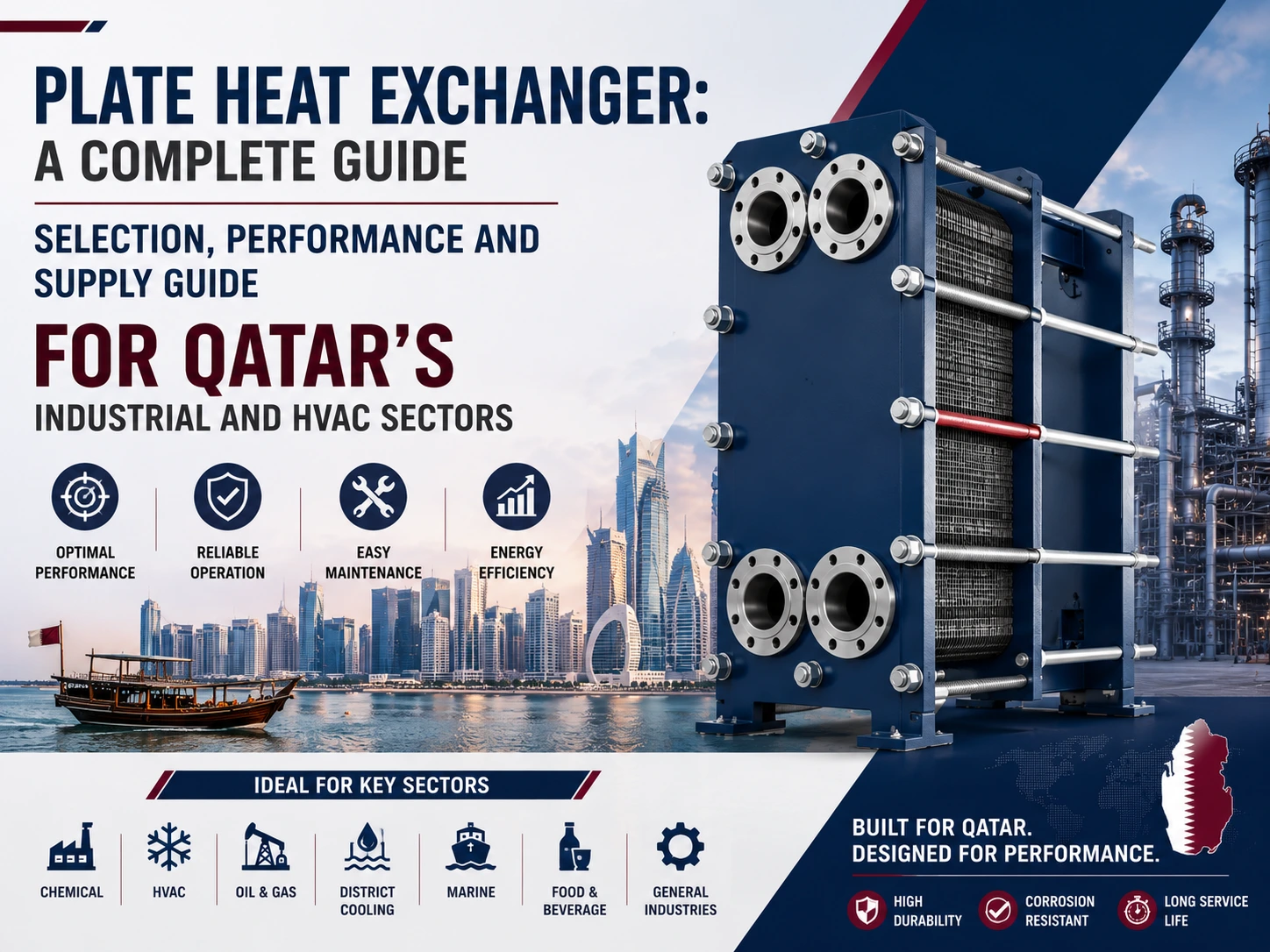
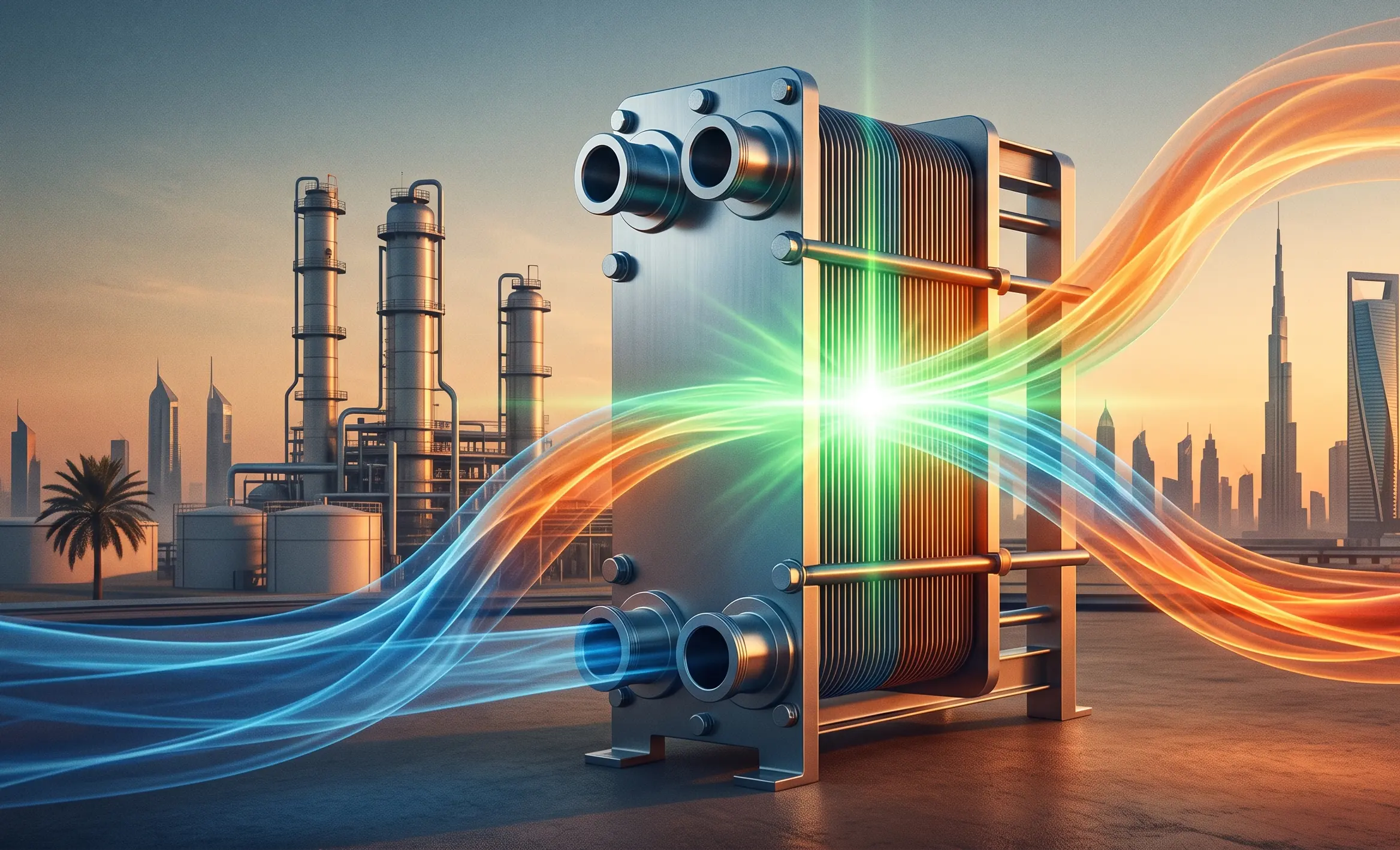
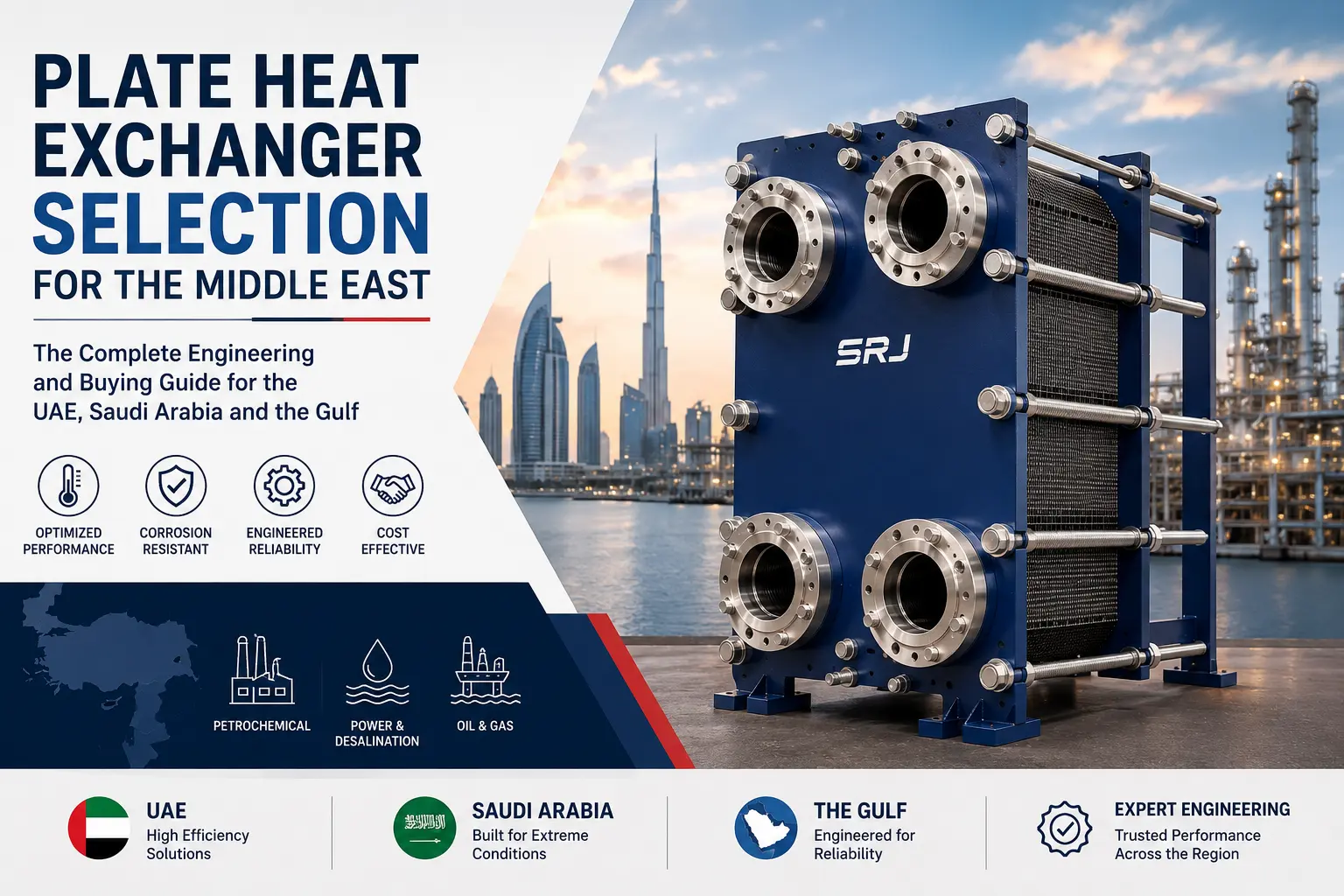
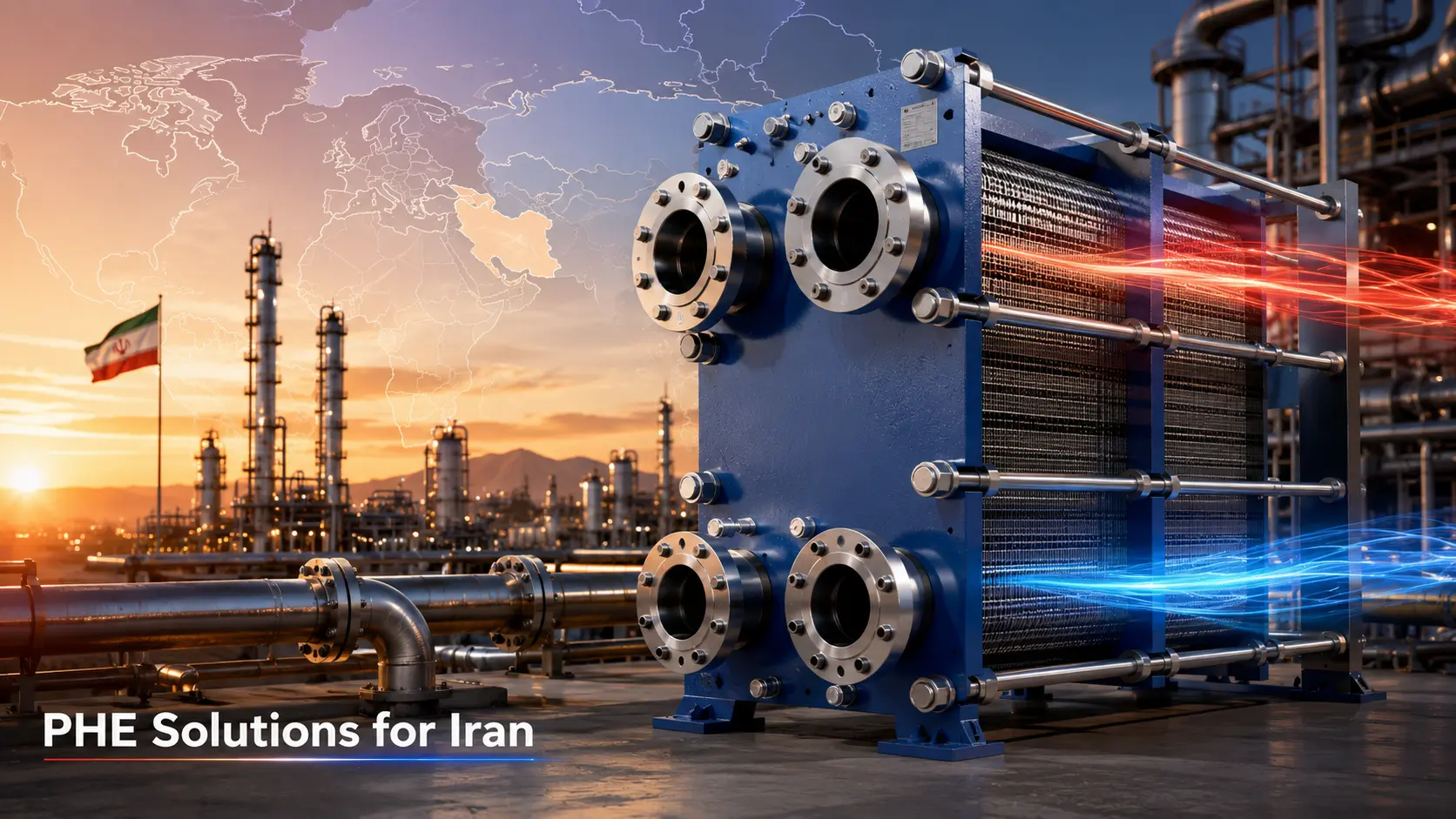
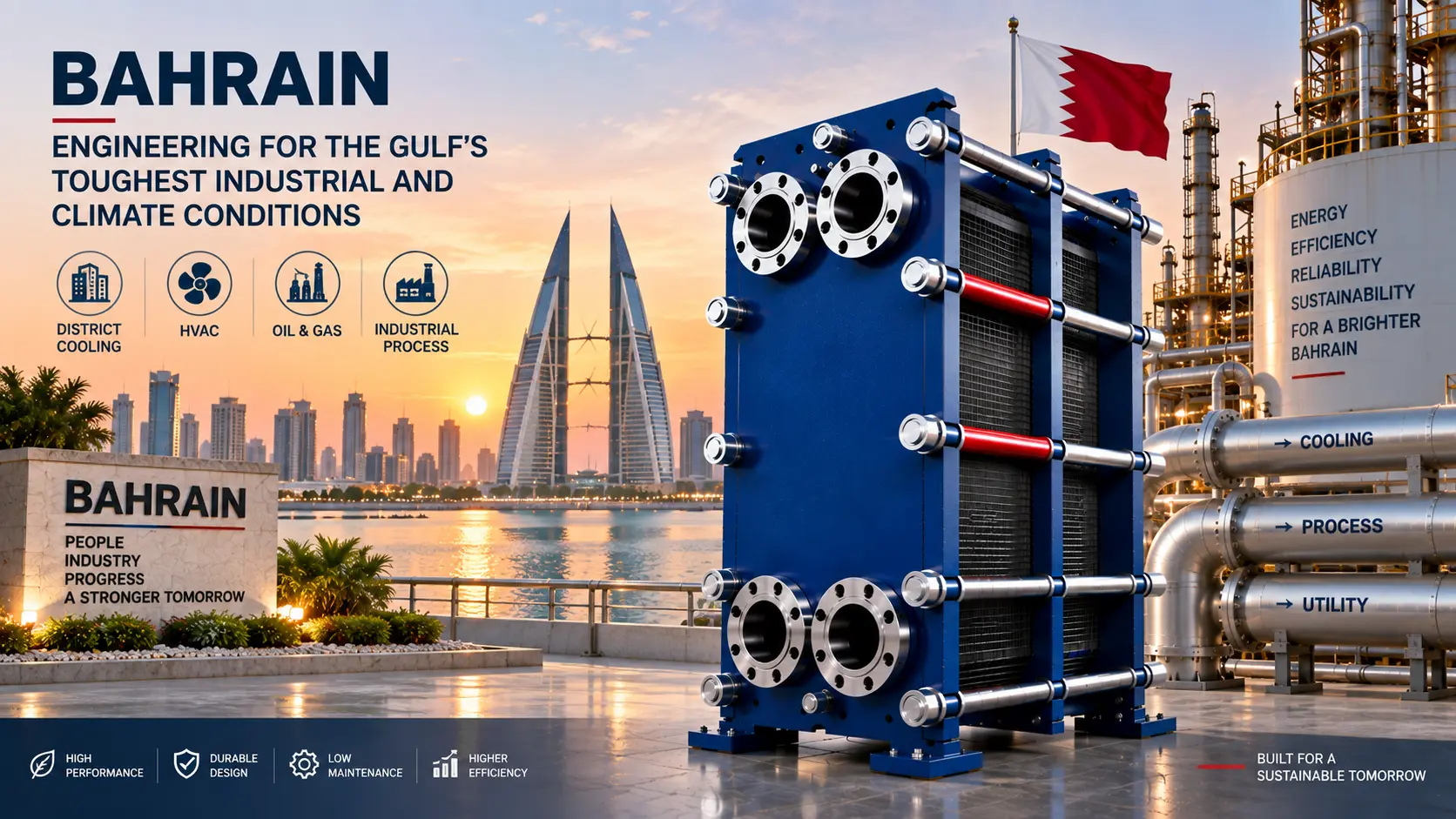
Bahrain presents an unusual combination of demands for anyone sourcing thermal equipment: heavy industrial cooling duties tied to oil refining, petrochemicals and aluminium smelting, sitting alongside a climate that pushes ambient temperatures past 45 degrees Celsius for months at a time. Finding the right plate heat exchanger manufacturers in Bahrain means finding a partner who understands both ends of that spectrum, not just one.
Bahrain’s Industrial Landscape and What It Demands from a Heat Exchanger
The Sitra Industrial Area, on the island south of Muharraq, is Bahrain’s primary heavy-industry zone. It houses the Bahrain Petroleum Company’s Sitra refinery, the Gulf Petrochemical Industries Company’s ammonia, methanol and urea complex, and Banagas’s gas-processing facility. Refining and petrochemical operations here run continuous, high-volume cooling duties — crude preheating, product cooling, and utility water systems — often at elevated pressure and with process streams that are anything but forgiving of the wrong material choice.
Aluminium Bahrain, one of the world’s largest single-site aluminium smelters, adds a distinct cooling profile of its own. Potline and casting operations generate sustained thermal loads with cooling water carrying a meaningful particulate burden, which changes how a plate heat exchanger needs to be spaced and maintained compared with a clean-water duty.
Bahrain’s Electricity and Water Authority runs combined power and desalination plants that depend on efficient heat recovery and seawater cooling stages, where Gulf seawater’s high salinity and elevated ambient temperature push material selection toward corrosion-resistant alloys well beyond what a freshwater duty would need.
Away from heavy industry, Manama’s commercial towers and waterfront developments such as Bahrain Bay and Diyar Al Muharraq depend on district cooling and building HVAC systems to manage a climate where cooling isn’t seasonal — it’s a year-round structural load on every mechanical system in the building.
Plate Heat Exchanger Supplier in Bahrain: What Changes When You’re Importing
Bahrain has limited domestic plate heat exchanger manufacturing capacity, which means most buyers are effectively evaluating a plate heat exchanger supplier in Bahrain who is really an import channel back to a manufacturer elsewhere — commonly India, given the established trade lane and cost-competitive, ISO-certified production base. That changes the questions worth asking. Lead time matters more than it would for a domestic purchase: confirm whether the unit ships by sea (typically the more economical route) or air (for urgent replacement needs), and get a realistic port-to-site timeline through Khalifa Bin Salman Port rather than a factory-gate date alone.
Documentation matters just as much as the hardware. Bahrain’s major industrial buyers — Bapco, GPIC, Alba and EWA among them — run procurement processes that expect full material test certificates, hydro-test reports, and compliance with the relevant ASME or API standard for the duty, not just a product datasheet. A supplier who can’t produce that paperwork alongside the unit will slow down your own commissioning schedule.
Industrial Heat Exchanger in Bahrain: Getting Material Selection Right
Selecting the right industrial heat exchanger in Bahrain starts with the fluid, not the catalogue. For seawater cooling circuits common in desalination and power-plant applications, titanium plates are the standard choice — Gulf seawater’s chloride content and elevated temperature will pit and crack standard stainless steel over time in ways that don’t show up until a leak has already started.
For GPIC-type ammonia and methanol duties, gasket compound selection needs particular attention: EPDM generally performs far better than nitrile rubber against ammonia exposure, since nitrile degrades relatively quickly in that environment. For Alba’s particulate-heavy cooling water, wide-gap plate designs resist the fouling and blockage that standard narrow channels are prone to under a heavy solids load. For Bapco’s refinery-side cooling and heat-recovery duties, welded or semi-welded construction is often warranted wherever the process side carries hydrocarbons at temperature and pressure combinations a gasketed unit isn’t rated for.
HVAC Plate Heat Exchanger in Bahrain: Cooling for a Climate That Never Really Cools Down
An HVAC plate heat exchanger in Bahrain does a different job than the same equipment would do in a temperate climate. District cooling plants serving Manama’s towers and the Gulf’s waterfront developments use plate heat exchangers primarily to isolate the chilled-water loop feeding building interiors from the condenser water loop rejecting heat to cooling towers or seawater — protecting expensive chiller plant from the fouling and corrosion that raw cooling-tower or seawater exposure would otherwise cause.
Because Bahrain’s cooling load runs high for most of the year rather than peaking seasonally, HVAC plate heat exchangers here are sized against a much higher duty cycle than the same equipment would see in a four-season climate, which makes plate count, flow velocity and fouling margin decisions correspondingly more consequential to long-term energy cost.
A Practical Framework for Evaluating a Bahrain-Bound Supplier
- Ask for a thermal datasheet specific to your fluid and site conditions, including Gulf seawater temperature and salinity data where relevant, not a generic clean-water sizing.
- Confirm plate material explicitly for any seawater or high-chloride duty — titanium should be the default discussion point, not an upsell you have to request.
- For ammonia, methanol or hydrocarbon duties, confirm gasket compound compatibility and, where needed, welded or semi-welded construction with supporting documentation.
- Verify ISO 9001 certification and ask what material test certificates and hydro-test reports ship with the unit.
- Confirm shipping method, realistic port-to-site lead time, and after-sales support arrangements before committing, since a unit with no local service backing becomes expensive to maintain the moment something needs adjusting.
Why Manufacturer Choice Matters for Bahrain Buyers
Working directly with a manufacturer rather than a pure trading intermediary matters more, not less, across a long shipping lane. SRJ Heatt Exchangers India Pvt. Ltd. manufactures gasketed, welded, semi-welded, brazed and wide-gap plate heat exchangers to ISO 9001 standards, with export documentation and material certification built into the production process rather than assembled after the fact — a detail that matters when a Bahrain-based EPC contractor or plant engineer needs full traceability for a Bapco or GPIC-linked project.
Maintenance Under Gulf Operating Conditions
Higher ambient and process temperatures generally accelerate both fouling and gasket aging compared with temperate-climate operation, so inspection intervals that work well elsewhere may need to be shortened for Bahrain-based units. Seawater-cooled circuits should be checked specifically for chloride-related pitting at plate edges and around gasket grooves, since this failure mode develops gradually and isn’t always obvious from external inspection alone. As with any plate heat exchanger, a rising pressure drop signals fouling, a falling outlet temperature signals reduced heat transfer, and any weeping at the frame edge calls for immediate gasket inspection rather than a wait-and-see approach.
What Drives Cost for a Bahrain-Bound Unit
Material selection is the dominant cost factor here more than in most markets, since titanium plates for seawater duty cost substantially more than standard stainless. Beyond material, total heat-transfer area, pressure and temperature rating, and frame construction set the base price, with freight, Bahrain’s standard import duty of roughly five percent, and documentation costs adding to the landed total. Comparing quotes on landed cost with full certification included, rather than ex-works price alone, gives a far more accurate picture of what a unit actually costs to get operational.
Frequently Asked Questions
Why do plate heat exchanger manufacturers in Bahrain typically mean an import relationship rather than local production?
Bahrain has limited domestic plate heat exchanger manufacturing capacity, so most buyers work with an established manufacturer abroad — commonly in India — through a local supplier or agent who manages import logistics and documentation.
What plate material is recommended for seawater cooling in Bahrain?
Titanium is the standard recommendation for seawater and high-chloride duties, since Gulf seawater’s salinity and elevated temperature accelerate pitting and corrosion in standard stainless steel over time.
What should I check before choosing a plate heat exchanger supplier in Bahrain?
Confirm ISO 9001 certification, ask for material test certificates and hydro-test reports specific to the unit, and get a realistic shipping method and port-to-site lead time rather than relying on a factory-gate date alone.
Which gasket material works best for ammonia service, such as GPIC-type petrochemical duties?
EPDM generally performs better than nitrile rubber against ammonia exposure, since nitrile compounds tend to degrade more quickly in that environment.
How is an HVAC plate heat exchanger in Bahrain different from one used in a temperate climate?
Because Bahrain’s cooling demand runs high for most of the year rather than peaking seasonally, HVAC units here operate against a much higher duty cycle, making sizing decisions around plate count and fouling margin more consequential to long-term energy cost.
What documentation should accompany an industrial heat exchanger in Bahrain for major buyers like Bapco or GPIC?
Full material test certificates, hydro-test reports, and compliance documentation against the relevant ASME or API standard, in addition to the standard product datasheet.
How does Bahrain’s climate affect plate heat exchanger maintenance schedules?
Higher ambient and process temperatures generally accelerate fouling and gasket aging, so inspection intervals suited to temperate climates often need to be shortened for units operating in Bahrain.
What’s the biggest cost driver for a plate heat exchanger destined for Bahrain?
Material selection, particularly titanium plates required for seawater or high-chloride service, which cost substantially more than standard stainless and should be compared on landed cost rather than ex-works price alone.
Conclusion
Bahrain’s combination of heavy petrochemical, refining and aluminium industry alongside a climate that keeps cooling demand high year-round makes material selection and documentation the two factors that matter most in any sourcing decision. SRJ Heatt Exchangers India Pvt. Ltd. manufactures its full range of gasketed, welded, semi-welded, brazed and wide-gap plate heat exchangers to the material and certification standards Bahrain’s Sitra refining and petrochemical complex, Alba’s aluminium operations, and the Gulf’s district cooling infrastructure all require, with export documentation built in from the start rather than added on request.