
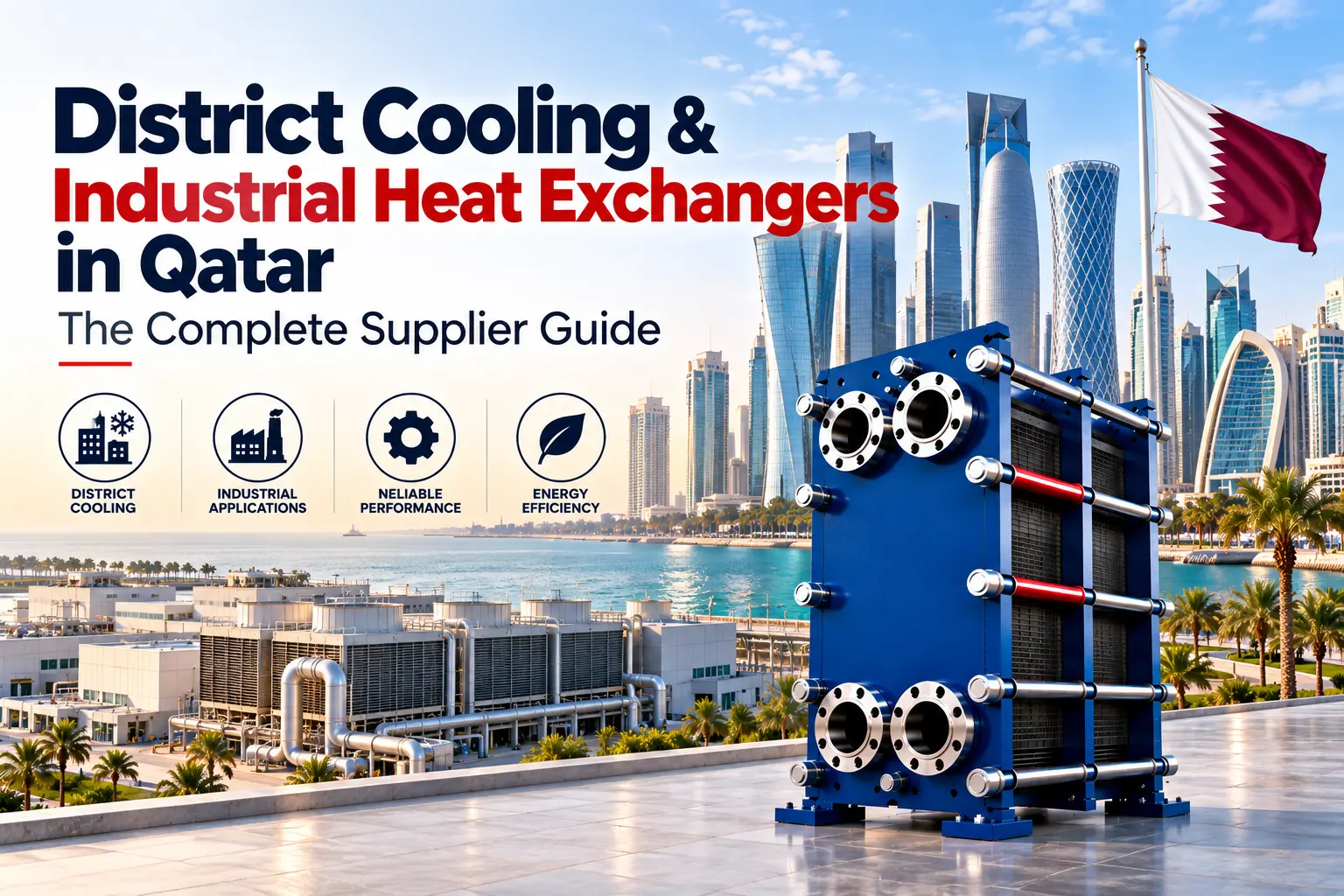
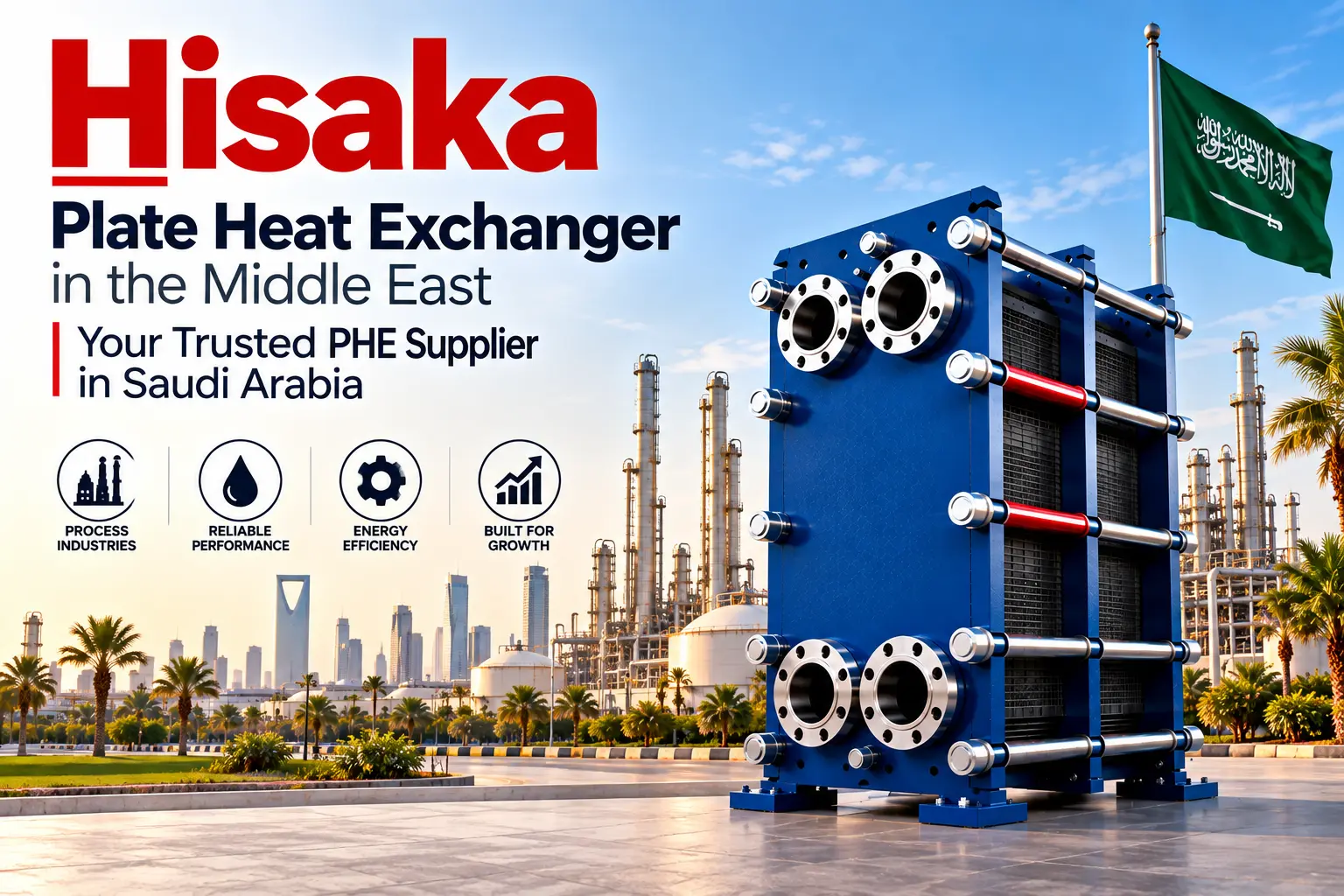
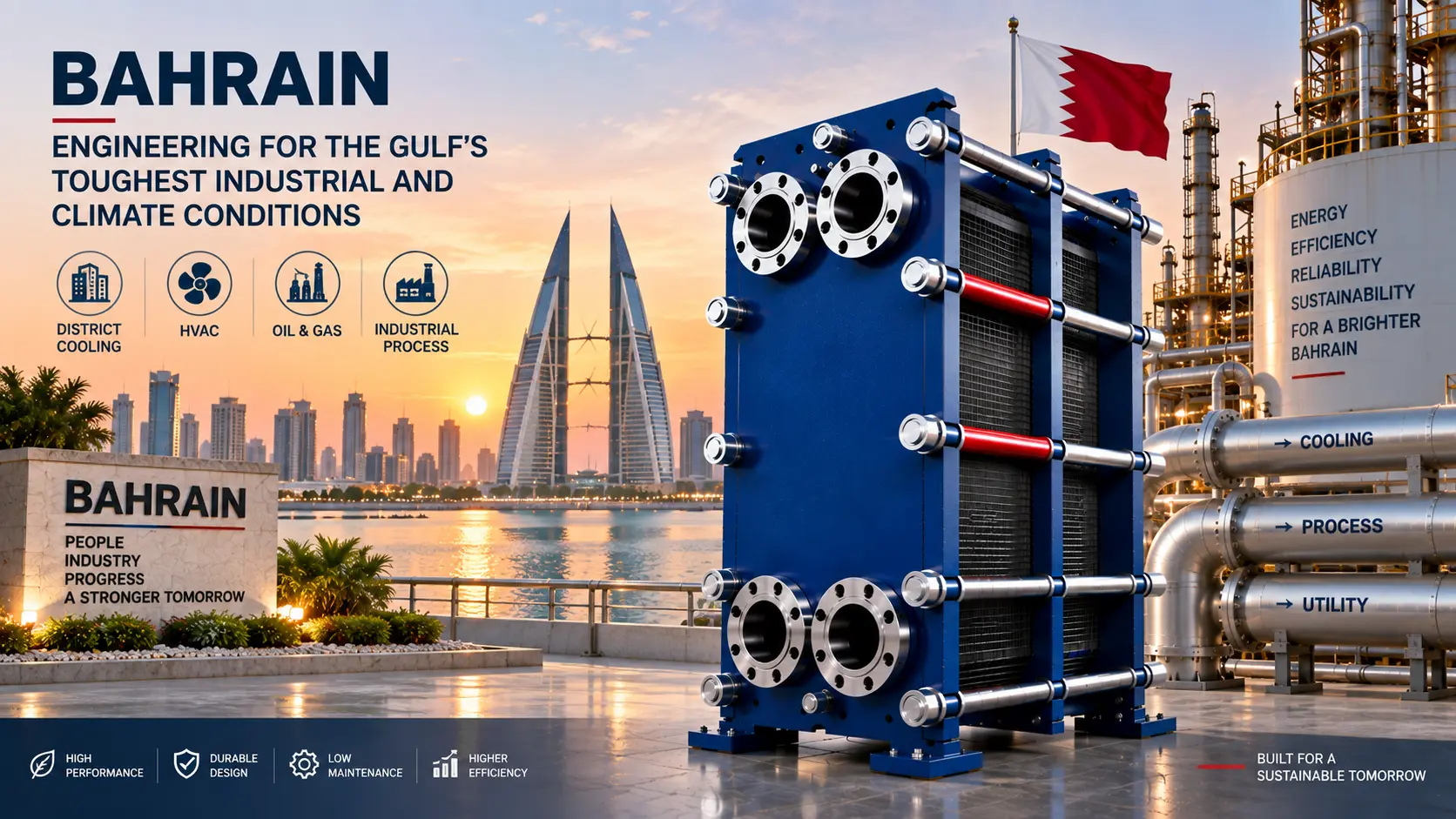
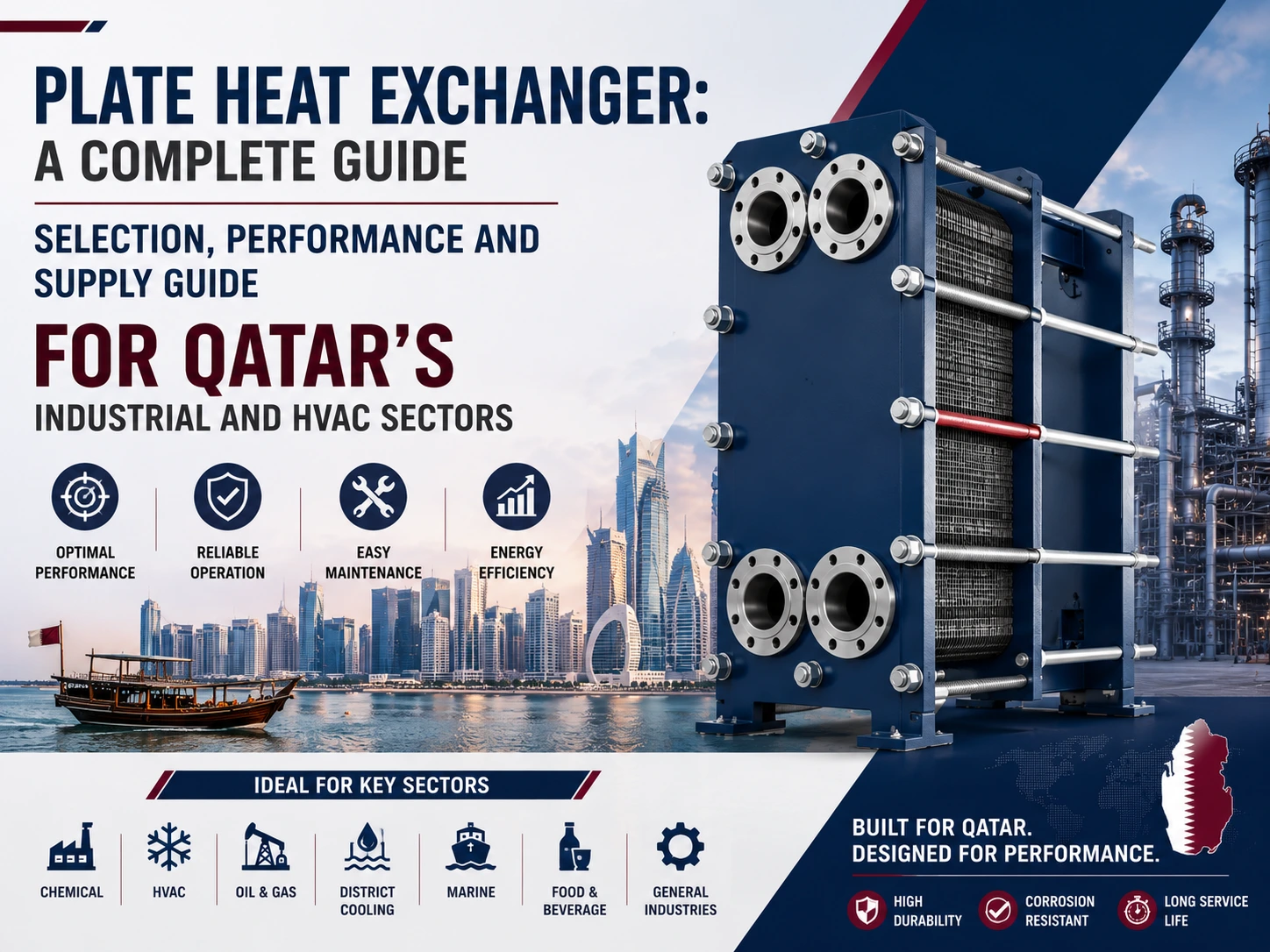
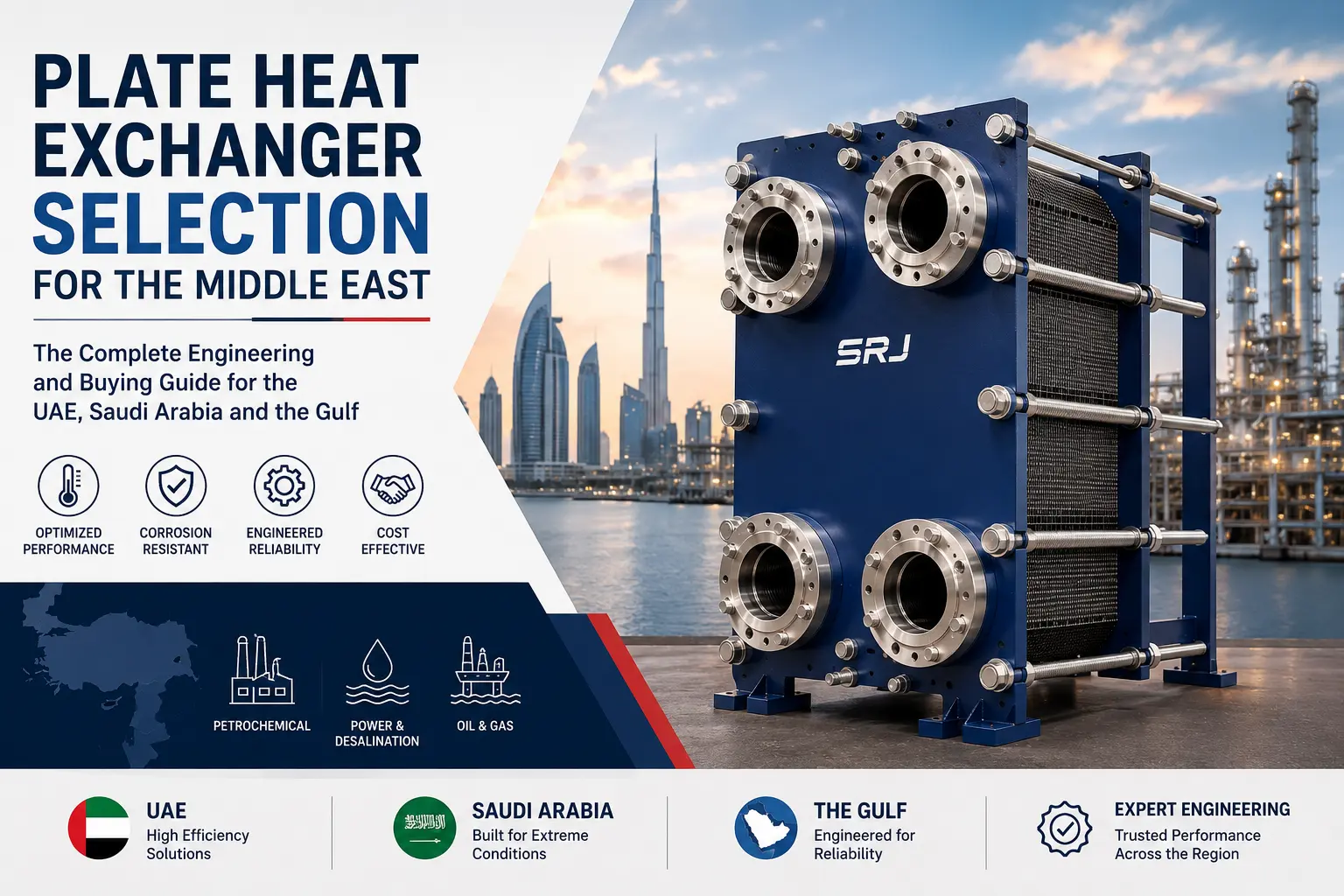

A plate heat exchanger is a compact heat transfer device that uses a stack of thin, corrugated metal plates to move thermal energy between two fluids without letting them mix. Across the Gulf’s process industries — oil and gas, petrochemicals, desalination, district cooling, food processing, and marine — this equipment has become the default choice over older shell-and-tube designs, largely because of its footprint, efficiency, and serviceability.
If you’re evaluating plate heat exchanger manufacturers in UAE, comparing plate heat exchanger suppliers in UAE, or sourcing reliable PHE gasket manufacturers in UAE, this guide covers the engineering, selection, and procurement decisions that matter most — for buyers across the UAE, Saudi Arabia, Oman, Qatar, Bahrain, and Kuwait.
How a Plate Heat Exchanger Actually Works
Each plate in a PHE is pressed with a herringbone or chevron pattern. When plates are clamped together in a frame, these patterns create narrow, turbulent flow channels. Hot fluid runs through alternating channels while cold fluid runs through the channels next to them, separated only by a thin plate wall. That thin wall, combined with turbulence induced by the corrugations, is why plate exchangers achieve overall heat transfer coefficients several times higher than tube bundles of similar size.
Turbulence matters more than most buyers realize. In a shell-and-tube unit, laminar flow near the tube wall creates a thermal boundary layer that resists heat transfer. Chevron plates disrupt that boundary layer continuously, which is why a PHE rated for a given duty can often be 20–30% the size of an equivalent shell-and-tube unit — a real advantage on offshore platforms and space-constrained plant rooms across GCC facilities.
Why Gulf Industries Have Shifted Toward Plate Technology
Three regional factors drive this shift:
High ambient temperatures push cooling loads higher year-round across the UAE, Saudi Arabia, Qatar, Bahrain, Kuwait, and Oman, so compact, high-efficiency exchangers reduce chiller and cooling tower sizing.
Desalination and district cooling growth across the region has created sustained demand for exchangers that handle high-TDS seawater and brackish water without excessive fouling. The International Energy Agency has documented the rising energy intensity of desalination in Gulf economies, which puts added pressure on heat transfer efficiency at every stage of the process.
Space and weight constraints on offshore and modular skids in the oil and gas sector make the compact PHE footprint a design necessity rather than a preference.
Gasketed vs. Brazed vs. Welded: Choosing the Right Type
Not every plate exchanger is built the same way, and picking the wrong type is one of the most expensive mistakes a procurement team can make.
Gasketed Plate Heat Exchangers
These use elastomer gaskets to seal each plate channel and hold the pack together in a bolted frame. They’re fully serviceable — plates can be removed, cleaned, and re-gasketed — making them the standard choice for cooling water circuits, HVAC, and any duty with fouling potential. The gasket material (NBR, EPDM, or Viton/FKM) has to match the fluid chemistry and temperature; this is where a lot of premature failures originate.
Brazed Plate Heat Exchangers
Plates are copper- or nickel-brazed into a single fixed unit with no gaskets. They handle higher pressures and temperatures in a smaller package but cannot be opened for mechanical cleaning — if fouling occurs, chemical cleaning-in-place is the only option. These suit refrigeration, heat pump, and closed clean-fluid loops well.
Fully Welded and Semi-Welded Plate Heat Exchangers
Used where gaskets can’t survive the process fluid — aggressive chemicals, high-temperature thermal oil, or refrigerants incompatible with elastomers. Semi-welded designs weld one fluid channel shut while keeping the other gasketed, a useful middle ground for ammonia refrigeration systems common in Gulf cold-storage and food-processing plants.
What Actually Determines PHE Performance
Buyers often compare heat exchangers on price and plate count alone. Performance is really governed by four variables working together:
- Plate corrugation angle — steeper chevron angles (high-theta) increase turbulence and heat transfer but raise pressure drop; shallower angles (low-theta) suit high-flow, low-fouling duties.
- Plate material — 304 and 316 stainless steel cover most duties; titanium and SMO 254 are specified for seawater cooling and high-chloride environments, directly relevant for coastal plants along the Arabian Gulf and Red Sea in the UAE, Saudi Arabia, Qatar, and Bahrain.
- Gasket chemistry and temperature rating — EPDM typically tops out lower than Viton in high-temperature service; the wrong gasket in a hot condensate line is a common cause of early leaks.
- Flow arrangement (single-pass vs. multi-pass) — multi-pass configurations extend residence time for duties needing a close temperature approach, at the cost of higher pressure drop.
Design references such as ASHRAE’s technical resources and ASME Boiler and Pressure Vessel Code, Section VIII remain the baseline for evaluating whether a manufacturer’s design methodology is sound.
Sourcing: What to Verify Before You Commit
When evaluating plate heat exchanger manufacturers in UAE or wider Gulf suppliers, procurement and engineering teams should confirm the following before issuing a purchase order:
- Material traceability — mill certificates for plate and gasket materials, especially for pressure-retaining parts.
- Design code compliance — ASME Section VIII for the frame and pressure boundary, and the EU’s Pressure Equipment Directive (PED) for European-origin equipment entering GCC free zones.
- Thermal design software validation — ask for the rating sheet, not just a quotation; a proper thermal design shows approach temperature, pressure drop, and fouling margin assumptions.
- Gasket interchangeability — confirm whether gaskets are proprietary (locking you into one supplier) or compatible with standard plate patterns, which matters enormously for long-term spares availability.
- Local stocking of spares — plate packs, gaskets, and tie bolts held in-region reduce shutdown risk versus importing on demand.
SRJ Heatt Exchangers India Pvt. Ltd. supplies plate heat exchangers and PHE spare parts to processing and utility plants across the UAE and the wider Middle East, and one pattern shows up consistently in field visits: plants that standardize on one plate pattern across multiple duties cut spare-parts inventory complexity substantially compared with plants running mixed patterns from different sources.
Installation Considerations Specific to Gulf Conditions
Ambient temperature affects more than cooling load calculations — it affects installation sequencing too. Gasket seating and initial tightening torque should ideally happen at a stable ambient temperature; installing a gasketed pack during peak midday heat in an uncooled plant room can lead to under-tightening once temperatures drop overnight, showing up as a weep leak within the first week of operation.
Piping supports also deserve attention. Plate exchangers are lighter than shell-and-tube units, but frame distortion from unsupported inlet/outlet piping is a frequent, avoidable cause of gasket misalignment.
Maintenance: Where Most Failures Actually Start
Field experience across GCC cooling water and process duties consistently points to three root causes behind premature PHE failure:
Fouling from untreated cooling water. Calcium carbonate scaling accelerates in the Gulf’s naturally hard water sources, reducing effective heat transfer area within months if water treatment is inadequate. A basic conductivity and hardness monitoring routine catches this early.
Gasket degradation from incorrect chemical cleaning. Using caustic or acid concentrations meant for a different gasket material is one of the most common self-inflicted failures reported by maintenance teams. Always match cleaning chemistry to the gasket elastomer, not just the fouling type.
Incorrect re-assembly torque after cleaning. Plate packs need to be re-tightened to the manufacturer’s specified dimension, or the unit will bypass flow around under-compressed gaskets. Keeping a torque log per unit avoids guesswork at the next shutdown.
A practical preventive maintenance interval for cooling water duty in Gulf conditions is inspection every 6–12 months, with cleaning frequency adjusted based on measured approach-temperature drift rather than a fixed calendar schedule — units in high-TDS seawater service typically need shorter intervals than closed-loop chilled water units.
PHE Gaskets: The Component That Determines Real Service Life
Gaskets are consumable by design, but sourcing decisions here have an outsized impact on total cost of ownership. When comparing PHE gasket manufacturers in UAE or other regional suppliers, the questions worth asking are:
- Is the gasket compression-molded or glue-applied? Compression-molded gaskets typically offer better long-term sealing and are less prone to detachment during cleaning.
- Does the supplier provide elastomer compatibility charts for your specific process fluid, not just generic temperature ratings?
- Can the gasket be matched to your existing plate pattern without re-engineering the frame?
Buyers who standardize gasket sourcing with a supplier that also understands plate design — rather than treating gaskets as a generic rubber commodity — tend to see fewer unplanned shutdowns tied to sealing failures.
Cost Factors Beyond the Purchase Price
Initial unit cost is a small part of lifecycle cost. The variables that matter more over a 10–15 year service life:
- Energy cost impact of fouling-driven efficiency loss (a fouled exchanger forces pumps, chillers, or boilers to work harder to hit the same duty)
- Frequency and cost of gasket replacement, heavily influenced by chemical compatibility choices made at specification stage
- Downtime cost during cleaning — cassette-style plate packs that open quickly for cleaning reduce maintenance window length
- Spares availability lead time, which matters more in the Gulf given import lead times for niche plate patterns
Selecting the Right Supplier: A Practical Checklist
- Does the supplier provide a documented thermal design, not just a spec sheet?
- Can they support both new installations and retrofits or plate replacements for existing frames?
- Do they hold regional stock, or is every order shipped from overseas with long lead times?
- Can they advise on material upgrades (titanium, SMO 254) for high-chloride or seawater duty?
- Do they offer after-sales technical support for troubleshooting, not just equipment sales?
Key Takeaways
- Plate heat exchangers outperform shell-and-tube units on footprint and efficiency, making them the standard choice across Gulf process industries.
- Gasketed, brazed, and welded designs serve different duties — matching type to fluid chemistry and serviceability needs is the first selection decision.
- Material selection (304/316 stainless vs. titanium/SMO 254) should be driven by chloride exposure, a real consideration for coastal facilities in the UAE, Saudi Arabia, Qatar, Bahrain, Oman, and Kuwait.
- Most premature failures trace back to fouling, incorrect cleaning chemistry, or improper re-assembly torque — not manufacturing defects.
- Total cost of ownership is shaped far more by gasket sourcing, spares availability, and maintenance discipline than by initial purchase price.
Conclusion
A plate heat exchanger is only as good as the specification behind it and the maintenance discipline applied after installation. For buyers across the UAE and the wider Middle East — including Saudi Arabia, Oman, Qatar, Bahrain, and Kuwait — the real differentiators aren’t marketing claims but material traceability, correct gasket chemistry, validated thermal design, and a supplier who can support the unit for its full service life. SRJ Heatt Exchangers India Pvt. Ltd. works with processing, utility, and OEM customers across the region on exactly these decisions, from initial thermal sizing through to long-term spares support, which ultimately determines whether a plate heat exchanger installation performs reliably for ten-plus years or becomes a recurring maintenance line item.
FAQ Section
- What is a plate heat exchanger used for? It transfers heat between two fluids — such as process water and cooling water, or refrigerant and brine — without mixing them, commonly in HVAC, desalination, oil and gas processing, and food and beverage applications.
- How does a plate heat exchanger differ from a shell-and-tube exchanger? A PHE uses corrugated plates to create turbulent flow and a large surface area in a compact frame, giving higher heat transfer efficiency per unit volume than shell-and-tube designs, which typically need more space for the same duty.
- Which is better — gasketed or brazed plate heat exchangers? Neither is universally better; gasketed units suit duties needing periodic mechanical cleaning and serviceability, while brazed units suit compact, high-pressure, clean-fluid applications like refrigeration where full serviceability isn’t required.
- How often should a plate heat exchanger be cleaned? Typical guidance is inspection every 6–12 months for cooling water duty, but the real trigger should be measured approach-temperature drift rather than a fixed calendar — seawater and high-TDS duties often need more frequent attention.
- What causes plate heat exchanger gasket failure? The most common causes are chemical incompatibility between cleaning agents and the gasket elastomer, incorrect re-assembly torque after maintenance, and operating temperatures beyond the gasket’s rated range.
- How much does a plate heat exchanger cost? Purchase price varies widely by plate material, area, and pressure rating, but lifecycle cost is driven more by gasket replacement frequency, fouling-related energy loss, and spares lead time than by the initial unit price.
- What plate material should I choose for seawater cooling? Titanium or SMO 254 are typically specified for seawater and high-chloride duties because standard 316 stainless steel is prone to chloride-induced pitting in these conditions.
- Can plate heat exchangers be retrofitted into an existing frame? In many cases yes, provided the new plate pattern and gasket type are compatible with the existing frame dimensions and tie-bolt spacing — this is worth confirming with the supplier before ordering replacement plates.
- How do I choose between suppliers across the UAE and wider Gulf region? Prioritize suppliers who provide documented thermal designs, hold regional spares stock, support material upgrades for chloride exposure, and offer ongoing technical support rather than one-time equipment sales.
- Why is fouling a bigger issue in Gulf countries specifically? Naturally hard water sources and high ambient temperatures accelerate scaling and biological fouling, making water treatment and monitoring more critical for plate exchanger longevity in this region than in cooler, softer-water climates.