
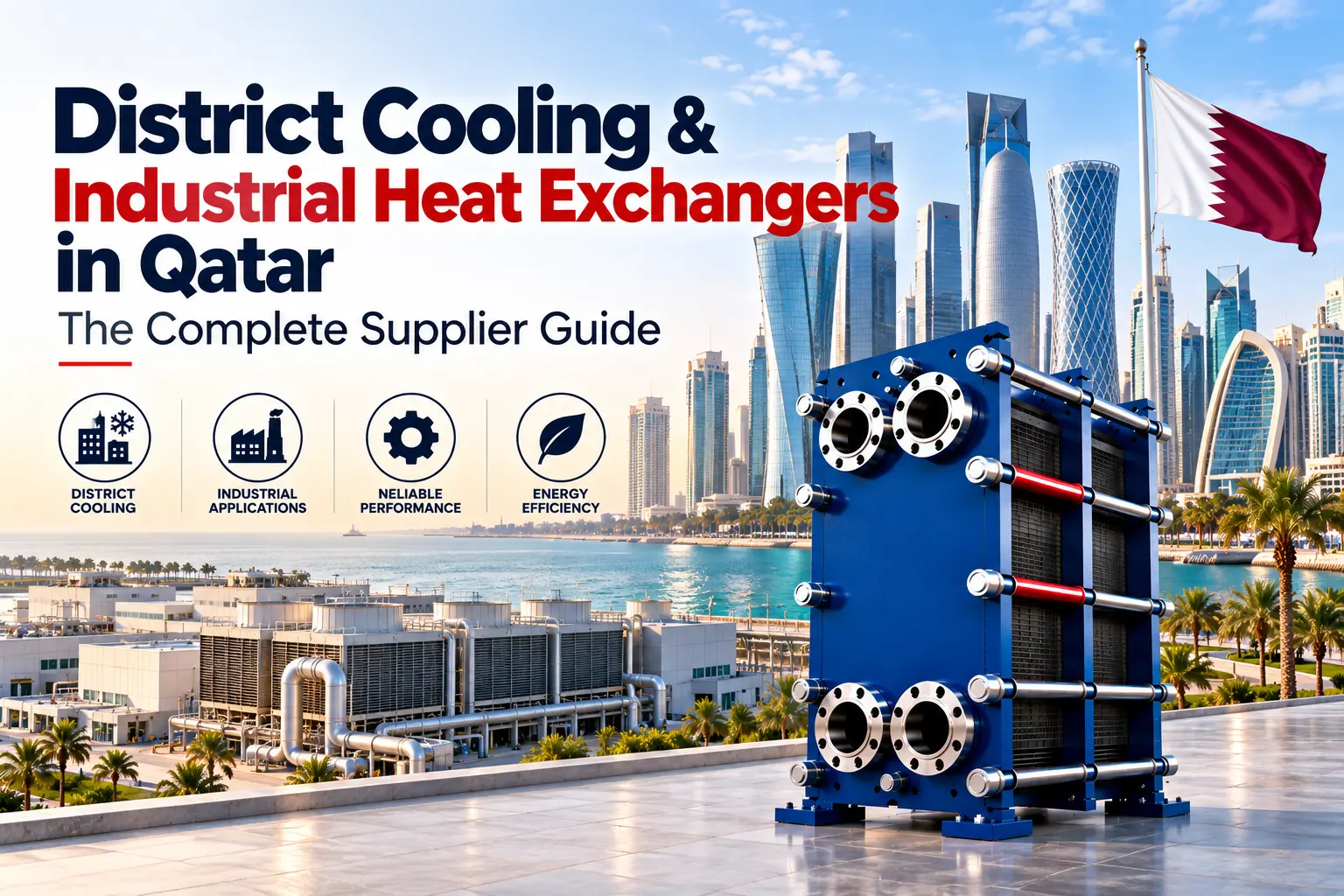
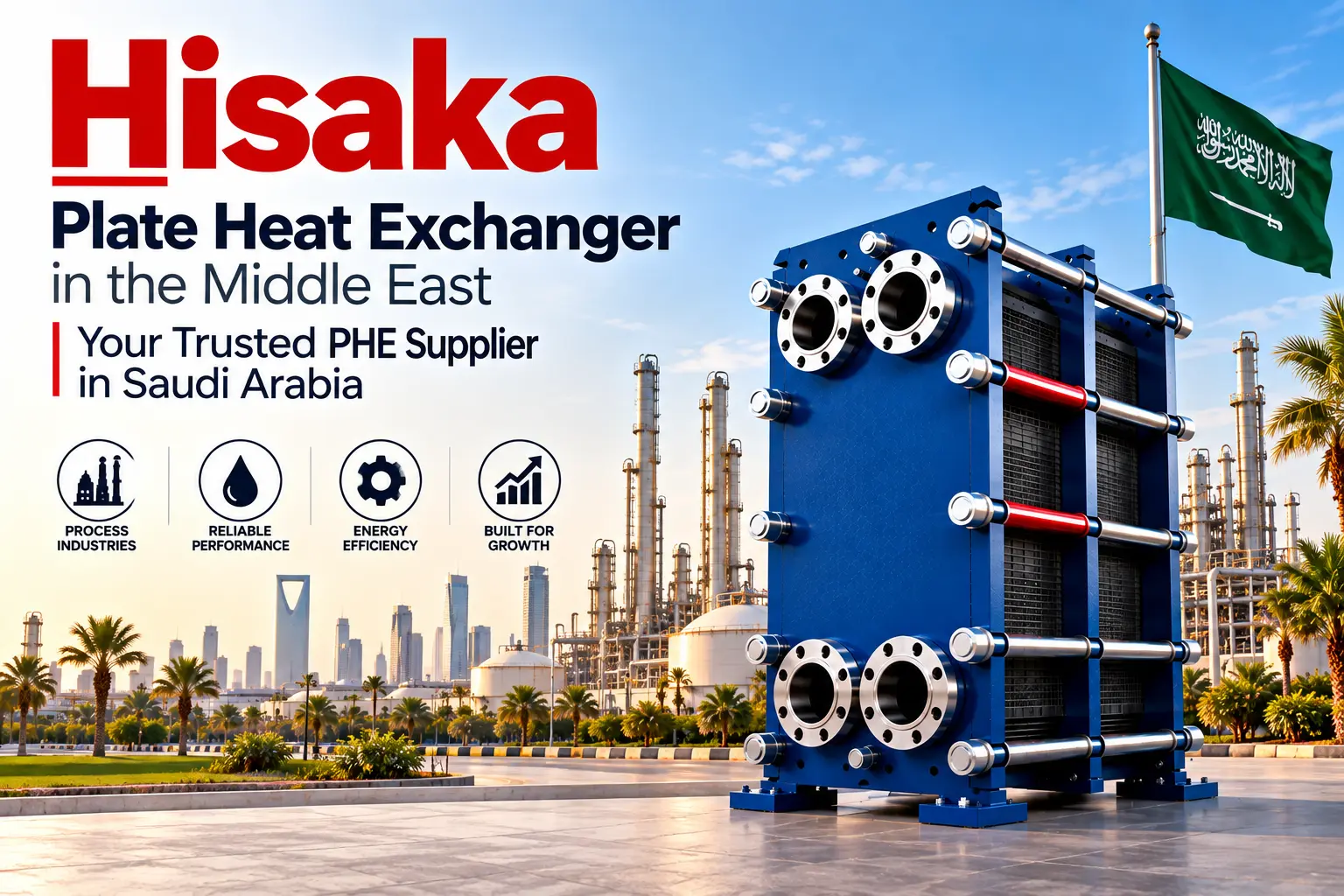
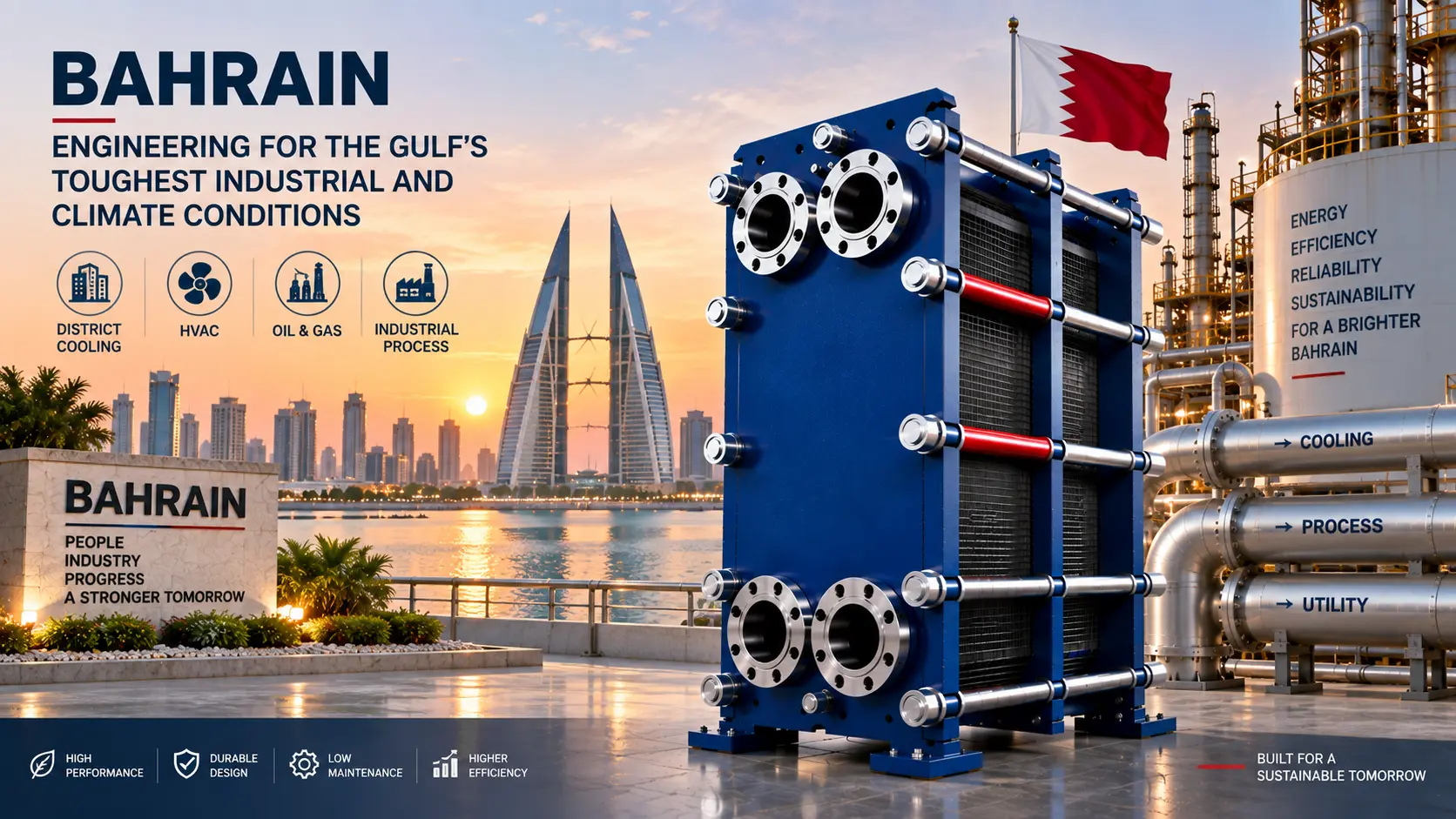
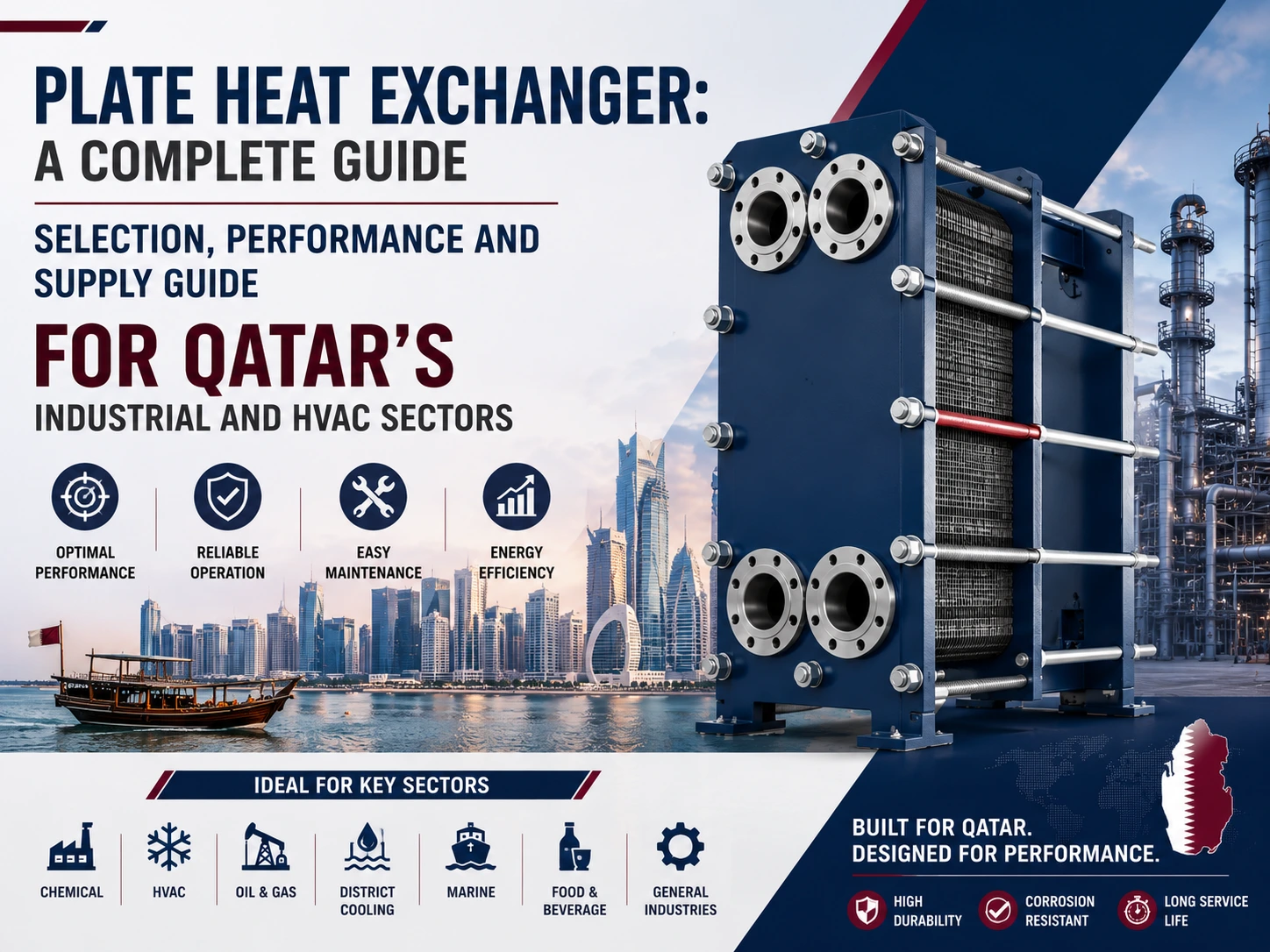

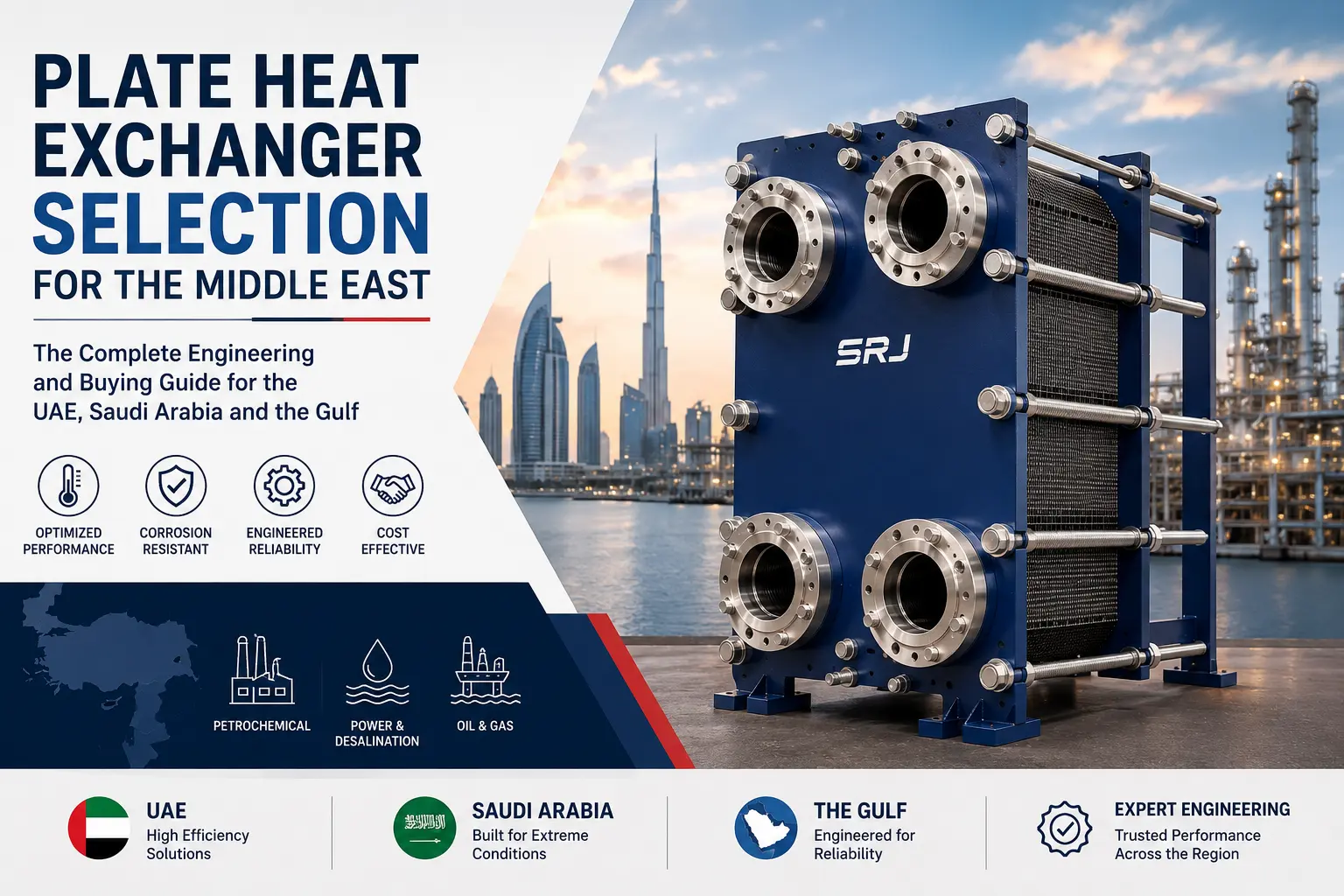
A plate heat exchanger is one of those rare pieces of equipment that determines, day after day, whether a Gulf facility runs lean or quietly wastes energy and money. In a region where summer ambient temperatures cross 45°C, where cooling is a survival requirement rather than a comfort, and where seawater is simultaneously a free resource and a relentless corrosion threat, the difference between a well-specified unit and a catalogue-driven guess is enormous. This guide is written for the engineers, procurement managers, consultants, and facility owners across the UAE, Saudi Arabia, Qatar, Oman, Kuwait, and Bahrain who would rather make an informed decision than inherit someone else’s mistake.
Most material available online on this subject falls into two camps: thin product pages that list specifications, or paid market reports that quote forecasts. Neither explains how the Gulf’s specific operating reality should actually shape your selection, sizing, material choice, and maintenance strategy. That is the gap this guide closes, and it goes considerably deeper than the typical overview.
Why the Gulf Depends So Heavily on Plate Heat Exchangers
The reasoning is mostly physics and economics. A plate heat exchanger transfers heat through thin, corrugated metal plates clamped together in a frame, with hot and cold fluids flowing through alternating channels. The corrugations force the fluid into turbulent flow even at modest velocities, and turbulence is what drives heat transfer. The result is a heat transfer coefficient roughly three to four times higher than a comparable shell-and-tube exchanger. In practical terms, you achieve the same thermal duty in a fraction of the floor space and weight, and you can open the frame to clean or replace plates without scrapping the entire system.
For the Gulf, that compactness and serviceability map almost perfectly onto how the region operates. District cooling plants in Dubai, Abu Dhabi, Doha, and Riyadh lean on large gasketed plate-and-frame units to transfer energy between central chilled-water plants and building substations. Desalination facilities use them for brine cooling and waste-heat recovery. Petrochemical complexes in Jubail, Yanbu, and Ruwais deploy them throughout process trains as interchangers, coolers, and condensers. The common thread is high thermal duty, tight space, and an almost zero tolerance for unplanned downtime.
The demand picture is also structurally upward. Regional diversification programmes, rapid data-centre buildout, the expansion of district energy networks, and the steady replacement of ageing shell-and-tube units with compact, energy-efficient designs are all pushing installed capacity higher each year. The plate heat exchanger is no longer a specialist item in the Gulf; it is core thermal infrastructure.
What Exactly Is a Plate Heat Exchanger, in Plain Terms?
For a quick, snippet-ready definition: a plate heat exchanger is a compact device that moves heat between two fluids using a stack of thin metal plates, keeping the fluids fully separated while heat passes through the plate walls. It heats or cools without the two streams ever mixing, fits into tight plant rooms, and can be serviced one plate at a time. That blend of high efficiency, small footprint, and easy maintenance is exactly why it dominates Gulf cooling and process duties.
Understanding the Four Main Types Before You Buy
A frequent and expensive mistake is treating “plate heat exchanger” as a single product. There are four broad constructions, and choosing the wrong one for a given duty leads to either premature failure or wasted capital.
Gasketed Plate-and-Frame Units
This is the most common and most versatile type. Plates are sealed by elastomer gaskets and clamped between two end frames on tie-bars. The defining advantage is flexibility: you can add or remove plates to change capacity, open the unit fully for mechanical cleaning, and re-gasket in the field. For district cooling substations, HVAC duties, and any application where capacity may change or where fouling demands regular opening, the gasketed unit is usually the right answer.
Brazed Plate Heat Exchangers
Here the plates are vacuum-brazed together with copper (or nickel for ammonia and corrosive duties), eliminating gaskets and frames entirely. The result is a sealed, compact, pressure-tough unit at lower cost, ideal for refrigeration, smaller HVAC loads, and heat pumps. The trade-off is that it cannot be opened for cleaning and cannot be re-plated, so it suits clean, stable fluids rather than fouling-prone or expandable duties.
Welded and Semi-Welded Units
When one or both fluids are too aggressive, too hot, or too high-pressure for an elastomer gasket, welded constructions step in. A semi-welded unit pairs welded plate cassettes for the aggressive fluid with gaskets on the benign side, which is a common choice for refrigerants and certain process chemicals. Fully welded units handle the harshest duties but sacrifice the easy serviceability that makes plate exchangers attractive in the first place.
Knowing which of these four fits your duty is the first real engineering decision, and it should precede any conversation about brand or price.
Plate Heat Exchanger Material Selection for Gulf Conditions
This is where most field failures originate and where buyers most often under-think the problem. The plate material decides whether a unit lasts fifteen years or starts weeping in eighteen months. Gulf conditions are unusually punishing because three threats frequently combine: high chloride content in seawater, elevated ambient and process temperatures, and hard, scaling-prone make-up water.
Stainless Steel 316L for Standard Fresh-Water Duties
For closed-loop chilled water, treated process water, and most HVAC applications, 316L stainless steel is the dependable workhorse. It comfortably handles the temperatures involved and resists the moderate chloride levels found in conditioned water. Specifying titanium here simply wastes capital. The critical caveat is water chemistry: 316L has a chloride threshold, and uncontrolled make-up water that pushes chlorides past that band is precisely what quietly destroys “standard” units. If your water treatment is loose, your material margin disappears, regardless of what the datasheet promised.
Titanium for Seawater and High-Chloride Service
The moment seawater enters the system, the conversation changes entirely. Titanium plates are the industry standard for seawater cooling, desalination brine duties, and any high-chloride stream, because titanium resists the pitting and crevice corrosion that rapidly destroys stainless steel in hot, aerated saltwater. Grade 1 titanium covers most seawater plate duties. Grade 7, an alloy with a small palladium addition, is specified where crevice corrosion risk is severe or where the fluid can periodically become deaerated, because the palladium keeps the metal passive even without dissolved oxygen. The cost premium is real, but in seawater service it is insurance against a far costlier failure. Plants along the Arabian Gulf coast have operated titanium plate units for decades on their original plates, which tells you everything you need to know about the long-term payback.
Super-Austenitic and Nickel Alloys for In-Between Duties
For aggressive chemical streams that exceed 316L but do not strictly require titanium, super-austenitic grades such as SMO 254, or nickel alloys for the harshest media, occupy the middle ground on both cost and corrosion resistance. The right choice depends on a precise read of the fluid chemistry, temperature, and chloride concentration. This is exactly the kind of decision that should be backed by a supplier’s material expertise rather than a guess.
Insist on Material Traceability
Whatever grade you specify, demand traceable material certification. A genuine 316L or titanium plate carries documentation; a downgraded substitute can look identical yet fail catastrophically under chloride attack. In a region where a pinhole leak can contaminate a process batch or shut a cooling loop in peak summer, the few currency units saved on uncertified plates evaporate the first time the unit fails.
The Science of Sizing: Getting the Thermal Design Right
This is the section that thin competitor pages skip, and it is exactly where buyers lose money. Sizing a plate heat exchanger well comes down to feeding the manufacturer accurate process data and understanding the trade-offs that follow.
Start With Honest Process Data
Before anyone quotes a unit, you should be able to state the flow rates of both streams, the inlet and outlet temperatures, the allowable pressure drop, the design pressure and temperature, and the fouling tendency of each fluid. A supplier who quotes without asking for these numbers is guessing, and a guessed unit is a future problem. The thermal design should come back to you as a clear heat balance showing plate count, surface area, calculated pressure drop, and the predicted outlet temperatures.
Understand the Approach Temperature Trade-Off
The “approach” is the gap between the outlet temperature of one stream and the inlet temperature of the other, and it is the heart of the cost-efficiency balance. Pushing for a very close approach (a small temperature gap) extracts more energy and improves efficiency, but it requires more plates and therefore more capital and more pressure drop. Allowing a slightly wider approach saves plates and pumping energy but compromises thermal performance. The correct balance depends on your energy economics, not on a generic rule of thumb. In district cooling, where plant efficiency is everything, a close approach is usually worth the extra plates. In a simple cooler, a wider approach may be perfectly sensible.
Match the Plate Pattern to Your Pump Head
Two units with identical plate area can perform very differently depending on the corrugation, or chevron, angle of the plates. High-theta (steeper) plates create stronger turbulence and higher heat transfer but at the cost of greater pressure drop, while low-theta plates are gentler on both counts. Many manufacturers mix high and low plates within one pack to fine-tune performance to the exact duty. Matching this pattern to your available pump head is what separates an efficient installation from a unit that either underperforms or overwhelms your pumps. This is a genuine engineering nuance that catalogue-only purchasing completely misses.
Specify a Sensible Fouling Margin
Gulf cooling water frequently carries silt, hardness, and biological load. Building a realistic fouling allowance into the design, and selecting a plate pattern that maintains turbulence (turbulence resists fouling), keeps the unit performing between cleanings instead of degrading week by week. Over-specifying the fouling margin, however, bloats the unit and wastes money, so this too is a balance best struck with experienced design support.
Gaskets: The Component That Decides Uptime
Most plate heat exchanger failures in the field are not dramatic frame or plate failures. They are leaks, and leaks almost always trace back to gaskets. The gasket sets the chemical and temperature limits of the unit as firmly as the plate metallurgy does, so it deserves real attention rather than a default catalogue selection.
Choosing the Right Elastomer
NBR (nitrile) suits general water and oil duties at moderate temperatures. EPDM handles hot water and a wide range of chemicals but is incompatible with oils and fats. Viton (FKM) tolerates higher temperatures and aggressive media at a premium price. Matching the elastomer to the exact fluid and the real operating temperature, not an assumed one, is what prevents a gasket from hardening, taking a compression set, and weeping within months. A good supplier specifies the elastomer against your actual process conditions and documents the choice.
Glued Versus Clip-On Gaskets
Gaskets are either glued into the plate groove or clipped on mechanically. Clip-on gaskets dramatically reduce re-gasketing labour, since there is no curing time and no adhesive cleanup. For Gulf plants that re-gasket on a schedule, this detail meaningfully affects lifetime maintenance cost and outage duration, yet it rarely appears in a basic quotation. Ask about it.
Keep a Documented Spares Buffer
The single best operational habit for a continuous-duty plant is to hold a buffer set of gaskets matched to your exact plate model, with the plate model, gasket part number, and elastomer grade recorded in a service file. When a leak appears at 2 a.m. in peak summer, having the correct gasket on the shelf turns a multi-day outage into a few hours of work. Many plants lose hours during a breakdown simply because nobody wrote down which gasket the unit actually uses.
Application-Specific Guidance Across the Region
A plate heat exchanger is never bought in the abstract; the right specification flows directly from the duty. The Gulf has a handful of duties that dominate, and each shapes the selection differently.
District Cooling: The Gulf’s Signature Application
District cooling is arguably the defining thermal application of the modern Gulf city. Central plants chill water and distribute it; plate heat exchangers at each building’s energy transfer station hand that cooling to the building’s internal loop while keeping the two water systems hydraulically separate. The priorities here are a close temperature approach to preserve plant efficiency, reliable gasket sealing under continuous duty, and straightforward access for re-gasketing. Oversizing wastes capital; undersizing chokes the building during peak load. Getting the corrugation pattern matched to the available pump head is what separates an efficient substation from a chronic energy drain across thousands of operating hours.
Desalination and Seawater Cooling
In desalination, plate heat exchangers cool concentrated brine before discharge to limit environmental impact, and recover waste heat to pre-warm incoming seawater, which cuts overall energy use. Because seawater is the working fluid, titanium is almost always the answer. The serviceability advantage is decisive: when biofouling or scaling builds up, individual titanium plates can be cleaned or swapped, which matters enormously in a plant that cannot afford long outages. In thermal-RO hybrid plants, the same units recover heat between processes, improving plant economics.
Oil, Gas and Petrochemical Process Duties
Across the region’s downstream expansions, plate and semi-welded units handle interchanger, cooler, and condenser duties where space and weight savings carry real value on congested plots and offshore platforms. For these, gasket compatibility with hydrocarbons and process chemicals, correct pressure and temperature rating, and rigorous thermal proofing are non-negotiable. A semi-welded unit is frequently the right call where one fluid is too aggressive for an elastomer gasket but the duty still benefits from the plate exchanger’s efficiency and compactness.
Data Centres and Commercial HVAC
The region’s accelerating data-centre buildout adds a fast-growing duty: free cooling and chilled-water heat transfer where reliability and efficiency are paramount and downtime is unthinkable. Here, clean closed-loop water usually means 316L plates, a close approach for efficiency, and redundancy designed into the layout so a single unit can be serviced without dropping the load.
How to Evaluate a Plate Heat Exchanger Supplier in the Middle East
Buying well in the Gulf is partly a logistics and partnership question, not only a technical one. The regional supply landscape is layered. Global manufacturers ship branded units through hubs such as Jebel Ali, Dammam, and Hamad Port, while regional assemblers import plates, frames, and gaskets and perform final assembly, testing, and customization locally.
That structure creates a genuine decision. Imported complete units carry brand assurance but longer lead times and harder logistics for oversized frames. Locally assembled and serviced units offer faster turnaround, easier spares, and, increasingly, an advantage in tenders that reward in-country value and local content. For time-sensitive projects, the supplier who can deliver and re-gasket quickly often beats the one with the more famous logo on the frame.
When you shortlist, press hard on a few points. Does the supplier run your actual duty through proper thermal sizing software and share the full heat balance and pressure drop, rather than pulling a unit from a catalogue? Can they certify plate metallurgy with traceable material documents? Do they match the gasket grade precisely to your fluid and real operating temperature? Do they hold genuine spare-parts stock, and what is their realistic response time during a breakdown? That last answer reveals more about a supplier’s value than any brochure ever will.
Standards and Certification
For Gulf projects, confirm the unit is rated and documented to recognised pressure-vessel and quality standards, and that certification aligns with your project’s tender requirements. Conformity and documentation expectations vary across GCC countries, so clarifying this early prevents painful surprises at the inspection or commissioning stage.
Maintenance Realities Under Gulf Conditions
A plate heat exchanger is low-maintenance, not maintenance-free, and Gulf conditions add their own stresses. Hard make-up water scales plates faster than in temperate climates. Seawater duties invite biofouling. Airborne dust and fine sand settle on frames and tie-bars and can accelerate corrosion at the clamping hardware. Treating the unit as fit-and-forget is the surest route to premature failure.
Build a Simple Monitoring Routine
Watch two signals. A rising pressure drop across the unit indicates fouling building up between the plates. A drifting outlet temperature, or a falling heat transfer performance, signals scaling or internal bypassing. Trend these over time rather than reacting only when something fails, and clean before performance collapses rather than after.
Clean Correctly: CIP and Manual Opening
For many duties, cleaning-in-place (CIP) with the appropriate chemical circulated through the unit removes scale and biofilm without opening the frame. For heavier fouling, or on a periodic schedule, open the unit and mechanically clean the plates. When you do open it, inspect every plate for pitting, cracking, and thinning, and inspect gaskets for hardening and compression set.
Re-Torque to the Specified Dimension, Never by Feel
When you close the unit, tighten the frame to the manufacturer’s exact closing dimension (the measured plate-pack length), not by feel or by a fixed torque guess. Over-tightening crushes gaskets and deforms plates; under-tightening invites leaks. Write that closing dimension on the frame itself so the next technician does not have to hunt for it. This single discipline prevents a large share of post-maintenance leaks.
Standardise Spares Across the Plant
Where multiple units share plate models and gasket grades, your stocking burden drops and resupply gets simpler. Standardisation is an underrated lever for reducing both spare-parts inventory and breakdown response time across a facility.
Thinking in Lifecycle Cost, Not Purchase Price
The cheapest unit at purchase is rarely the cheapest unit over fifteen years. A sound lifecycle view weighs four things: the capital cost, the pumping energy consumed over the unit’s life (driven by pressure drop), the maintenance and re-gasketing cost, and the cost of unplanned downtime. A slightly more expensive unit with the right plate pattern, correct material, and a supplier who stocks spares locally will almost always win on total cost, because energy and downtime dwarf the initial price difference in continuous Gulf operation. Framing the purchase this way is what separates strategic procurement from box-ticking.
A Note on Engineering Partners
The real difference between a transactional vendor and a genuine engineering partner shows up after installation, when something goes wrong and you need fast, knowledgeable support. SRJ Heatt Exchangers India Pvt. Ltd. has built its reputation across India and the Middle East on exactly that combination: sound thermal design, correctly matched plates and gaskets, traceable metallurgy, and the after-sales responsiveness that continuous-duty Gulf plants depend on. For facilities that cannot tolerate extended downtime, that blend of engineering depth and service reliability is what turns a supplier into a long-term thermal partner rather than a one-time transaction.
Common Questions From Gulf Buyers
Is titanium always necessary in the Middle East? No. Titanium is essential for seawater and high-chloride duties, where stainless steel would corrode quickly. For closed-loop chilled water and most HVAC applications, 316L stainless steel performs reliably at a much lower cost, provided water treatment keeps chlorides controlled.
Can I expand a plate heat exchanger’s capacity later? Often yes, with a gasketed plate-and-frame unit. You can add plates within the frame’s design limit, as long as the frame and ports were specified with future growth in mind. Brazed and welded units do not offer this flexibility, which is a key reason to choose gasketed units where future expansion is likely.
Why do most plate heat exchanger leaks happen? Aged or mismatched gaskets and incorrect frame torque cause far more leaks than plate failure. Correct gasket selection and tightening to the proper closing dimension prevent the majority of field problems.
Gasketed, brazed, welded or semi-welded — how do I choose? Gasketed for flexibility, cleaning, and expandability; brazed for clean, compact refrigeration and HVAC duties; semi-welded when one fluid is too aggressive for a gasket; fully welded for the harshest high-temperature or high-pressure media.
Should I buy an imported unit or a locally assembled one? It depends on lead time and service needs. Imported units carry brand assurance; locally assembled and serviced units typically offer faster delivery, easier spares, and an advantage in tenders that value local content.
How long do PHE gaskets last in Gulf conditions? Typically three to five years depending on temperature, media, and cycling, though aggressive or high-temperature duties shorten this. Track performance rather than relying on a fixed calendar.
Final Thoughts
Selecting a plate heat exchanger for a Gulf facility is far less about chasing the lowest sticker price and far more about matching the unit to the region’s real operating conditions: punishing ambient heat, corrosive seawater, hard scaling water, and zero appetite for downtime. Choose the right construction type for your duty, get the plate material right for your fluid, size the plates and approach to your actual numbers, specify the gasket against real conditions, plan for fouling and maintenance from day one, and partner with a supplier who certifies their metallurgy and stands behind the unit after the sale. Do all of that, and your plate heat exchanger will quietly do its job for years across the UAE, Saudi Arabia, and the wider Middle East, while the rest of the plant gets the attention it needs.