
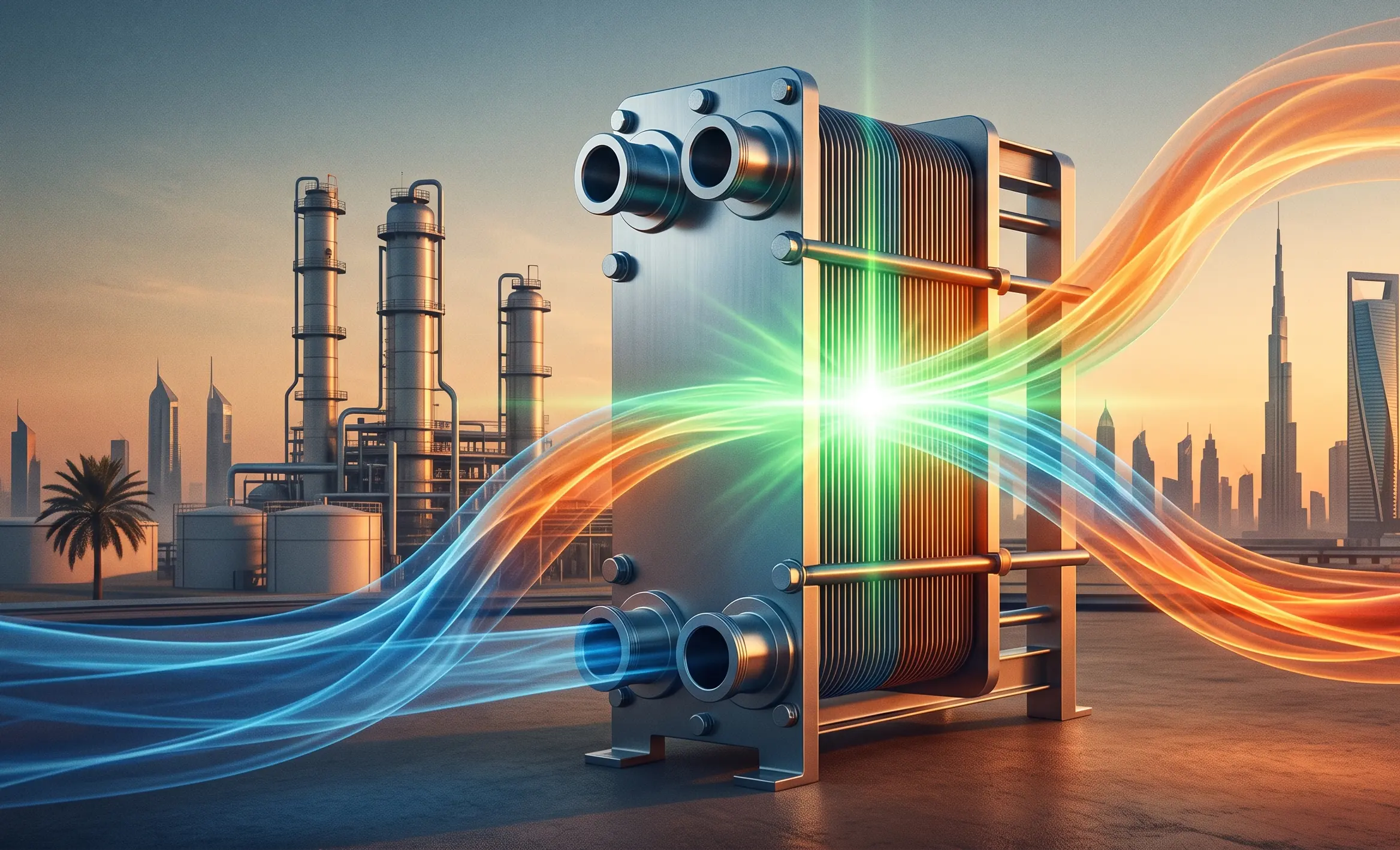
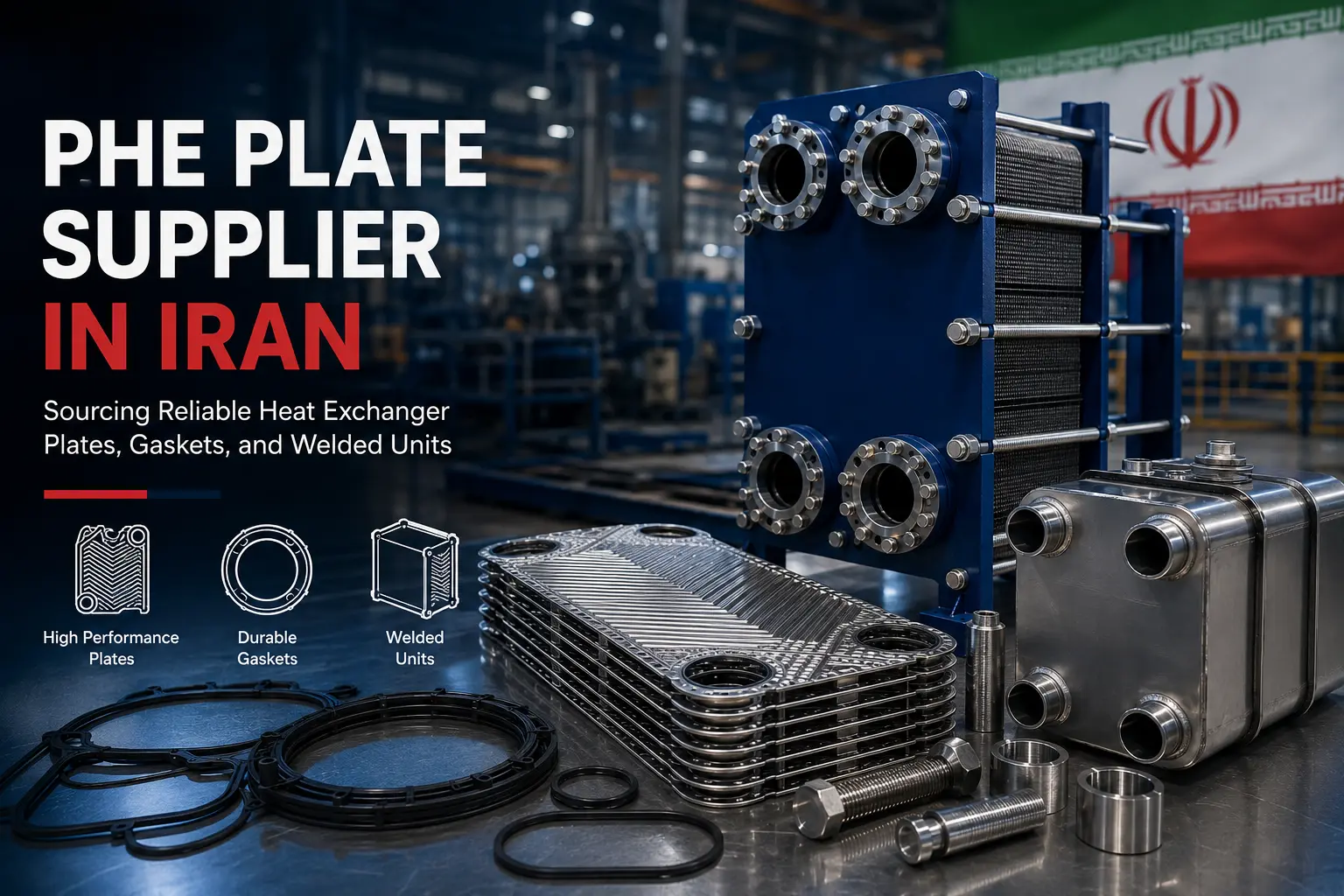
Finding a dependable PHE plate supplier in Iran has become a defining challenge for facility managers across the country’s refining, petrochemical, food processing, and HVAC sectors. Plant operators don’t just need plates that fit—they need corrosion-resistant alloys matched to specific media, gaskets engineered for local temperature extremes, and welded units capable of withstanding aggressive process conditions. SRJ Heat Exchangers India Pvt. Ltd. serves Iranian industrial clients with manufacturing-grade plates, gaskets, and complete welded plate heat exchanger systems, combining engineering precision with supply-chain reliability.
A single mismatched plate or incompatible gasket can shut down a production line, contaminate process fluids, or accelerate failure within weeks. This guide explains what separates a genuine engineering supplier from a parts reseller, and which considerations matter most when sourcing for Iran’s industrial environment.
What to Expect from a Professional PHE Plate Supplier in Iran
Replacement plates are not interchangeable commodities. Each plate heat exchanger model uses a specific plate geometry—corrugation angle, depth, and port configuration—that determines thermal performance and pressure handling. A competent PHE plate supplier in Iran starts by identifying your existing unit’s specifications rather than offering generic substitutes.
Plate Material Selection for Iranian Process Conditions
Stainless steel 304 and 316L cover most water, oil, and moderate-chemistry applications. However, Iran’s petrochemical and desalination operations frequently handle chloride-rich and acidic media that destroy standard stainless steel within months. For these conditions, titanium, SMO 254, or Hastelloy alloys become necessary.
The cost of getting this wrong is real: a coastal facility using 316L plates against seawater-contaminated cooling water typically sees pitting corrosion and perforation inside 8–12 months. Titanium plates in the same service last 10–15 years. The higher upfront cost recovers itself many times over through eliminated replacement cycles and avoided downtime.
Pressing Quality and Dimensional Accuracy
Genuine plates require precision pressing to maintain the exact corrugation pattern. Plates pressed with incorrect depth or angle create flow distribution problems, raise pressure drop, and cut heat transfer efficiency by 10–20%. Always ask for pressing tolerances and mill test certificates verifying alloy composition—reputable manufacturers provide them as standard.
Heat Exchanger Gasket Supplier in Iran: Matching Compound to Application
Gaskets fail more often than plates, yet operators frequently treat them as an afterthought. The right heat exchanger gasket supplier in Iran understands that compound selection determines both temperature ceiling and chemical compatibility—and that a wrong choice causes leaks, cross-contamination, and unplanned shutdowns.
Choosing the Correct Gasket Material
Each elastomer suits specific conditions:
- NBR (Nitrile): Reliable for oils, fats, and water up to ~110°C; degrades fast with ammonia or strong oxidizers.
- EPDM: Excellent for hot water, steam, and many chemicals up to 150°C; unsuitable for mineral oils.
- Viton (FKM): Handles aggressive chemicals and high temperatures beyond 180°C; higher cost, justified for harsh petrochemical duty.
- HNBR: Bridges the gap where nitrile fails but full fluoroelastomer is unnecessary.
Selecting NBR for a 140°C application, or EPDM for an oil circuit, guarantees premature failure. An experienced gasket supplier verifies media, peak temperature, and pressure before recommending a compound.
Clip-On vs. Glued Gaskets
Modern plates use either clip-on gaskets (fitted mechanically into the plate groove) or glued gaskets requiring adhesive curing. Clip-on designs cut reassembly time and eliminate curing delays. Confirm the attachment type matches your plate design—mixing systems causes sealing failures. A dependable supplier also maintains shelf-life control, so you receive fresh elastomer rather than stock that has hardened in storage.
Welded Plate Heat Exchanger in Iran: Solutions for Aggressive and High-Pressure Media
When gasketed units cannot handle the chemistry or pressure, a welded plate heat exchanger in Iran becomes the engineering answer. Welded construction removes elastomer gaskets entirely, allowing operation with aggressive solvents, high-temperature thermal fluids, and pressures gasketed designs cannot tolerate.
Where Welded Units Outperform Gasketed Designs
Welded plate heat exchangers suit concentrated acid cooling, ammonia refrigeration, high-pressure steam, and processes exceeding 200°C. With no gaskets to degrade, they handle media that would destroy elastomers within days, and tolerate pressures of 40 bar and beyond.
The trade-off is serviceability. Welded units cannot be opened plate-by-plate for manual cleaning, making upstream filtration, water treatment, and clean-in-place systems essential rather than optional.
Semi-Welded: The Practical Hybrid
Where one fluid is corrosive but the other is benign, semi-welded construction balances both needs—the aggressive-media side is welded for chemical resistance, while the other stays gasketed for serviceability. Ammonia refrigeration systems commonly use this configuration, gaining chemical safety on the refrigerant side while keeping maintenance access on the water side.
How to Evaluate Heat Exchanger Suppliers Serving Iran
Sourcing decisions extend well beyond unit price:
- Technical sizing capability: A genuine supplier calculates thermal duty and specifies materials from your process data. If they cannot size thermally, they are reselling, not engineering.
- Material certification: Insist on mill test certificates for plates and compound documentation for gaskets to guard against substituted materials.
- Inventory reliability: Industrial downtime costs thousands per hour; consistent stock prevents extended outages.
- Cross-brand compatibility: Many Iranian facilities run mixed fleets built up over decades. A capable supplier produces plates and gaskets compatible with a wide range of frame designs.
- After-sales engineering: Installation guidance, torque specs, and troubleshooting separate real partners from vendors who vanish after invoicing.
Industrial Sectors Across Iran That Depend on Plate Heat Exchangers
- Oil, gas, and petrochemical: Process cooling and heat recovery, often needing titanium plates and welded units for aggressive streams.
- Food and beverage: Pasteurization and dairy processing using stainless steel plates and food-grade EPDM gaskets.
- HVAC and district energy: Heating and cooling loops dominated by gasketed units with EPDM seals.
- Power generation: Lube oil cooling and auxiliary cooling circuits.
- Desalination and water treatment: Chloride-resistant titanium plates for seawater and brine.
Maintenance Practices That Extend Equipment Life
Even the best components fail early without discipline. Operators who record baseline pressure drop and approach temperature at commissioning catch fouling before it forces emergency shutdowns. A 30–40% rise in pressure drop signals cleaning is due; waiting longer compresses plate life and inflates energy costs. Inspect gaskets at every disassembly—reusing hardened gaskets is a frequent, avoidable cause of leaks. For welded units, consistent water treatment and filtration carry the full maintenance load. Quality components plus structured maintenance routinely extend service life to 10–15 years.
Conclusion: Choosing the Right PHE Plate Supplier in Iran
Selecting a PHE plate supplier in Iran is an engineering decision, not a purchasing shortcut. The right partner verifies plate geometry and alloy compatibility, matches gasket compounds precisely to your media and temperature, and supplies welded units built for the aggressive conditions common across Iranian petrochemical, desalination, and processing operations. Material certification, thermal sizing, dependable inventory, and after-sales engineering separate a true supplier from a parts reseller.
SRJ Heat Exchangers India Pvt. Ltd. supports Iranian industrial clients with manufacturing-grade plates, application-matched gaskets, and complete gasketed, semi-welded, and welded plate heat exchanger systems—backed by thermal engineering expertise and material traceability. Explore solutions at https://srj.co.in/ for India operations and https://srj.ae/ for Middle East regional support.
External References:
- ASHRAE: Heat transfer and thermal system design guidelines (https://www.ashrae.org)
- ISO (ISO 9001, ISO 15547): Quality and heat exchanger standards for petroleum and petrochemical industries
About SRJ Heat Exchangers India Pvt. Ltd.
SRJ Heat Exchangers India is a manufacturer and supplier of plate heat exchangers, replacement plates, gaskets, and welded heat exchanger systems serving industrial clients across India, Iran, and the wider Middle East. With expertise in alloy selection, gasket compound matching, and high-pressure welded construction, SRJ delivers engineered thermal solutions for petrochemical, food, HVAC, power, and desalination applications. Visit https://srj.co.in/ or https://srj.ae/.